44 guides
Bee hotel guides: sizes, siting, species and care
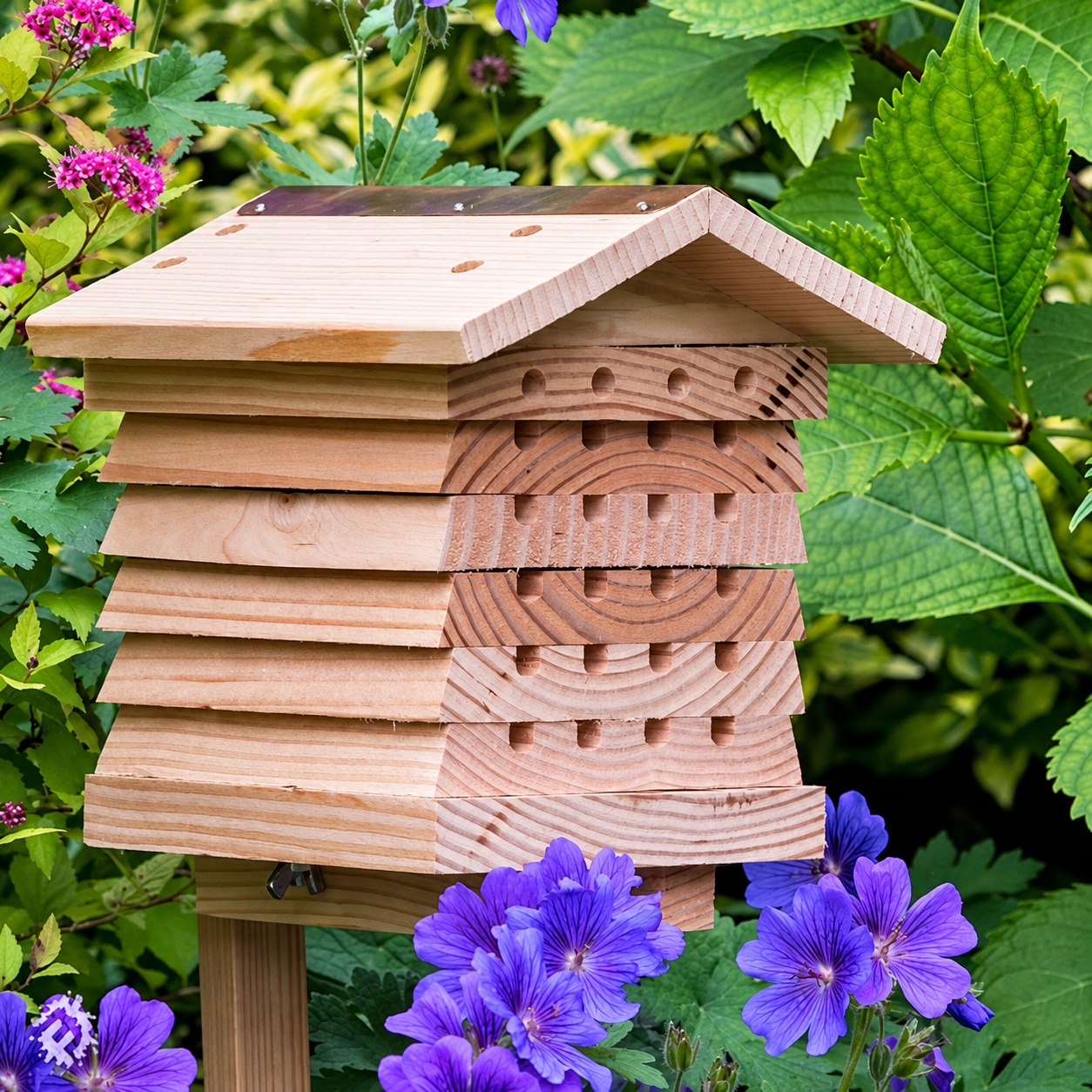
Everything we have learned about getting a bee hotel occupied, written from what turns up in our own tunnels each season rather than copied from a catalogue: the widths bees need, where a hotel has to hang, when the different species fly, and how to tell a real build from a decorative one. If you are new to this, start with the four questions below — between them they answer most of what people write to us about.
Start here
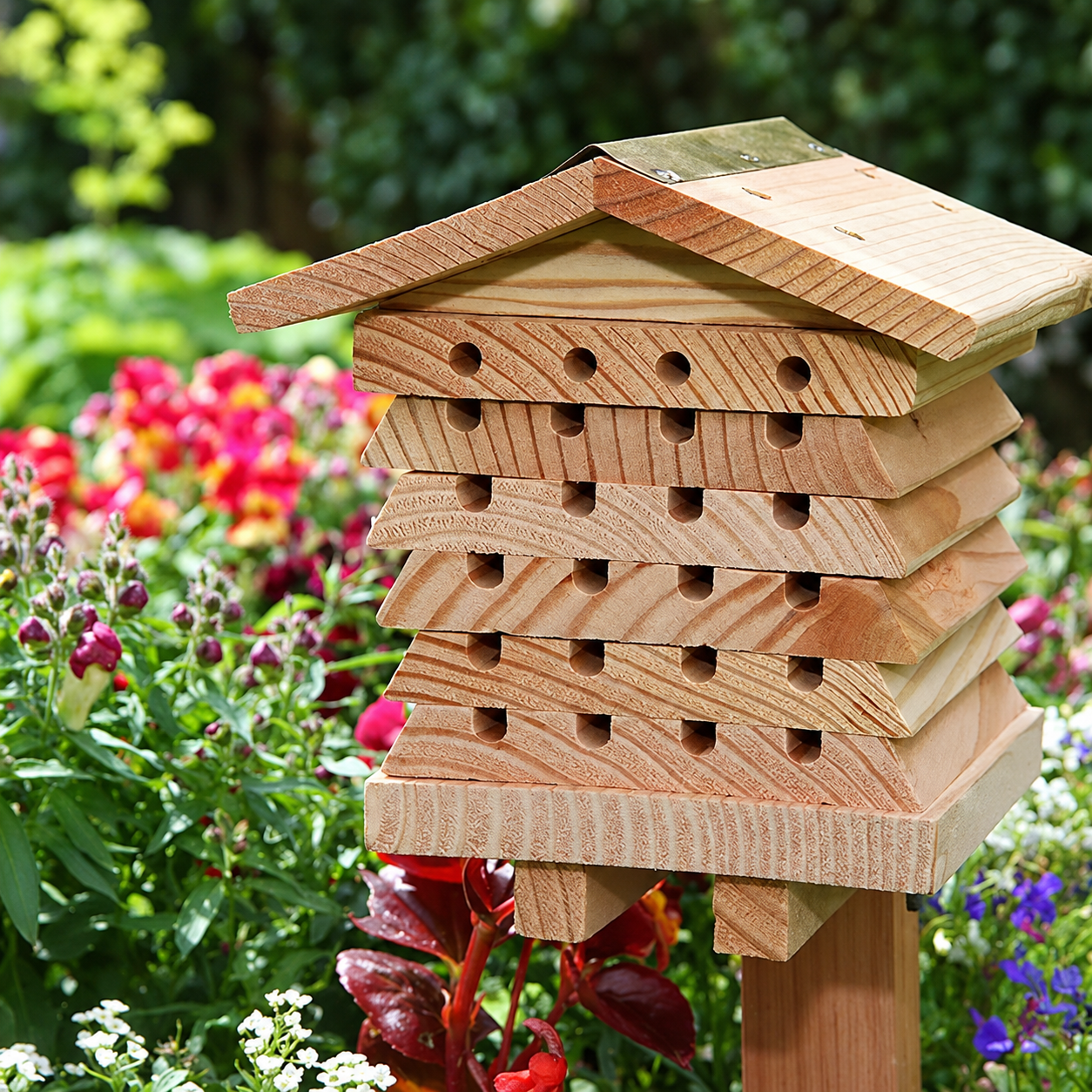
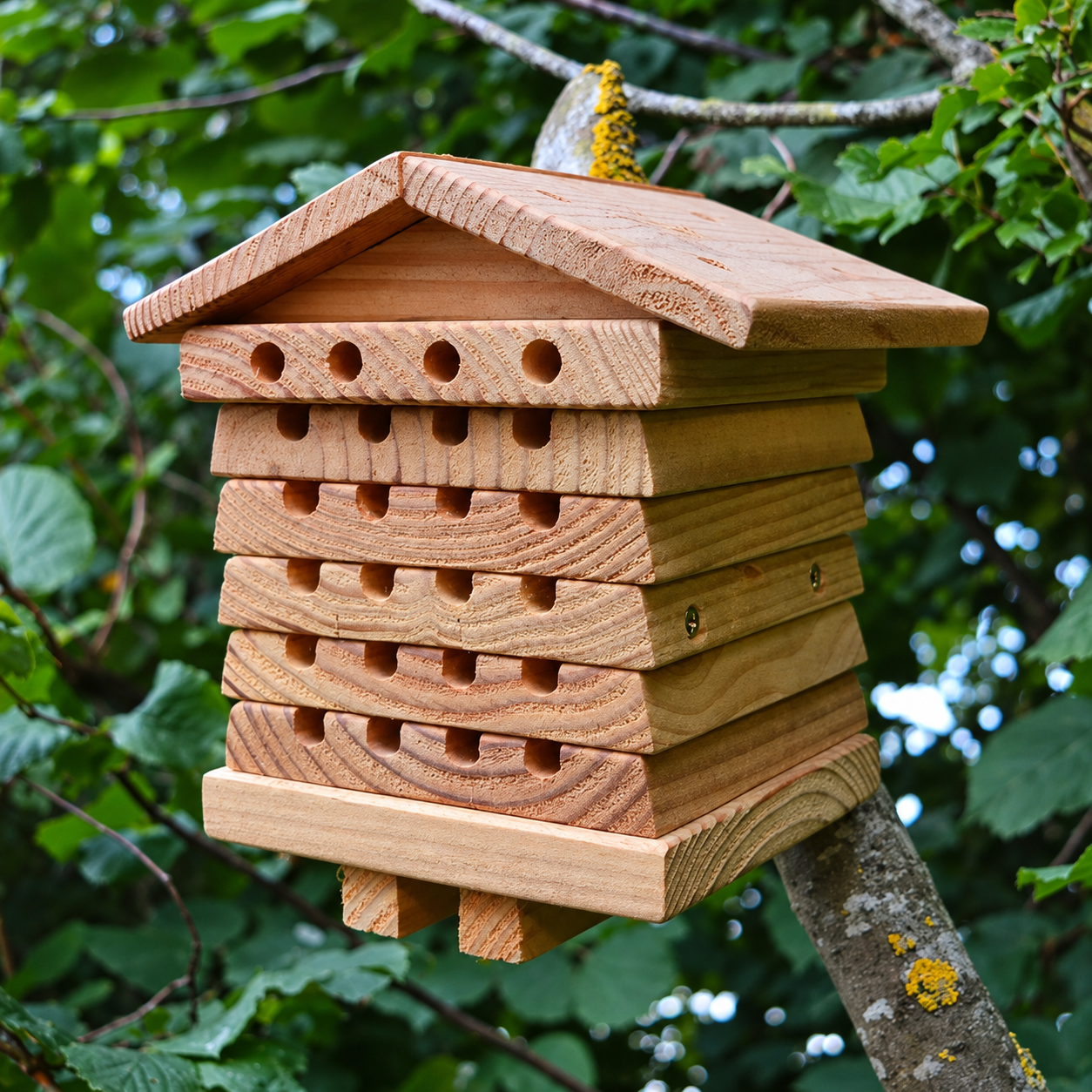
Bee hotel basics in sixty seconds
Four things decide whether a bee hotel is used or ignored. Nothing else on this page matters much until these are right.
Tunnel widths, plural
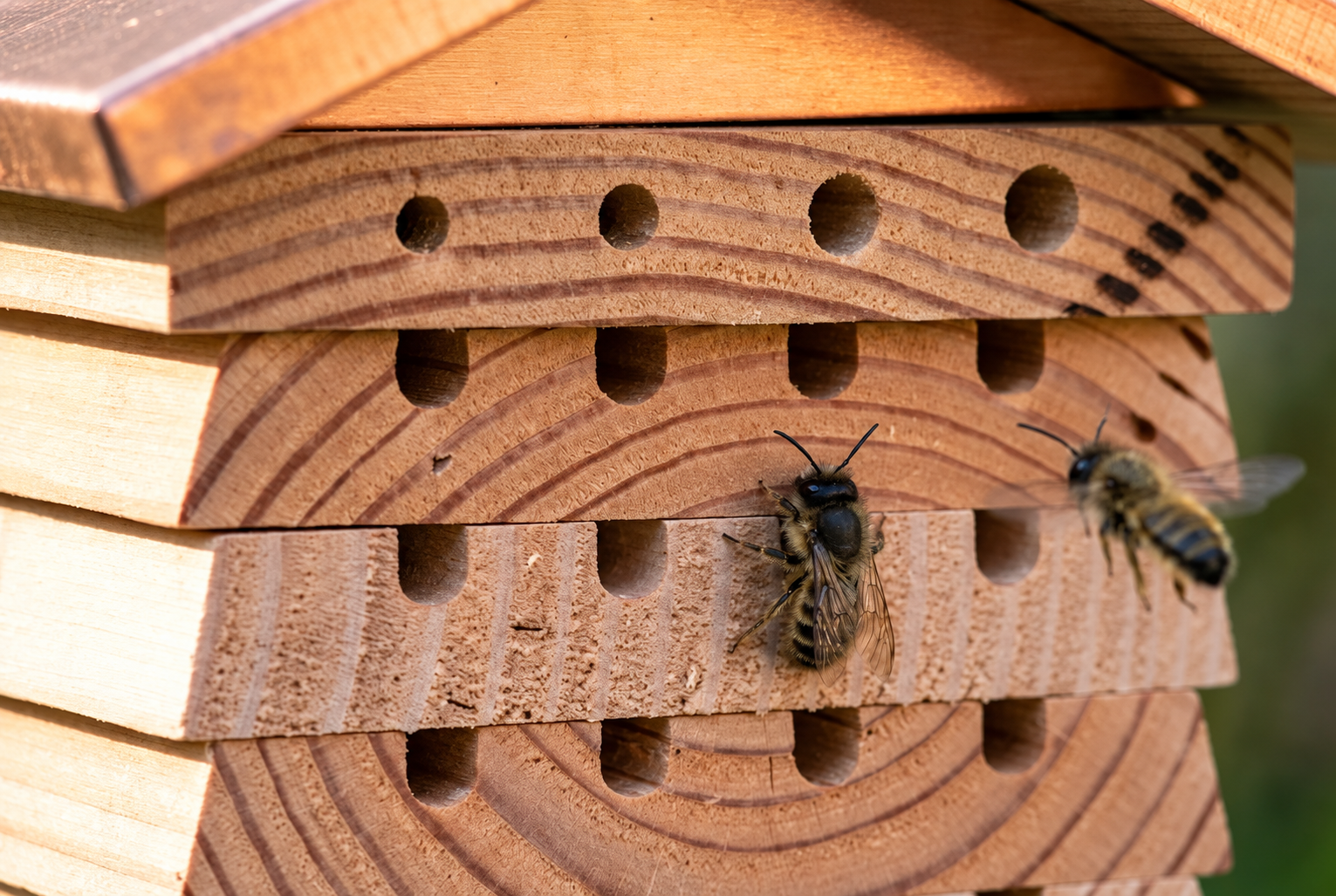
A single drill size houses one species at best. A spread from roughly 2mm to 10mm suits masked bees, leafcutters and mason bees alike.
Sizes and depthsUntreated timber, thick enough
Paint and lacquer smell wrong to an inspecting female and seal moisture in. Thick untreated cedar buffers heat and lets the wood breathe.
Which timber lastsWarm, still and dry
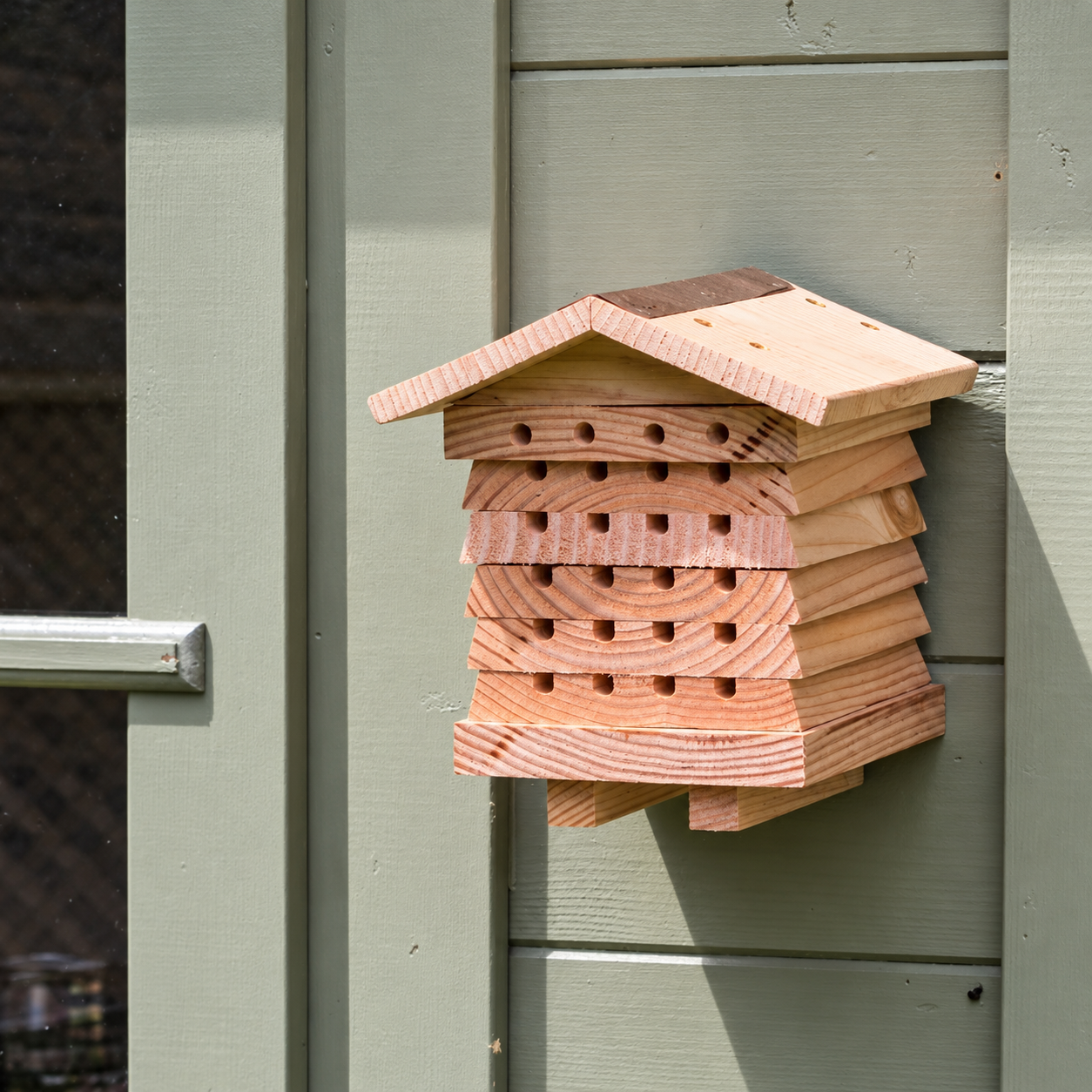
South to south-east facing, 1–1.5m up, fixed rigidly rather than swinging, with a roof that throws rain clear of the tunnel mouths.
Where to hang itLeft alone once occupied
Females memorise the exact spot. Moving it mid-season loses the nest, and bringing it indoors over winter wakes the brood too early.
Year-round careEvery guide, by subject
Choosing one
Start here if you are deciding what to buy. These pages cover what separates a hotel bees use from a decorative box, how the different names on the label relate to each other, and what a fair price looks like.
- Bee hotels: the buyer's checklistThe five build details that decide whether tunnels get filled, and the hotel we make.
- Bee houses explainedWhat a bee house is, what it is not, and why it is nothing like a beehive.
- Bee houses for the gardenChoosing one that suits a small garden, a balcony, an allotment or a large plot.
- Bee homes compared: bamboo vs cedarWhy cut bamboo splits and moulds, and what solid timber does differently.
- Bee boxes: what happens insideA tunnel-by-tunnel look at how a female provisions and seals her nest cells.
- Best bee hotel in the UKHow to judge what is sold here, on build quality rather than photographs.
- Bee hotel for sale: prices and packsWhat bee hotels cost, why the cheapest ones sit empty, and our pack prices.
- Wooden bee houses: which timber lastsCedar, pine, oak and plywood after five British winters outdoors.
- Bee hotel price: every packWhat one costs, the price per hotel in multi-packs, and what the money buys.
- Reviewing a bee hotelThe six criteria that decide occupancy, and the claims to ignore.
- Alternatives to a bee hotelBare soil, dead stems, rough grass and planting — often cheaper and broader.
- Bee and bee hotelsThe nickname explained, and the specification behind it.
- A bee hotel as a giftWho it suits, what to say in the note, and how the gift wrap works.
Bee hotels vs bug and insect hotels
The same product is sold under three or four different names, and they are not interchangeable. These pages explain what each one actually houses so you buy the right thing for what you want to attract.
- Insect hotel vs bee hotelMixed-compartment hotels versus tunnels built for one job.
- Insect houses for the gardenWhat lives in each compartment, and which parts are usually ignored.
- Bug hotels and bug housesLadybirds, lacewings and beetles — and the part of a bug hotel bees use.
- Bug houses: what moves inWhy mixed-material boxes stay empty, and which parts bees can use.
- Insect hotels in the UKThe four types on sale here and how each copes with British rain.
- Bee hotel vs bug hotel: which to buyA straight comparison, and what to pick if you only want one.
Which bees use it
Around nine in ten British bee species are solitary, with no hive, no queen and no honey. These pages introduce the species that nest in tunnels, when each one flies, and what the tunnels need to suit them.
- Solitary bee hotelsHow solitary nesting works, and why it makes these bees so safe to live alongside.
- Solitary bee houses by speciesWhich diameter suits which bee, from 2mm masked bees to 10mm masons.
- Mason bee housesRed mason bees, mud plugs, and the 8mm tunnels they prefer.
- Leafcutter bee housesThe neat leaf discs, the June to August season, and 6–7mm tunnels.
- Mason bees in the UKA gardener's guide to the species you are most likely to attract.
- What is a bee hotel?The plain-English explanation, for anyone starting from scratch.
- How does a bee house work?Egg, pollen store, mud wall, repeat — the full nesting sequence.
- Do bee hotels work?An honest answer: they do, when five specific things are right.
- Bee house bees: who uses oneSpecies by species, when each flies and how to tell bees from wasps.
- Bees in a box: inside sealed tunnelsWhat a capped tunnel contains, and when the young come out.
- Beekeeping at home, or solitary bees?Hives compared with a hotel: time, cost, honey and conservation.
- Do bee hotels attract wasps?Why picnic wasps ignore cedar tunnels, and which visitors are harmless.
Setting it up and looking after it
Once you have one, siting decides almost everything. These pages cover height, direction, timing and the small amount of care a well-built hotel needs across the year.
- What size holes, and how deep?Diameters by species, and why 10–15cm depth changes the brood.
- What direction should it face?South to south-east, and what happens when it faces north.
- Where to hang a bee hotelHeight, shelter, and why it must be fixed rather than swinging.
- When to put one out, and when bees emergeMonth by month, including what to do if you buy mid-summer.
- How to attract bees to itFlowers, mud, sun and patience — what actually brings the first female in.
- How and when to clean a bee hotelWhat to leave alone, what to brush out, and when to do it.
- Year-round care guideSpring, summer, autumn and winter in one place.
- Where to put a bee hotelBest spot by garden type, including balconies, fences and paved yards.
- Setup guide for season oneFrom unpacking to the first mud cap, step by step.
- Nothing nesting yet?Nine causes in order of likelihood, and the change to make for each.
- How to make a bee hotelTimber, bit sizes, depth and finish — plus where homemade ones fail.
- With children and in schoolsSafety rules, what to watch each term, and running it as a project.
- Problems, parasites and dampMould, parasitic wasps, woodpeckers, and empty tunnels diagnosed.
What is happening right now
A bee hotel has a rhythm. Knowing which part of it you are in tells you whether to be watching, waiting or leaving it entirely alone.
March to June
Red mason bees fly. Males appear first and patrol the front; females follow and start sealing tunnels with mud.
Spring timingJune to August
Leafcutter bees take over, capping tunnels with neat discs of leaf cut from roses and shrubs.
Leafcutter beesSeptember to November
Activity stops. Sealed tunnels hold developing larvae, so nothing should be opened, moved or cleaned.
Cleaning, properlyDecember to February
The hotel stays outside. The natural cold is what keeps next spring's emergence on schedule.
Winter problems
About Clayton Dawson
Cabinetmaker and solitary-bee keeper, and the maker of the Wild Bee Hotel. Every guide here is written and reviewed against what Clayton sees in his own tunnels each season, and checked against published guidance from the Bumblebee Conservation Trust, Buglife and the RHS. Read the full story.
Ready for a hotel bees will actually use?
Untreated Western red cedar with 19mm walls, a hand-formed copper roof, hand-sanded tunnels from 2mm to 10mm and a solid rear panel — built to every point on this page. From £39.99, with packs of two, three and four bringing the price per hotel down.
- Free worldwide shipping
- 30 days to change your mind
- Dispatched in 1–2 working days
4.8/5 from 7,763 reviews