Bee homes for the garden: what to look for and where to put it
A bee house earns its place in a garden twice over: it gives solitary bees somewhere safe to raise the next generation, and it puts the most efficient pollinators you can get right next to your fruit, beans and squash.
What a garden bee house changes
Solitary bees carry dry pollen loose on the underside of the abdomen and shed it as they move, so they pollinate far more flowers per visit than a honeybee with packed pollen baskets. A resident population of red mason and leafcutter bees noticeably improves fruit set on apples, pears, plums, currants, strawberries, beans, tomatoes and courgettes. They do not sting in any meaningful sense, they need no keeping, and they will not swarm.
Choosing a bee house
Tunnel diameters
A range beats a single size every time: around 8mm for red mason bees, 6–7mm for leafcutters, 3–4mm for the smaller masked and yellow-faced species. A good house offers roughly 2mm to 10mm so whichever species live near you can find a fit.
Timber and finish
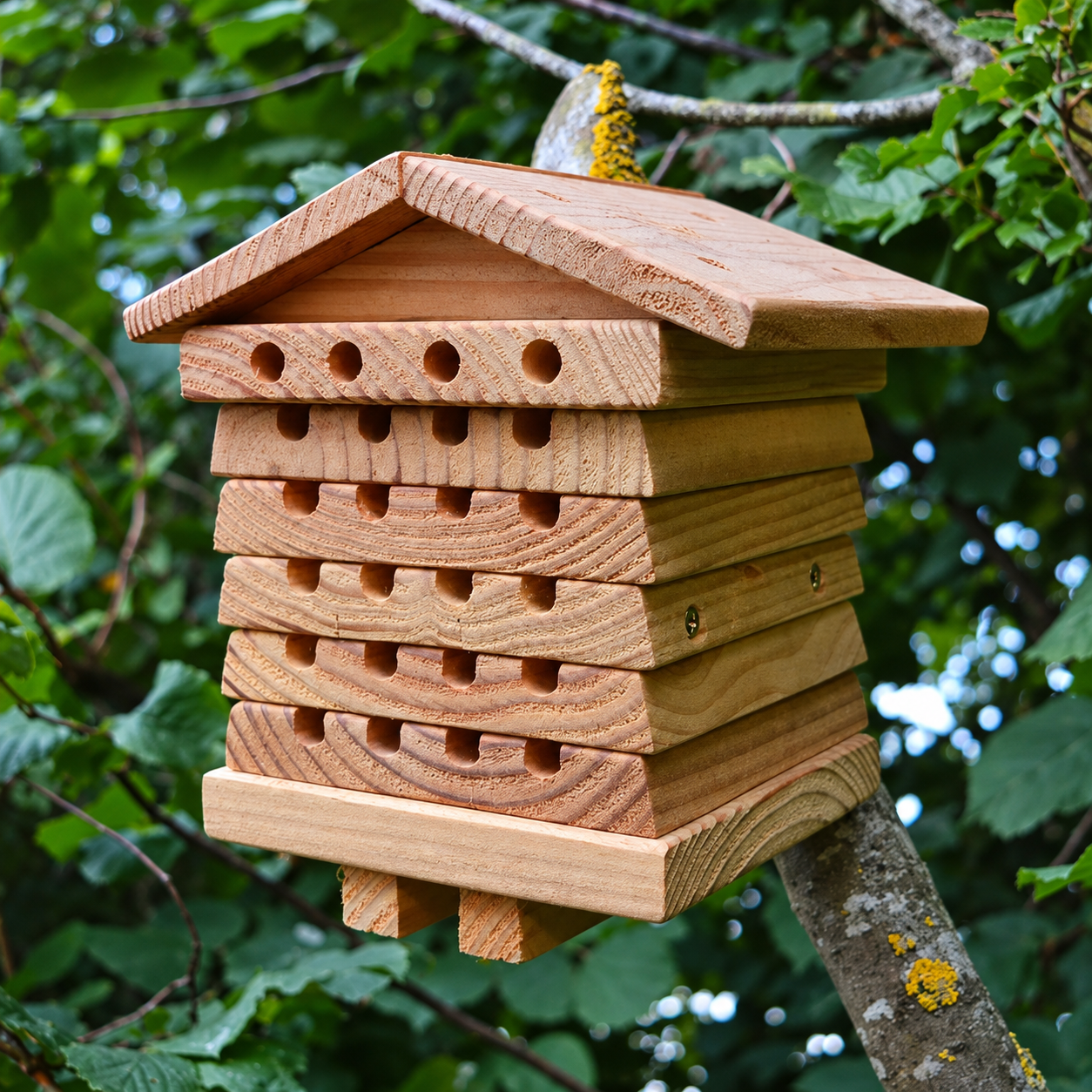
Untreated only. Thick walls — 19mm or more — even out the temperature between a cold night and a hot afternoon. Western red cedar is the sensible timber: naturally rot-resistant, stable outdoors, and light enough to hang on a fence panel.
Roof
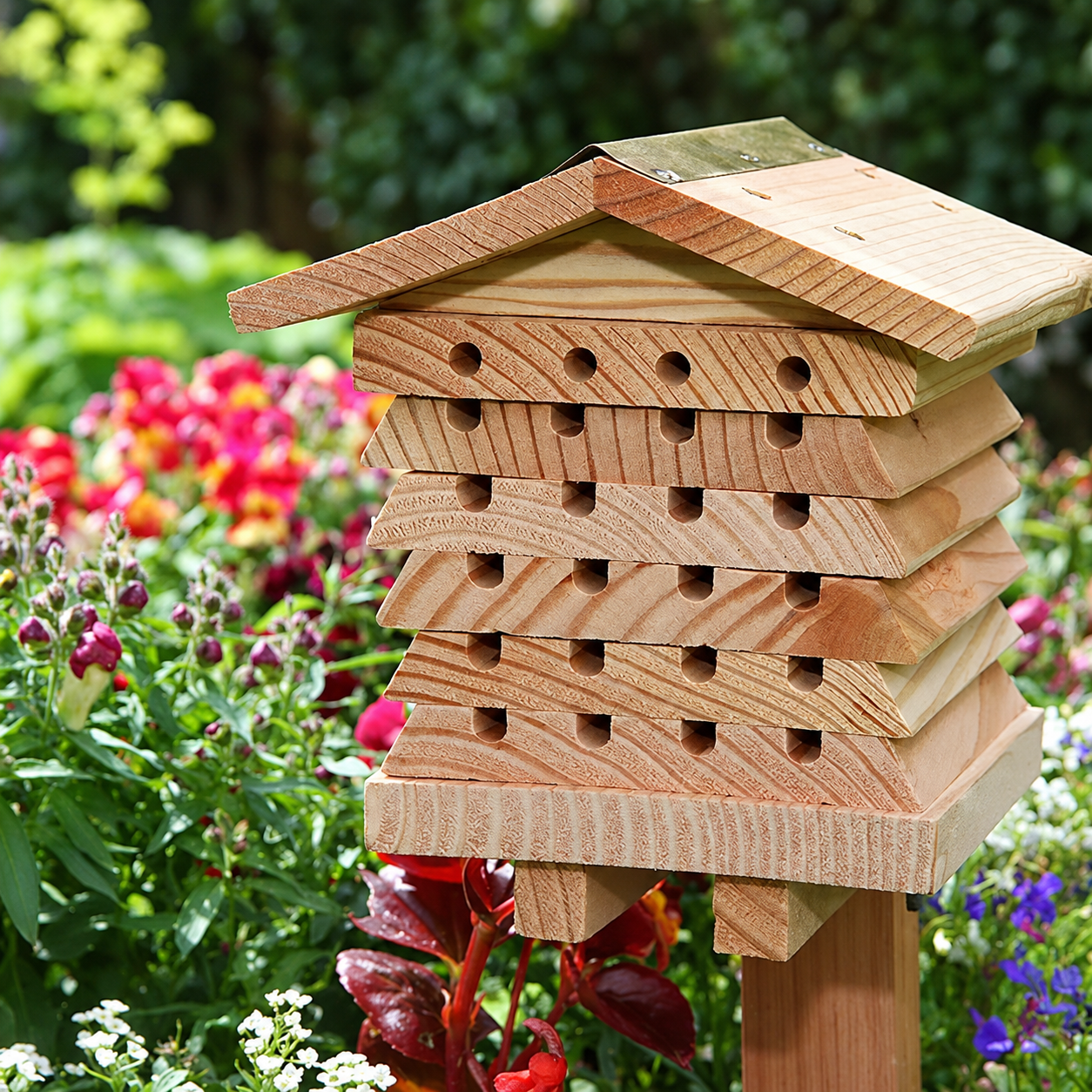
It must overhang the tunnel face on all sides. A copper roof lasts decades; roofing felt and thin plastic crack after a winter or two and then funnel water into the nests.
Back panel
Solid, always. An open back is an invitation to parasitic wasps.
Siting it in a real garden
- South or south-east facing, in full morning sun.
- 1–1.5m high, fixed rigidly — bees will not settle in something that swings.
- Clear of overhanging leaves and out of the path of sprinklers.
- Within sight of flowers and, ideally, a patch of bare damp soil for mason bee mud.
- Leave it up through winter; the next generation is inside.
The Wild Bee Hotel in the garden
Untreated Western red cedar, a hand-formed copper roof, hand-sanded tunnels from 2mm to 10mm, a solid rear panel and a steel mount that takes a screw into a wall, fence post or shed. One is £39.99; multi-packs bring the price per hotel down if you are covering an allotment or buying for family. Free worldwide shipping, 30-day money-back guarantee.
Built to the standard this guide describes
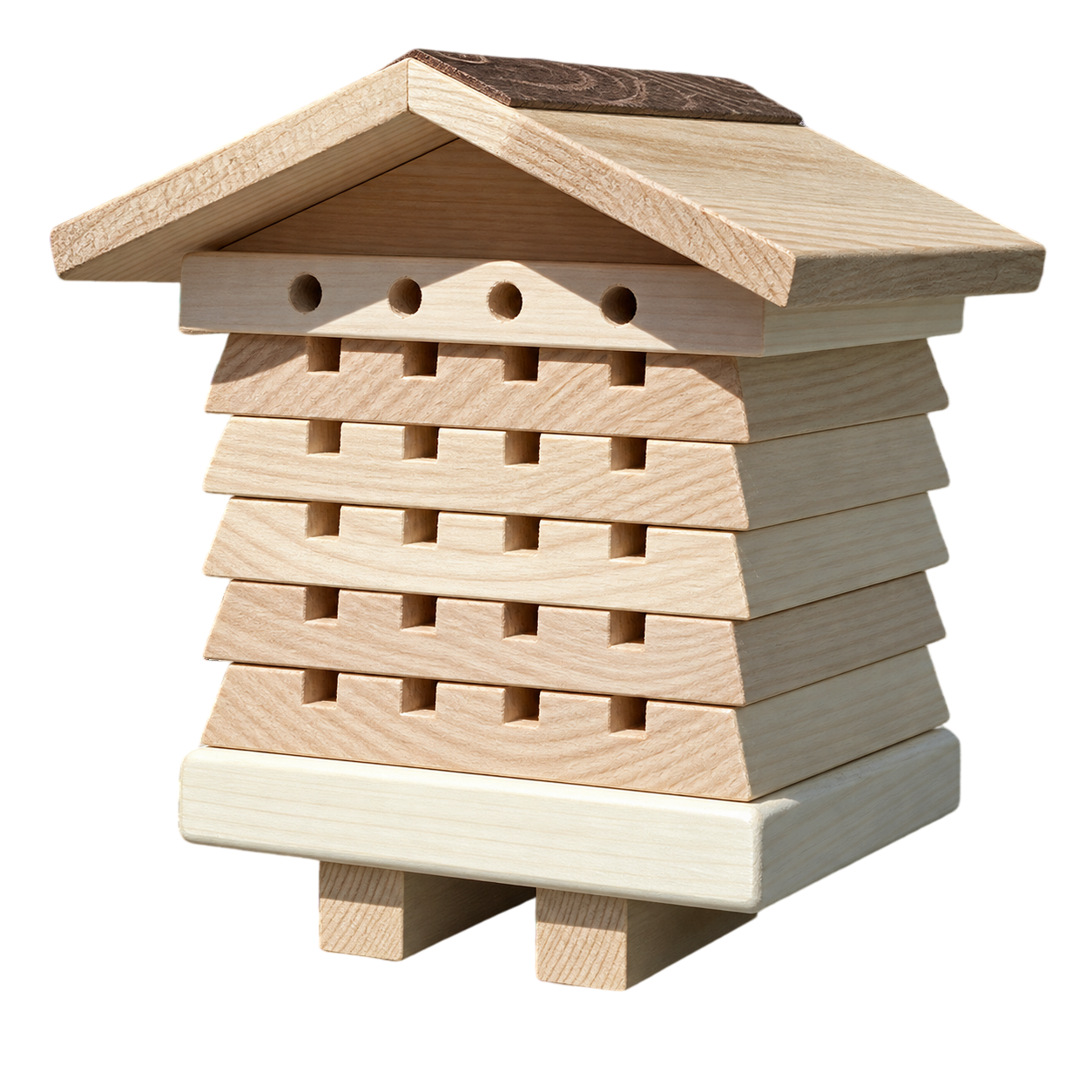
Untreated Western red cedar, a hand-formed copper roof, tunnels from 2mm to 10mm sanded mirror-smooth, and a solid rear panel. From £39.99 with free worldwide shipping and 30 days to change your mind.