A bee's home for a full year: what happens inside, month by month
A bee home does not sit idle between spring visits. Inside its tunnels, a full generation is growing, resting and finally emerging on a clock set by temperature and daylight, not by anything you do. Here is what is actually happening inside across twelve months.
At a glance: the year in one table
| Period | What is happening inside the home |
|---|---|
| March–April | Males emerge first and wait near entrances; females emerge and mate soon after |
| April–June | Red mason bee females provision and seal tunnels with mud, cell by cell |
| June–August | Leafcutter bees take over, sealing tunnels with cut leaf discs |
| Late summer–autumn | Larvae finish feeding and spin cocoons inside sealed cells |
| Winter | Fully formed adults rest inside cocoons, needing sustained cold |
| Early spring | Rising temperature triggers emergence, and the cycle begins again |
Spring: the home fills up
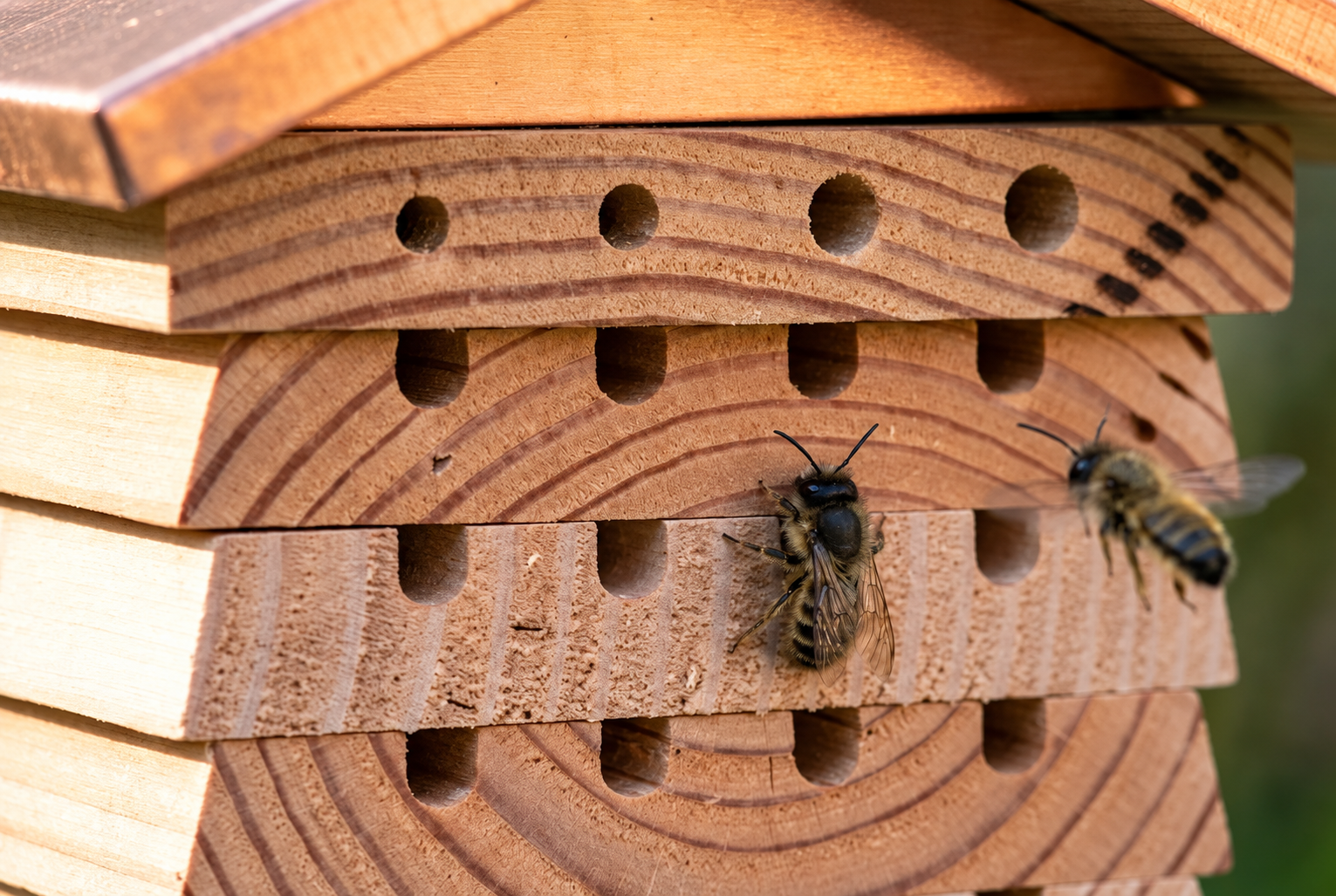
Red mason bees (Osmia bicornis) are usually the first tenants, on the wing from March. Males emerge a few days before females and gather near the entrances, mating with females as they appear. A mated female then inspects tunnels, choosing one that suits her size, and begins the work of provisioning: repeated trips for pollen and nectar, packed into a loaf at the tunnel's far end, then a single egg laid on top and the cell sealed with mud she carries in from bare, damp soil nearby.
She lays female eggs toward the back of the tunnel and male eggs nearer the entrance — a pattern that holds across cavity-nesting species and is explained in more depth in our guide to tunnel sizing and depth. By the time she has filled a tunnel with several cells in a row, she caps the entrance completely and starts on the next.
Early summer: a change of tenant
As mason bee season winds down through May and June, leafcutter bees (Megachile) begin appearing, recognisable by the neat semicircular notches they cut from rose, lilac and other soft leaves. They use the same tunnels in the same way — pollen loaf, egg, seal — but their seals are unmistakably different: layered green leaf discs rather than mud plugs. A single home can show both signatures in one season if it offers the right range of diameters.
By August the busy part is over and the home goes completely quiet. That quiet is the point — everything of value that season is now inside, developing, and needs to be left alone.
Late summer to winter: the invisible months
Once a cell is sealed, the larva inside feeds on its stored pollen loaf, grows, then spins a cocoon and pupates. By autumn most sealed cells contain a fully formed adult bee, resting inside its cocoon, waiting for spring. Nothing about this stage is visible from outside the home, which is exactly why it should not be disturbed, moved, or brought indoors during these months — warmth at the wrong time can trigger early emergence with nothing in flower to sustain it.
Why this home stage decides success or failure
Spring again: emergence
Rising temperature in late winter and early spring triggers the final transformation and emergence. Bees chew their way out of the sealed cell nearest the entrance first, working backward, which is why males — laid nearer the front — emerge slightly ahead of the females behind them. The whole cycle then restarts with a new generation of females inspecting the same tunnels.
What this means for choosing a home
Because most of a bee's life happens hidden inside sealed cells, the qualities that matter are the ones you cannot see in a spring photograph: dry timber, a roof that keeps rain off across every month including the wettest, and a back panel that keeps the whole cycle safe from parasites while it is unfolding out of sight. Our full buyer's checklist covers the specification points behind all of this.
The Wild Bee Hotel as a year-round home
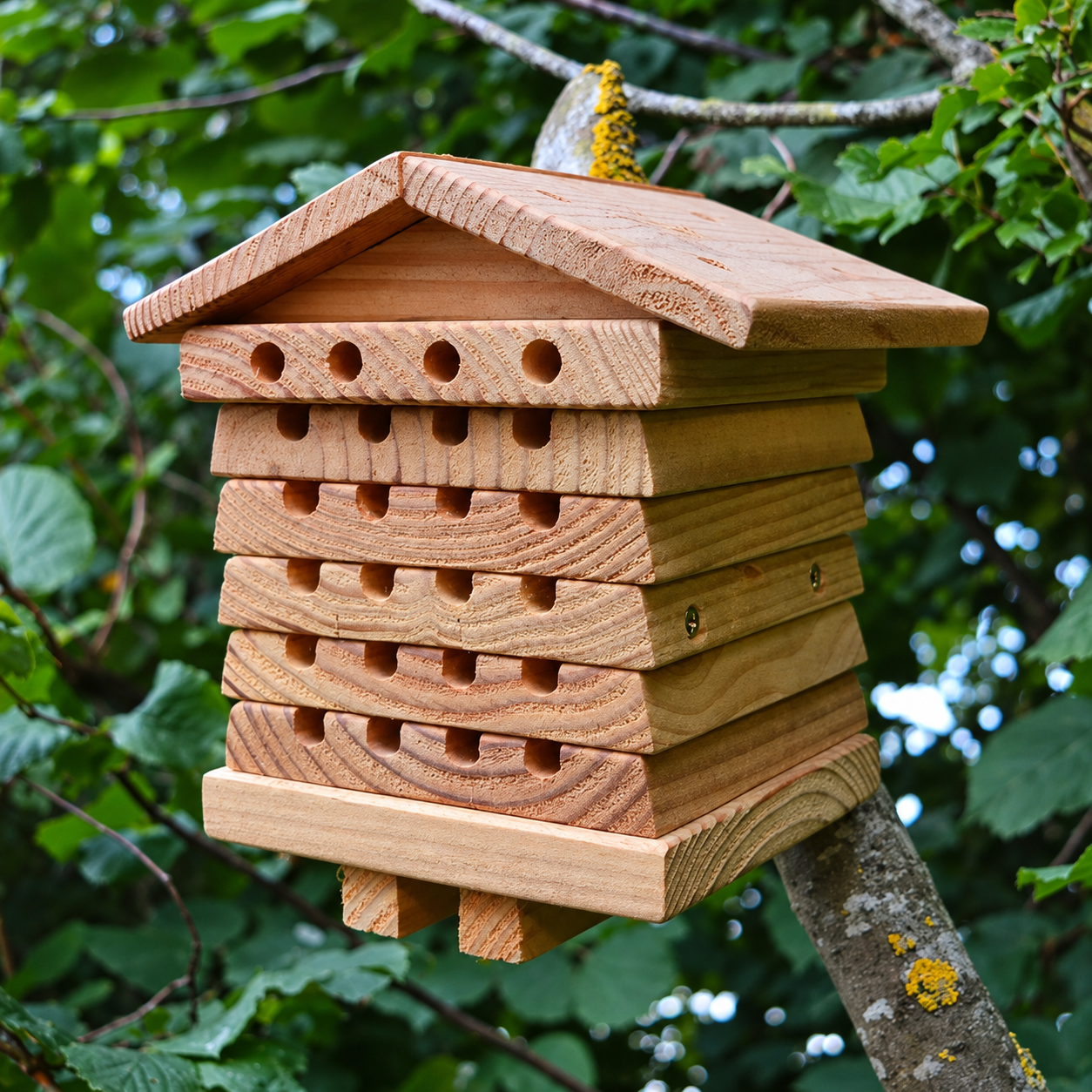
The Wild Bee Hotel sits outside through the entire cycle described above: untreated Western red cedar, hand-formed copper roof, hand-sanded tunnels from 2mm to 10mm, solid rear panel, steel mount. £39.99 with free worldwide shipping, and 30 days to change your mind.
Questions people ask next
Do the bees living in a bee home stay there all year?
Should I bring the bee home indoors for winter?
Why do some tunnels never seem to seal?
How long does a bee actually spend as an adult, out flying?
What happens if a tunnel gets damp partway through the year?
Will the same tunnels be reused year after year?
The home that carries a generation through winter
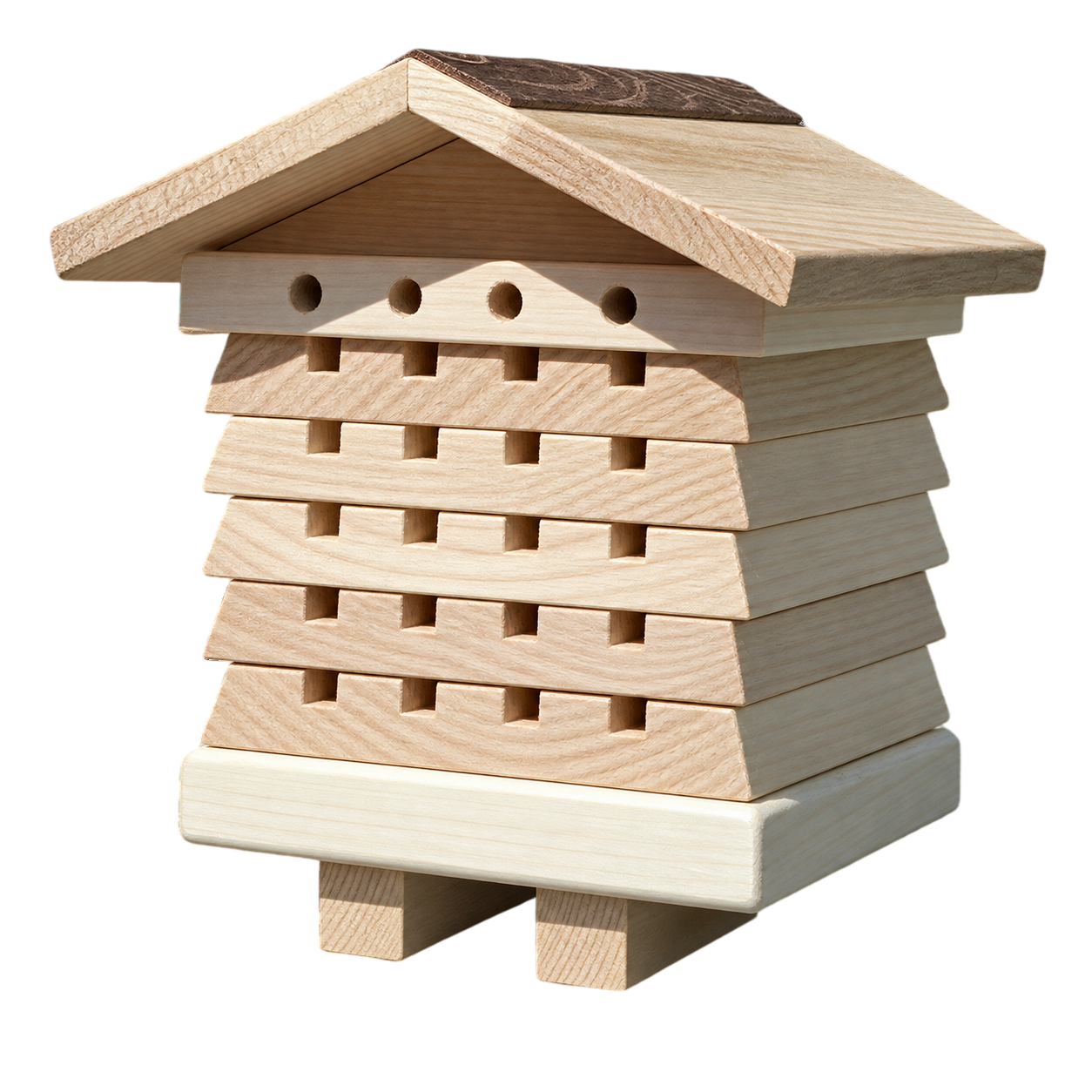
19mm untreated cedar, a hand-formed copper roof and a solid rear panel keep the brood dry from the day it is sealed to the day it emerges. £39.99, free worldwide shipping, 30-day money-back guarantee.
About Clayton Dawson
Cabinetmaker and solitary-bee keeper, and the maker of the Wild Bee Hotel. Clayton has kept red mason and leafcutter bees in his own garden for years, and every guide on this site is written and checked against what he sees in the tunnels each season rather than copied from a catalogue. Read the full story.
First published 22 October 2025 · last reviewed 30 June 2026.
What we based this on: Bumblebee Conservation Trust, RHS.