Bee box price vs cost: why the cheap bamboo one is rarely the cheaper choice
A bamboo bee box at the garden centre looks like the sensible, low-commitment option. Priced per year rather than per purchase, it usually is not — and the maths is worth doing before you buy one for the third time in three years.
At a glance: what changes with price
- Cheap bamboo bundles are typically sawn through the node, leaving a rough internal shelf.
- Most budget boxes have no roof overhang, so rain reaches the tunnel entrances directly.
- Open or thin plywood backs let parasitic wasps reach the brood from behind.
- A single drilled diameter suits one species at most, not the range visiting most gardens.
- Expected outdoor life runs from a season or two for bamboo to many years for cedar and copper.
Hive or nesting box — a quick separation first
People searching for a "bee box" mean two very different things: a beekeeper's hive full of honeybees, or a small nesting box for the solitary bees already visiting the garden. This page is about the second. No hive, no honey, no protective suit, no keeping — you screw it to a sunny wall and leave it alone. For the fuller distinction between the two, see our bee house versus beehive comparison.
Inside the box, cell by cell
A female backs into a tunnel, measures it, then makes trip after trip carrying pollen. She packs a loaf of pollen at the far end, lays a single egg on it, walls the cell off with mud or chewed leaf, and starts the next cell. A full tunnel holds several cells in a row, with the ones nearest the entrance usually male so they emerge first. She caps the entrance and moves on, and never meets her own offspring.
What a fiver actually buys you
Bamboo bundles bought for a few pounds get damp, split, and cut wings on sawn rims. Open backs let parasitic wasps reach the larvae. A flat roof or no roof runs rain straight down the tunnel face. Almost none of this is visible in a garden centre photograph — it only shows up after the box has been outside through a wet autumn.
Cost per year: the comparison that matters
| Box type | Typical price | Realistic working life | Rough cost per year |
|---|---|---|---|
| Bamboo cane bundle | £5–£10 | 1–2 seasons | £5–£10 |
| Painted or stained pine box | £12–£20 | 2–4 seasons | £4–£8 |
| Untreated cedar with a metal roof | £39.99 | 8–10+ seasons | Roughly £4–£5, falling each year it lasts |
Those figures are rough by nature — actual life depends on exposure and luck — but the pattern holds up: the cheapest option rarely wins once you count the number of times you buy it again.
Nobody minds paying £6 for a bamboo bundle. What stings is buying the same bundle four springs running because none of them survived a winter.
Checklist for buying a bee box
- Tunnel widths spanning roughly 2mm to 10mm.
- Untreated, thick timber — 19mm or more.
- A metal roof overhanging the front and sides.
- A solid rear panel.
- Hand-finished tunnel interiors with no splinters.
- A rigid fixing, not string or wire.
Common mistakes even with a good box
The Wild Bee Hotel
Every point on the checklist above, in untreated Western red cedar with a hand-formed copper roof and a heavy-duty steel mount. £39.99 for one, less per unit in multi-packs, free worldwide shipping, 30-day money-back guarantee.
Questions people ask next
Why do bamboo bee boxes fail so quickly?
Is a more expensive bee box actually more likely to be used?
How do I work out the real cost per year of a bee box?
Can I just replace the bamboo canes inside a cheap box each year?
Does a bigger, cheaper bee box make up for lower build quality?
What is the single biggest quality difference between cheap and well-made boxes?
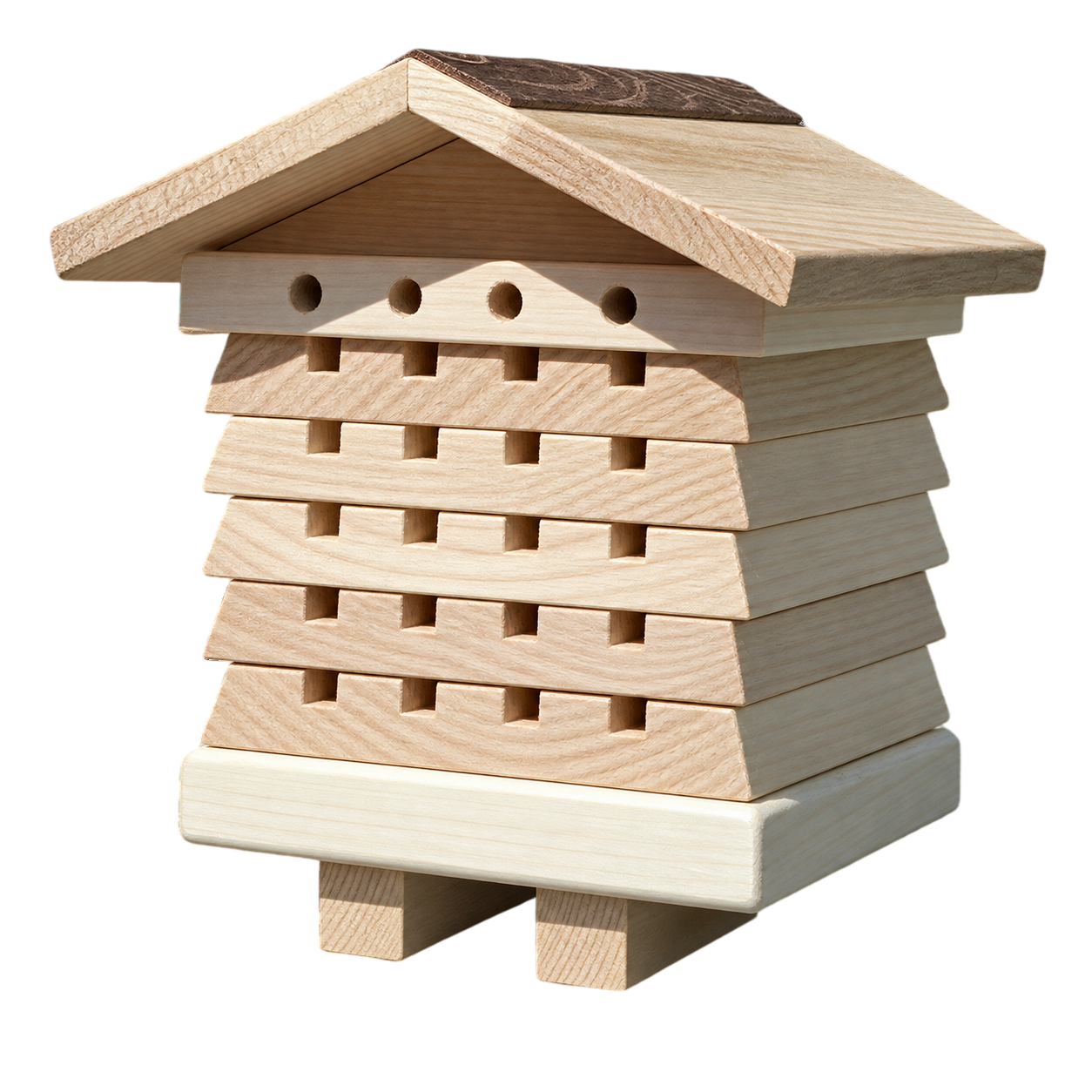
Do the sum once, then stop rebuying
Untreated cedar, a copper roof and a solid rear panel, built to still be working in ten years rather than replaced every two. £39.99, free worldwide shipping, 30-day money-back guarantee.
About Clayton Dawson
Cabinetmaker and solitary-bee keeper, and the maker of the Wild Bee Hotel. Clayton has kept red mason and leafcutter bees in his own garden for years, and every guide on this site is written and checked against what he sees in the tunnels each season rather than copied from a catalogue. Read the full story.
First published 9 February 2026 · last reviewed 27 August 2026.