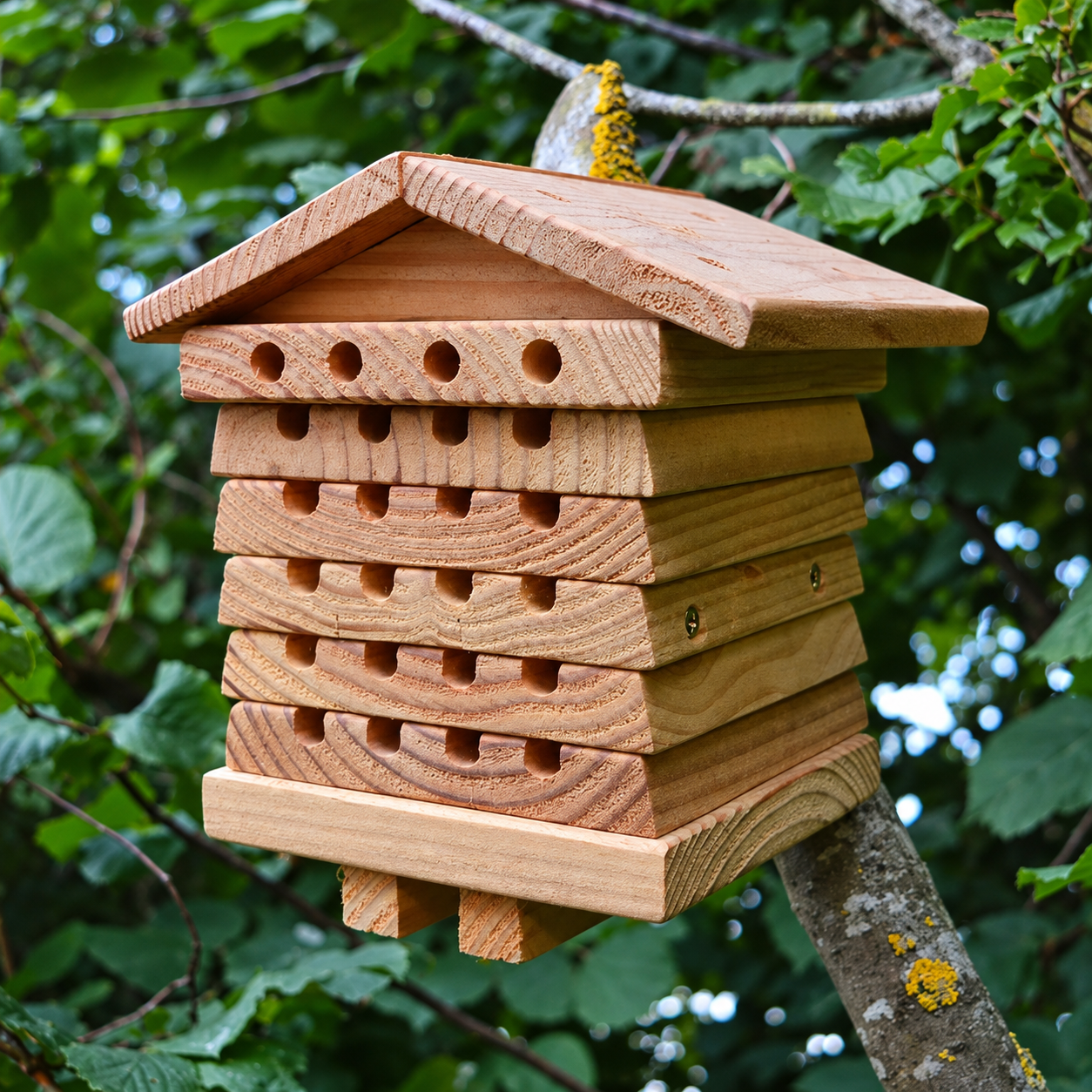
Do bee hotels work? Yes — and here is exactly when they don't
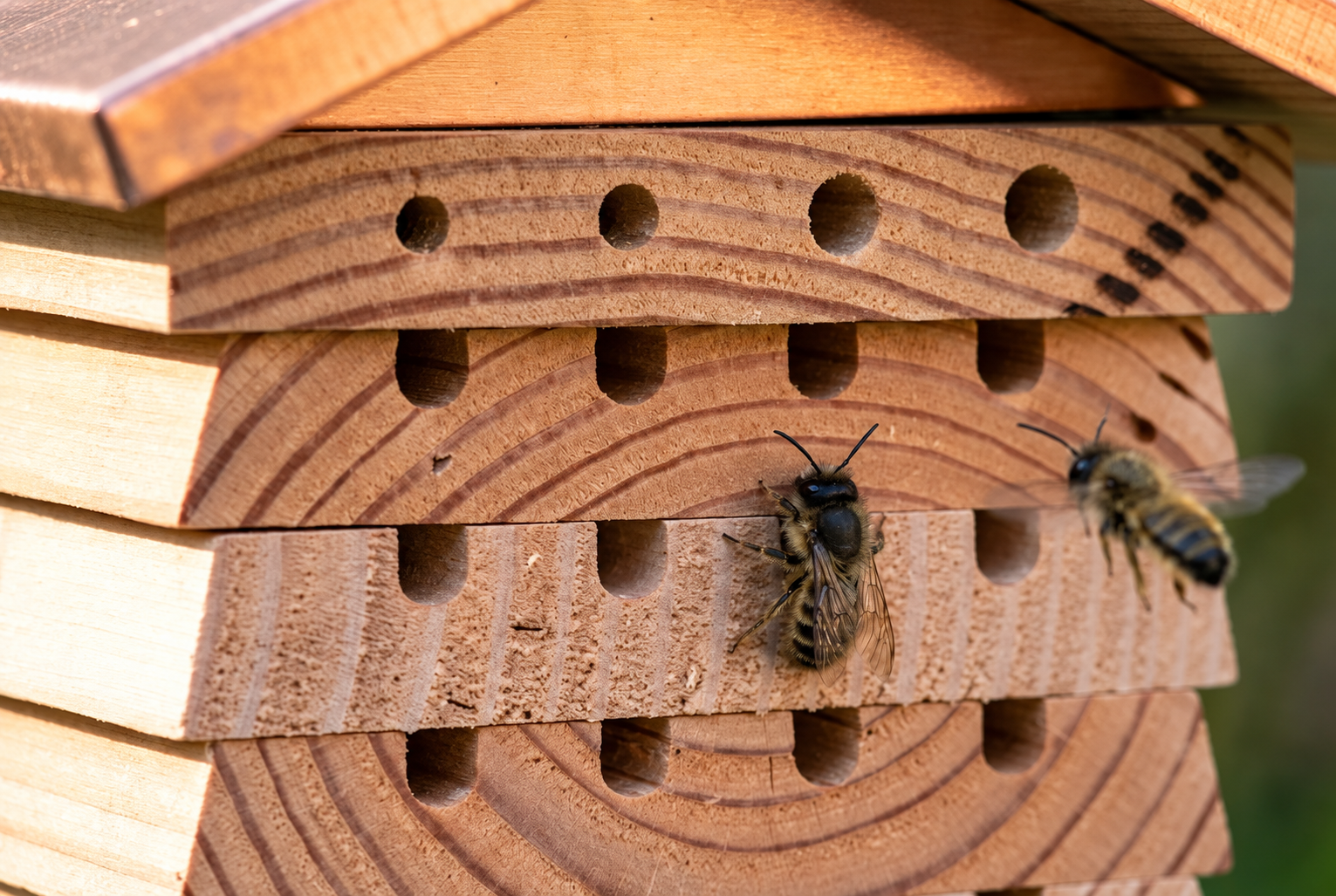
How a bee hotel works, mechanically
Cavity-nesting solitary bees do not dig their own tunnels; they look for existing ones. Dead standing wood, hollow stems and crumbling mortar supply them in the wild, and tidy gardens supply almost none. A hotel adds that missing resource in a place you choose. If suitable females are flying within a few hundred metres, and the tunnels suit them, they move in.
The six reasons a hotel stays empty
- Wrong tunnel sizes. One drill width excludes every species it does not happen to fit. A 2mm–10mm spread covers mason, leafcutter and the small bees.
- Damp. No roof overhang, or thin timber, and the pollen stores go mouldy. Females often reject visibly damp tunnels outright.
- Rough interiors. Splintered drilling and sawn bamboo rims damage wings.
- Wrong position. Shade, north-facing, too low, hidden behind foliage, or swinging on a string. Bees want morning sun and a rigid front.
- Paint and preservative. Solvent smell deters inspection.
- Impatience. Put out in June, the mason bee season has already passed; the real test is the following spring.
What success looks like, and when
Year one: some tunnels capped, often only the widths that match your local species. Year two and after: emergence from last year's cells plus new nesting, so occupancy climbs. A hotel that is 30–60% capped by its second autumn is doing well; every capped tunnel is several cells, so that is a substantial number of bees.
How to give yourself the best odds
- South or south-east facing, full morning sun, 1–1.5m up, screwed firmly in place.
- Flowers in bloom from March to September within easy flying distance.
- A patch of bare, damp soil for mason bees to collect mud.
- No insecticide use anywhere near the nesting front.
- Leave it up all winter; do not "tidy" capped tunnels away.
A hotel built around those failure modes
The Wild Bee Hotel exists because most shop-bought hotels trip over that list: it has hand-sanded tunnels from 2mm to 10mm, 19mm untreated Western red cedar, a hand-formed copper roof overhanging on all sides, a solid rear panel and a rigid steel mount. £39.99, free worldwide shipping, 30-day money-back guarantee.
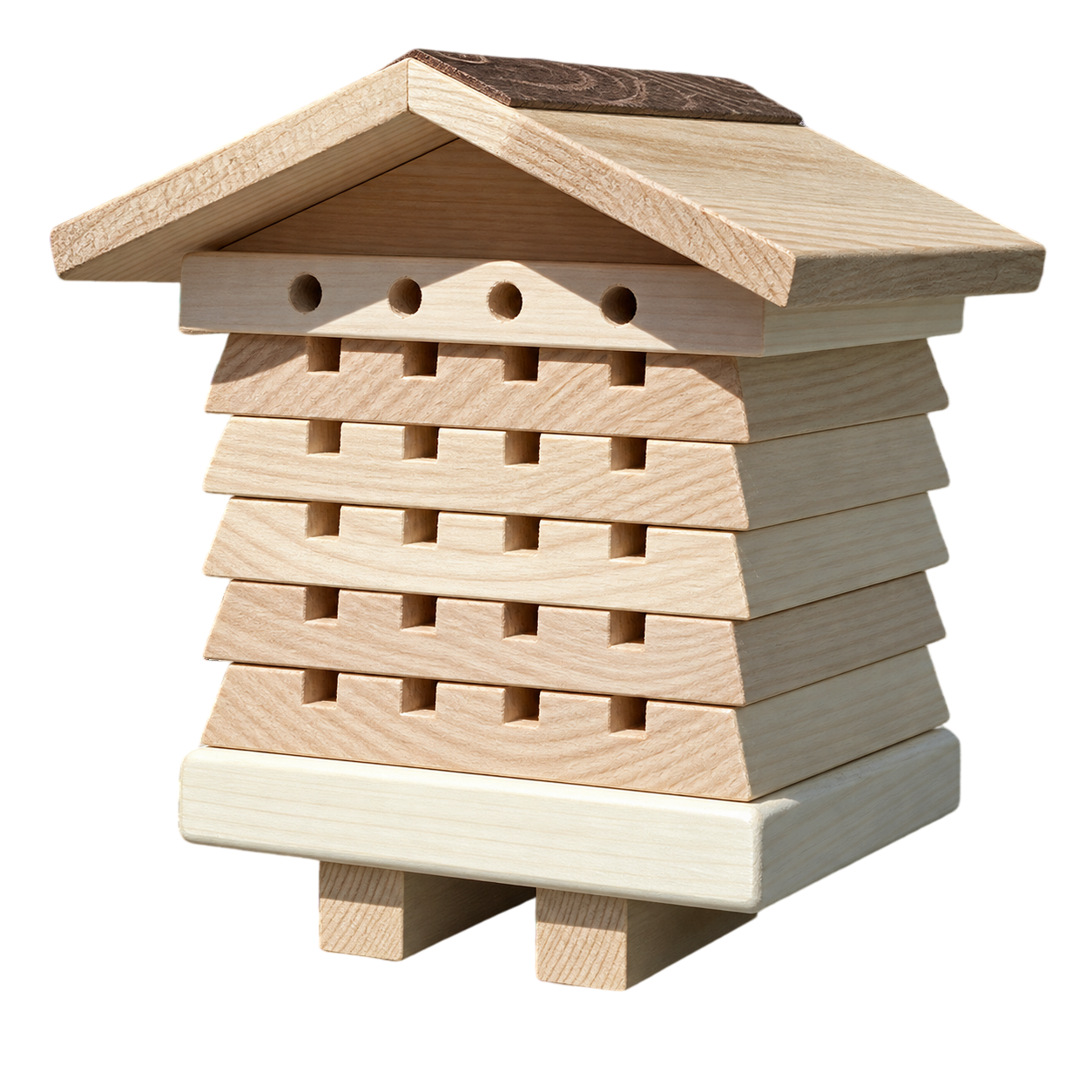
Built to the standard this guide describes
Untreated Western red cedar, a hand-formed copper roof, tunnels from 2mm to 10mm sanded mirror-smooth, and a solid rear panel. From £39.99 with free worldwide shipping and 30 days to change your mind.