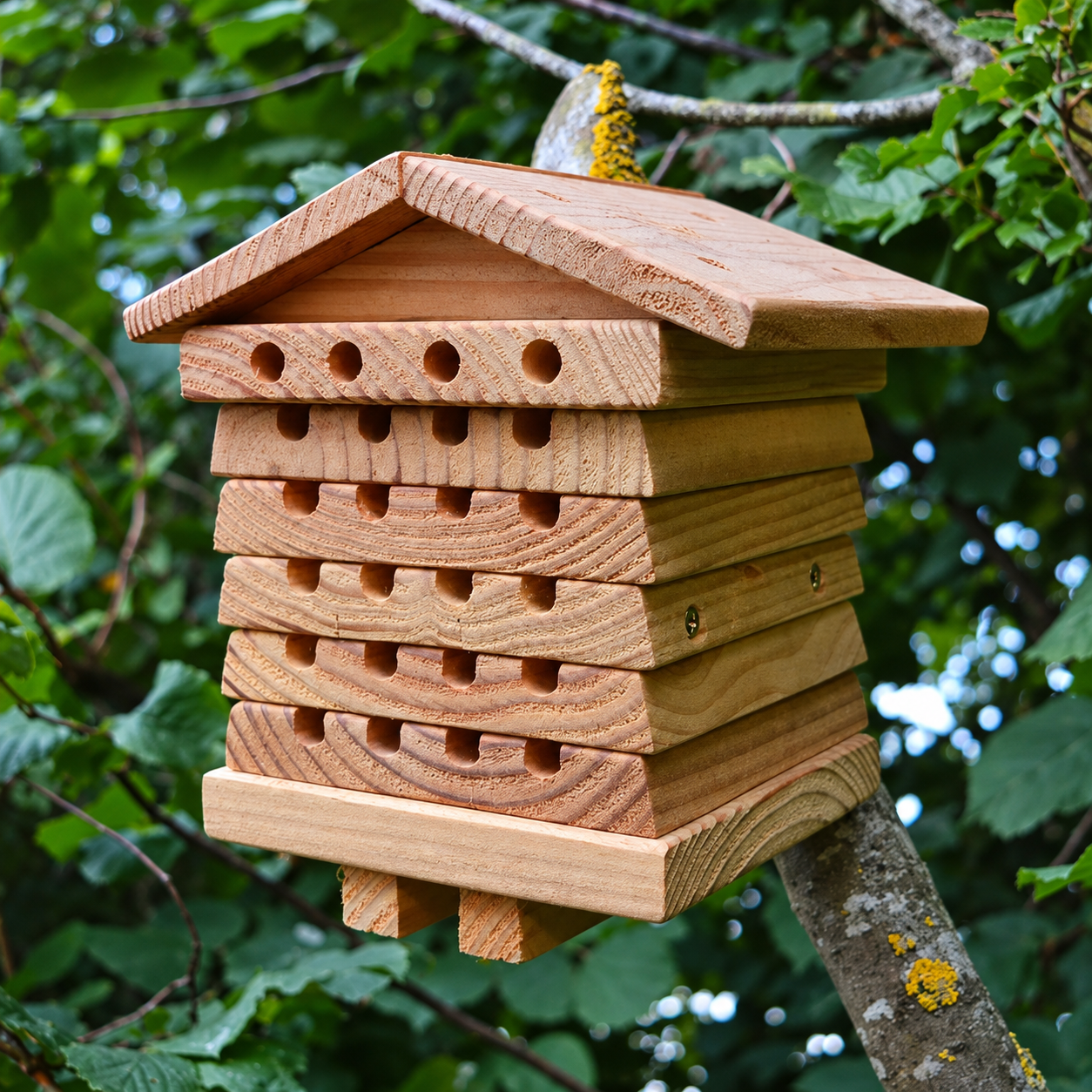
Insect houses for the garden: choosing one insects will actually use
Insect homes sell by the thousand every spring and a large share of them are still empty the following autumn. The difference between an occupied insect house and an ornament comes down to five things you can check before you buy.
Who an insect house is for
Most garden insect houses are aimed at cavity-nesting solitary bees and solitary wasps, with a secondary section for overwintering ladybirds and lacewings. That is a sensible target: those species are common in British and European gardens, they nest above ground, and they take to a well-made box quickly. Ground beetles, bumblebees and butterflies are not really served by a wall-mounted box, whatever the packaging claims.
Five checks before you buy
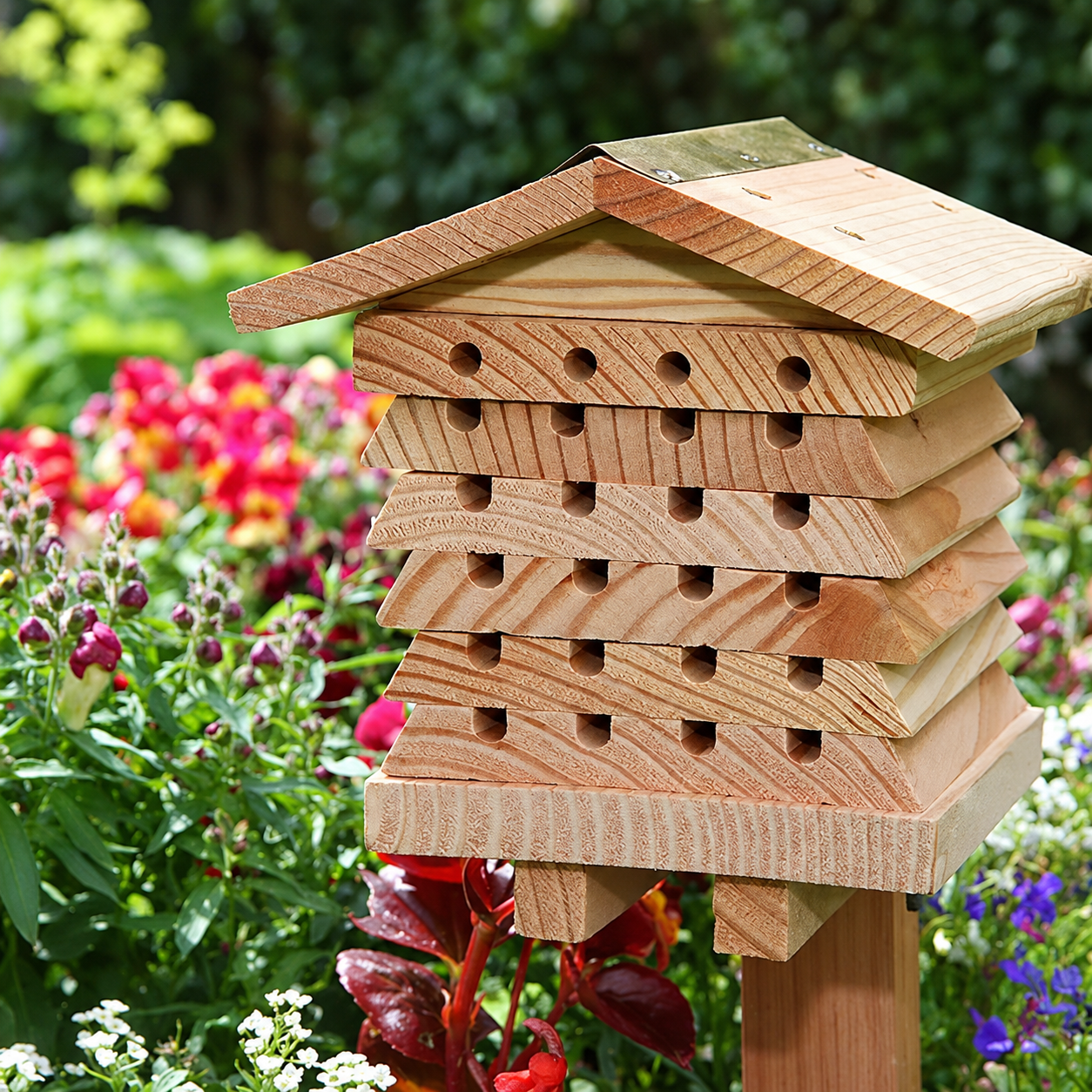
- A spread of tunnel diameters. Roughly 8mm suits red mason bees, 6–7mm leafcutters, 3–4mm the smaller species. One width means one tenant at best.
- Untreated timber. Paint and lacquer smell wrong to an inspecting female and trap moisture inside the wood.
- A projecting, weatherproof roof. Rain on the tunnel face is the biggest single cause of failed nests. Metal outlasts felt and thin plastic by years.
- Smooth tunnel interiors. Splinters shred wings over hundreds of entries.
- A solid back. Open-backed boxes let parasitic wasps reach the larvae.
Where an insect house should go
South or south-east facing, in full morning sun, 1–1.5m off the ground, screwed firmly to a wall, fence or post so it cannot swing, with the tunnel entrances tilted very slightly downwards so water runs out rather than in. Keep the front clear of foliage, and leave it in place over winter — the next generation is developing inside.
Why timber and metal beat plastic
Thick timber buffers temperature: a cold spring night followed by a hot afternoon is hard on developing brood, and 19mm cedar walls smooth that swing out. Cedar also resists rot without any treatment. A copper roof neither rusts nor splits, and it develops a patina instead of going brittle the way felt and plastic do after one hard winter.
The Wild Bee Hotel
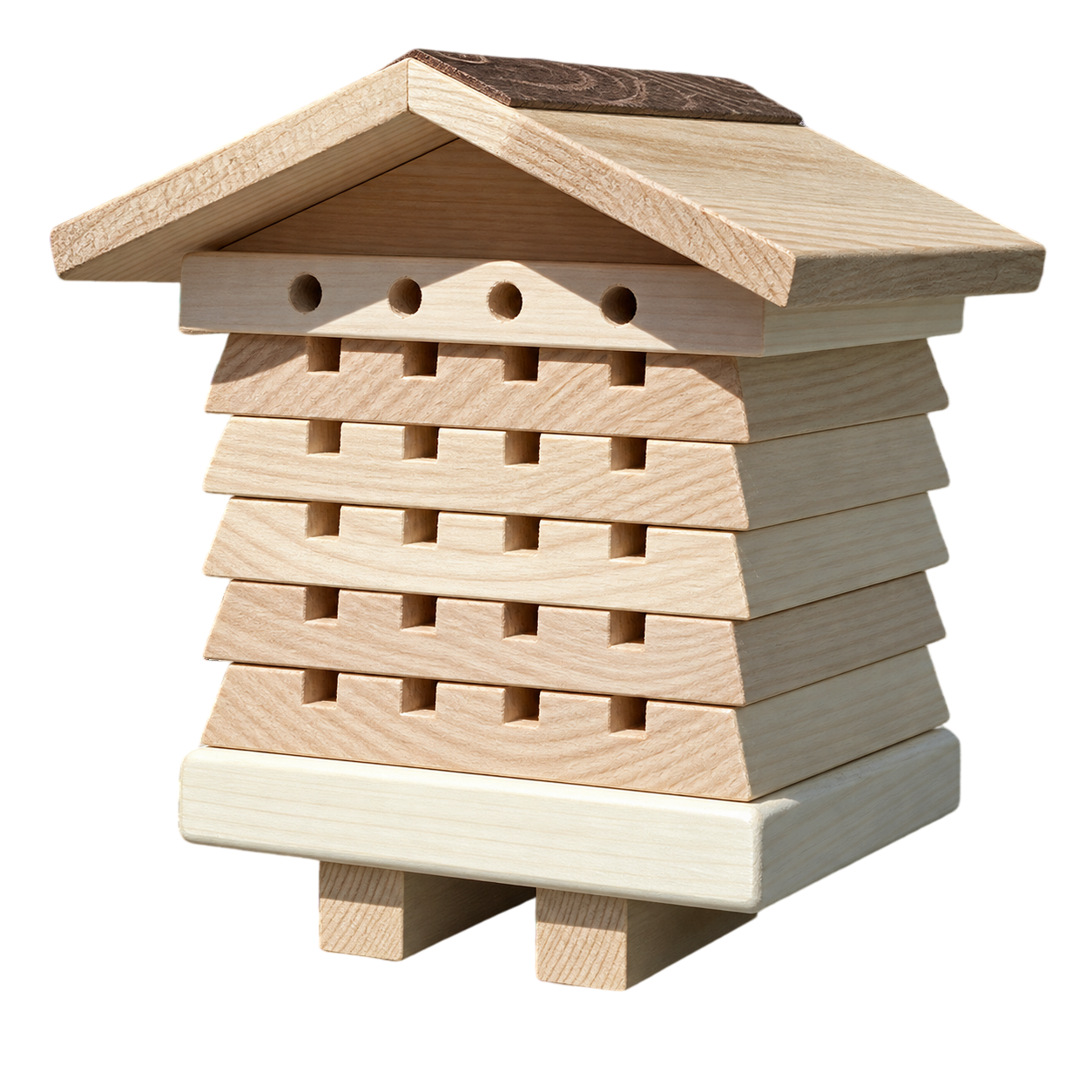
The Wild Bee Hotel is built to the checklist above: multiple tiers of hand-sanded tunnels from 2mm to 10mm, untreated Western red cedar, a hand-formed copper roof with an overhang on every side, a solid rear panel and a heavy-duty steel mount. £39.99, free worldwide shipping, and 30 days to send it back for a full refund if you are not convinced.
Built to the standard this guide describes
Untreated Western red cedar, a hand-formed copper roof, tunnels from 2mm to 10mm sanded mirror-smooth, and a solid rear panel. From £39.99 with free worldwide shipping and 30 days to change your mind.