Where to put a bee hotel
At a glance
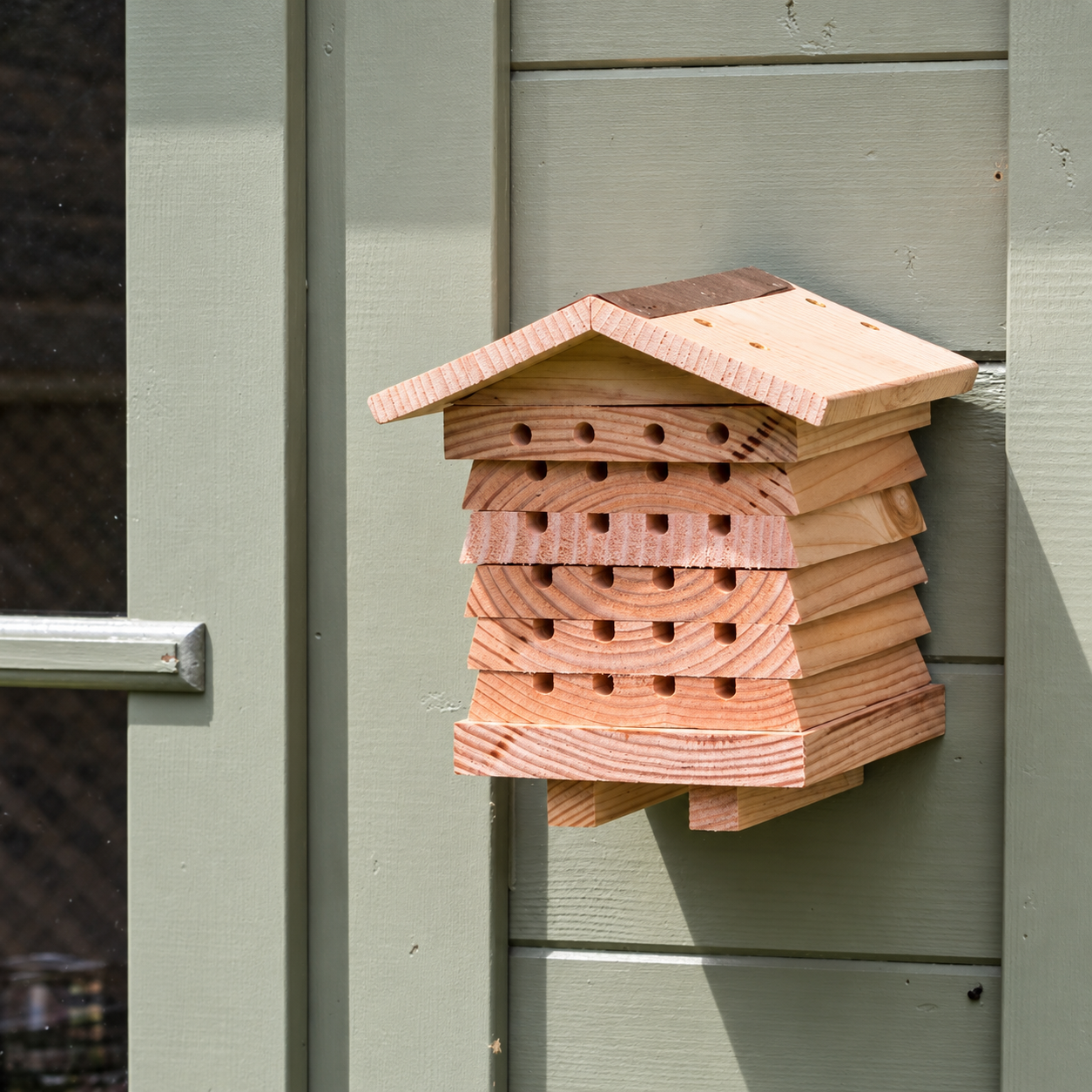
- Chest height, roughly 1–1.5m, on something that does not move.
- Openings facing south-east to south for early warmth.
- Under an eave, overhang or roof that sheds rain away from the face.
- Clear flight path — no foliage brushing the tunnels.
- Open single flowers and a patch of bare damp soil within a short flight.
The five things a good position gives
Warmth in the morning. Bees are cold-blooded; a face that warms at eight in the morning buys hours of extra provisioning time each day compared with one that warms at noon. Over a short spring season, that is the difference between filled tunnels and abandoned ones.
Dryness. Rain entering a tunnel ruins the pollen store the larva depends on. The roof and any overhang above the hotel are doing more work than the timber itself. Under a house eave, a shed overhang, or a fence with a capping rail are all good choices.
Stillness. Females navigate back to a fixed point in space. A hotel that swings, knocks or vibrates gets abandoned mid-nest, which is the quiet failure behind a lot of hung boxes.
A clear approach. Bees hover and reverse into tunnels. Leaves or climbers across the face make that impossible and hold moisture against the openings.
Supplies close by. Solitary bees forage over short distances, often a few hundred metres at most, and mason bees also need wet soil to build cell walls. A hotel in a fully paved garden with no bare earth can be perfectly sited and still fail for that one reason — the attracting guide covers what to plant.
Best and worst spots, by type of garden
| Situation | Best spot | Avoid |
|---|---|---|
| House with garden | South-east facing wall under the eave, chest height | North wall, shaded passage, behind a climber |
| Fenced town garden | Screwed to a fence post near the sunniest corner | Mid-panel on a flexing fence, or on a gate |
| Allotment | Shed or shelter wall, above crop height | Bean poles, cane wigwams, anything moved each season |
| Balcony or flat | Wall beside the sunniest window, pots nearby | Railings, anywhere wind funnels along the building |
| Paved or decked yard | Sunny wall, plus a planter of bare damp soil for mud | Ground level, or beside a busy doorway |
| Only trees available | Strapped tight to the trunk on the sunny side | Hanging from a branch or hook where it can swing |
Common siting mistakes
Beside a bird feeder is a bad idea, because it draws birds directly to the tunnel faces. Above a much-used door invites people to knock it. In the middle of a lawn on a cane it will rock and also sit in wet grass. Behind glass or in a greenhouse it will overheat and kill developing brood. Tucked inside a dense hedge it stays cold and damp all spring. Each of these looks sensible from a human point of view and fails on one of the five requirements above.
Moving one that is already up
If none of the tunnels are sealed, move it whenever you like and start the clock again. If some are sealed, wait until the flying season has finished — usually autumn — and then move it to a similar height and aspect. Keep it outdoors and the correct way up at all times so cells stay oriented as the mother built them. Practical fixing detail is in where to hang a bee hotel, and timing in when to put one out.
A box that suits real garden positions
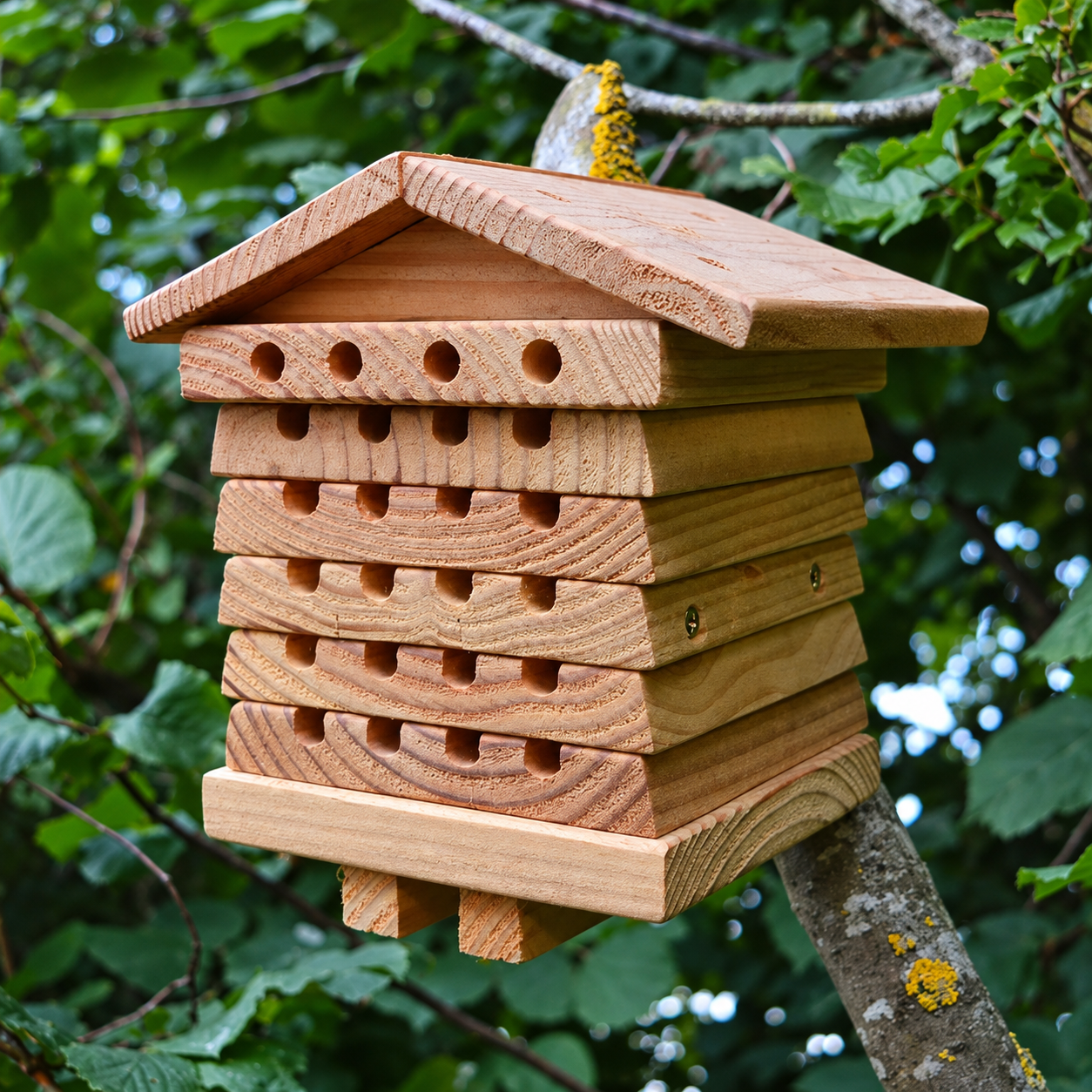
The Wild Bee Hotel is designed to be fixed rather than hung: 19mm untreated Western red cedar, a hand-formed copper roof that overhangs the tunnel faces so rain runs clear, hand-sanded tunnels from 2mm to 10mm, and a solid rear panel that sits flat against a wall or post. It is £39.99 for one, with free worldwide shipping and 30 days to change your mind.
Questions people ask next
How high should a bee hotel be?
Can I put a bee hotel on a fence?
Can a bee hotel go on a balcony?
Should a bee hotel be in sun or shade?
Can I hang a bee hotel from a tree?
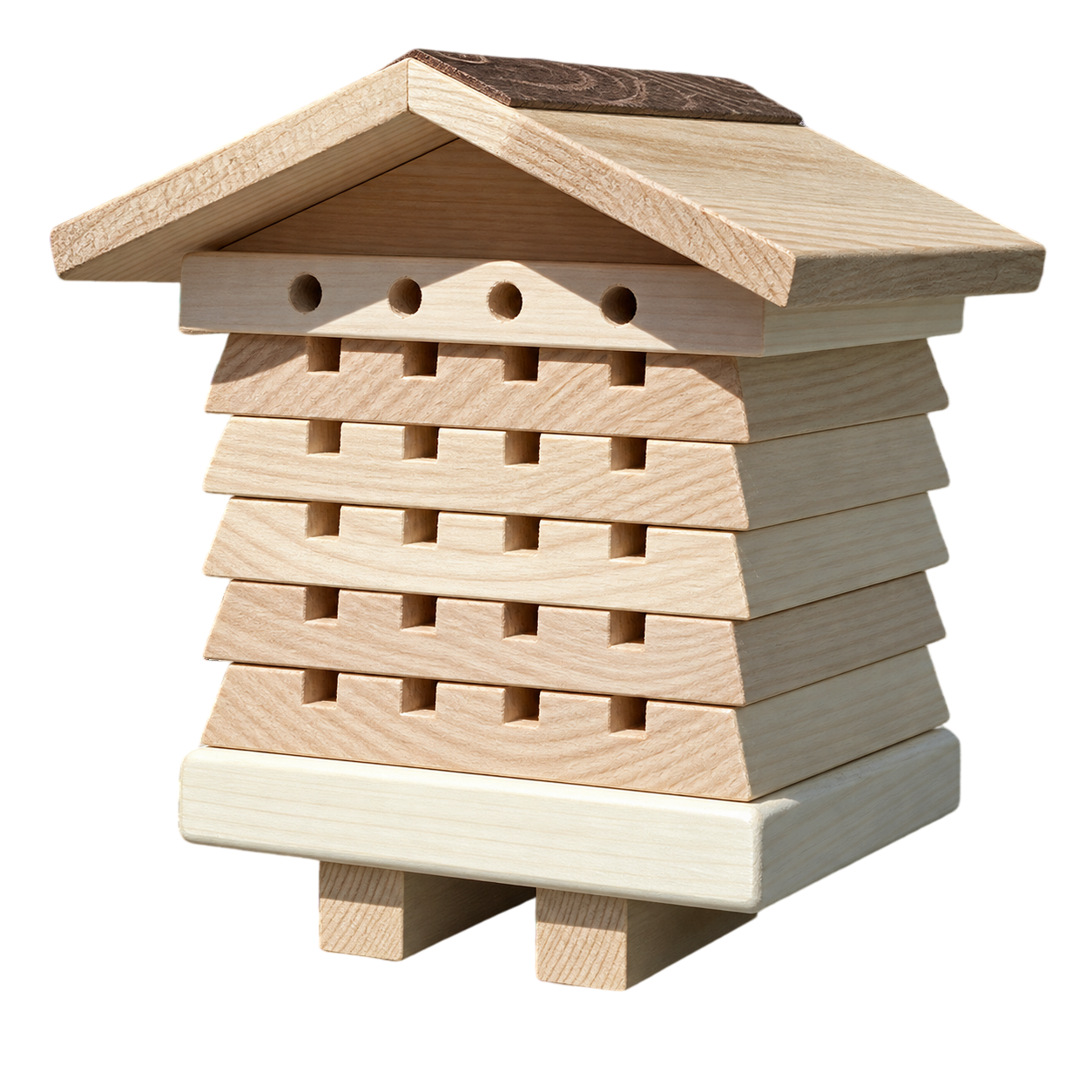
The right box makes siting easier
An overhanging roof and a sealed back widen the number of spots that work, because damp and draughts stop being the deciding factor.
About Clayton Dawson
Cabinetmaker and solitary-bee keeper, and the maker of the Wild Bee Hotel. Clayton has kept red mason and leafcutter bees in his own garden for years, and every guide on this site is written and checked against what he sees in the tunnels each season rather than copied from a catalogue. Read the full story.
First published 22 April 2025 · last reviewed 20 September 2026.
What we based this on: Buglife, RHS, Bumblebee Conservation Trust.