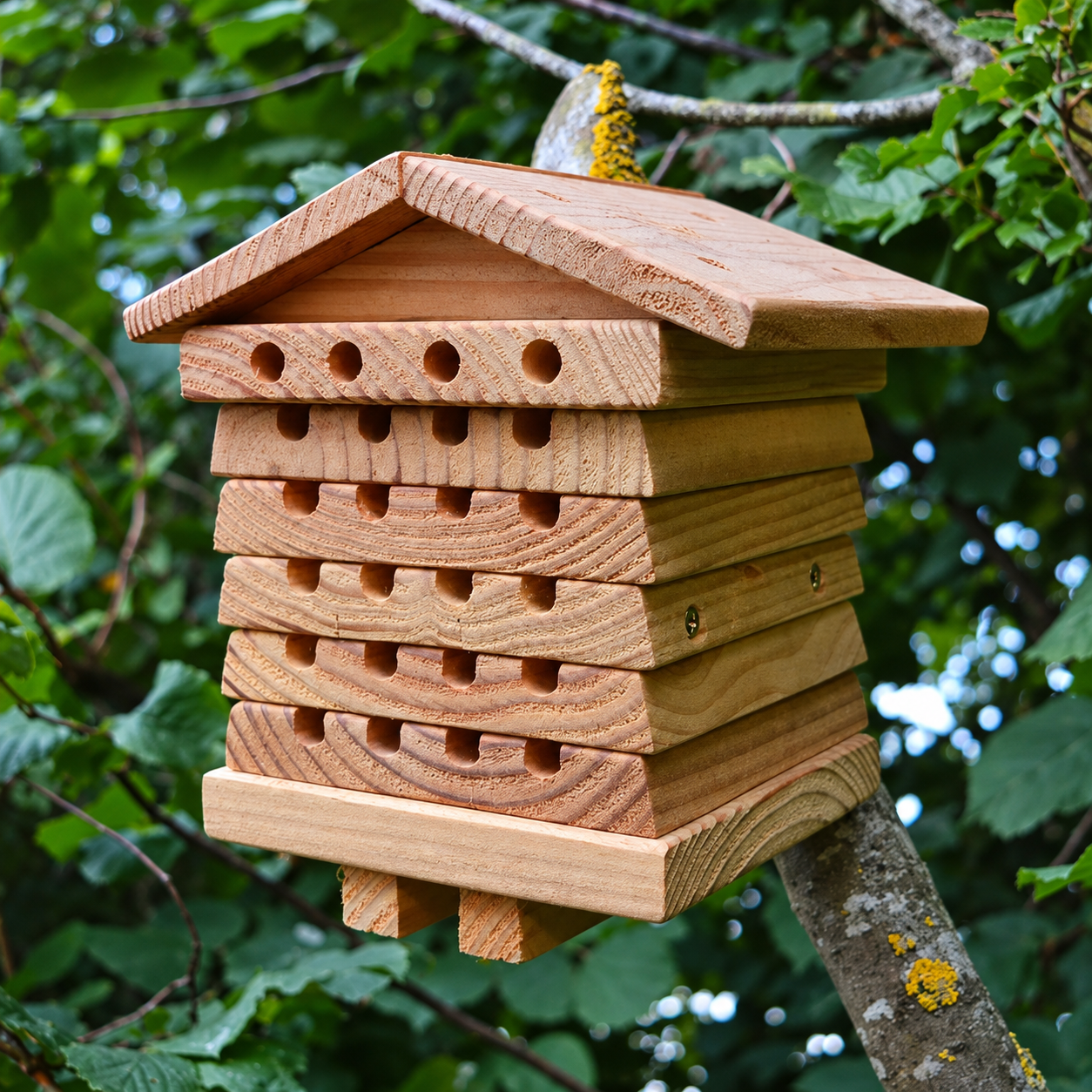
Bee hotel not being used? Work through these causes
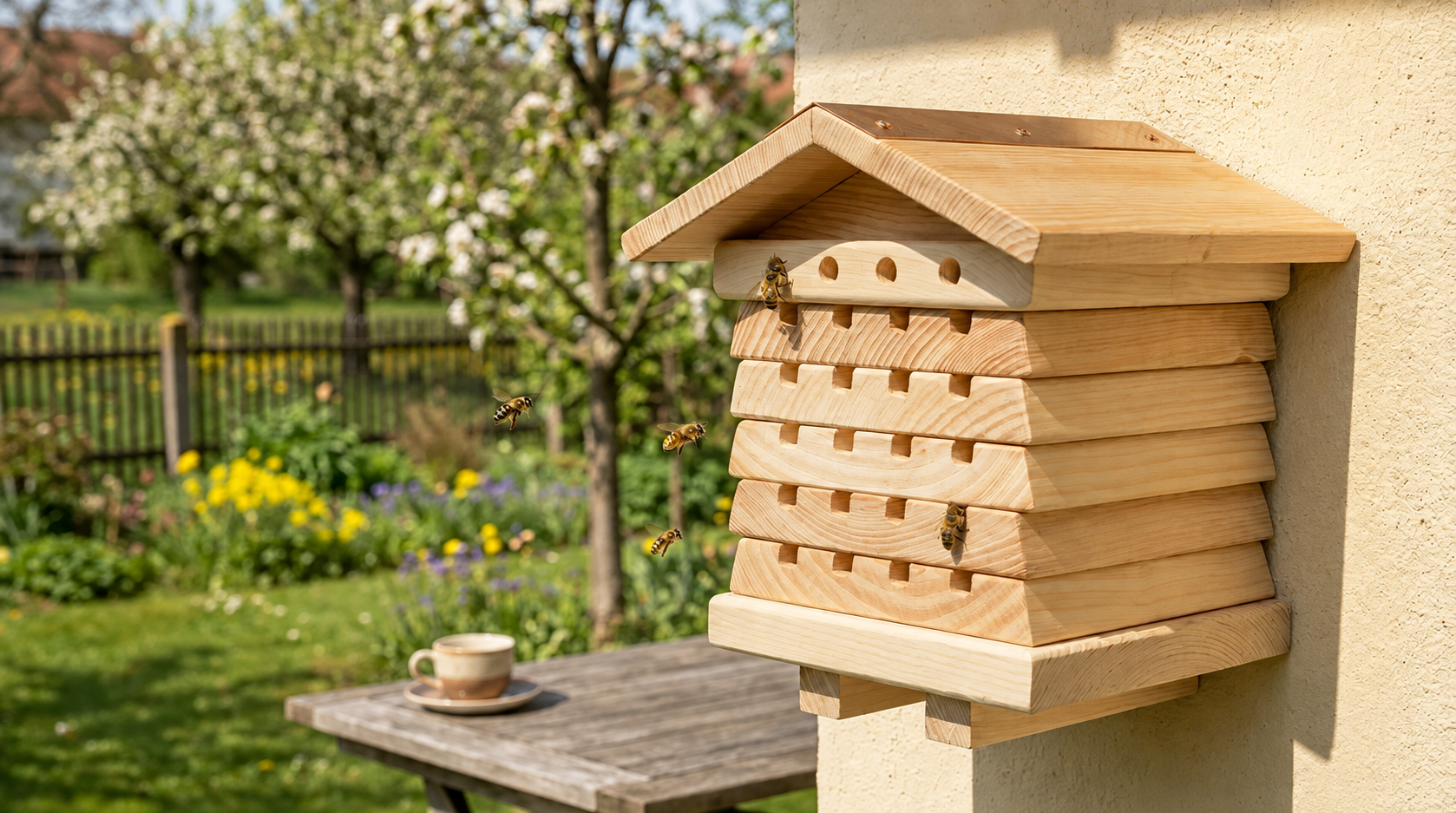
At a glance
- First-season emptiness is expected; two empty seasons means something is wrong.
- Morning sun on the tunnel faces is the single most common missing ingredient.
- Movement — swinging from a branch or hook — causes abandonment.
- Short or single-width tunnels limit which species can use it at all.
- No mud within flying range stops mason bees completing any nest.
Work through the causes in order
| Cause | How to tell | What to change |
|---|---|---|
| Too little morning sun | The face is shaded until midday or later | Re-site facing roughly south-east so the tunnels warm early |
| Damp reaching the tunnels | Dark stained rims, swollen timber, mould smell | Move under an eave or overhang; a roof must overhang the face |
| It moves | Hangs from a hook, cord or branch and swings | Screw it firmly to a wall, fence post or shed |
| Tunnels too shallow | Under about 10cm deep, or you can see daylight through | Replace with deeper dead-end tunnels and a solid back |
| Only one hole size | Every tunnel looks identical | Use a box spanning roughly 2mm to 10mm |
| Rough or split tunnel mouths | Splintered cane ends, furry drilled rims | Sand smooth, or replace split canes |
| Not enough forage | Few open flowers March–September nearby | Plant single-flowered species for a long season |
| No mud source | Garden entirely paved, decked or bark-mulched | Expose a patch of bare damp soil within short flight |
| Too high, too low, or blocked | Foliage across the face, or above head height | Chest height with clear flight space in front |
The sun question, in more detail
Solitary bees cannot fly until their flight muscles are warm, so a nest that warms at eight in the morning gives a female hours more working time each day than one that warms at noon. Over a short spring flight season, that difference decides whether tunnels are filled or abandoned half-provisioned. Facing roughly south-east is the usual recommendation because it catches early sun without the full afternoon heat that can cook shallow cells. The direction guide covers the compass detail and what to do on a plot where south-east is not available.
Why the box itself sometimes cannot be rescued
Some hotels will never be used wherever you hang them. Thin plywood swells and splits, so damp reaches the cells no matter the aspect. A flush roof with no overhang runs water straight down over the tunnel openings. Open-backed boxes let draughts and parasitic wasps through. Bamboo cut to five centimetres and left loose gives a female almost no room to lay females at all. If your hotel has two or more of those traits, re-siting is unlikely to change the outcome, and the problems guide explains each failure mode.
What success looks like
You are watching for sealed tunnel mouths, not for a crowd. A few mud caps in the first successful spring is a real result, and numbers usually climb year on year because many offspring nest close to where they hatched. Leaf discs appearing in summer means leafcutters have taken over tunnels the mason bees vacated. Both are described in what is happening inside sealed tunnels.
Do not do these while waiting
Do not open sealed tunnels to check. Do not bring the hotel indoors over winter — warmth triggers emergence months before there are any flowers. Do not paint, oil or treat the timber, because solvent smells deter females and treatment blocks the tunnel walls. Do not add sugar water; it attracts ants and wasps and feeds nothing that nests. Patience and a better position are the two effective interventions.
If you would rather start with a box that removes the variables
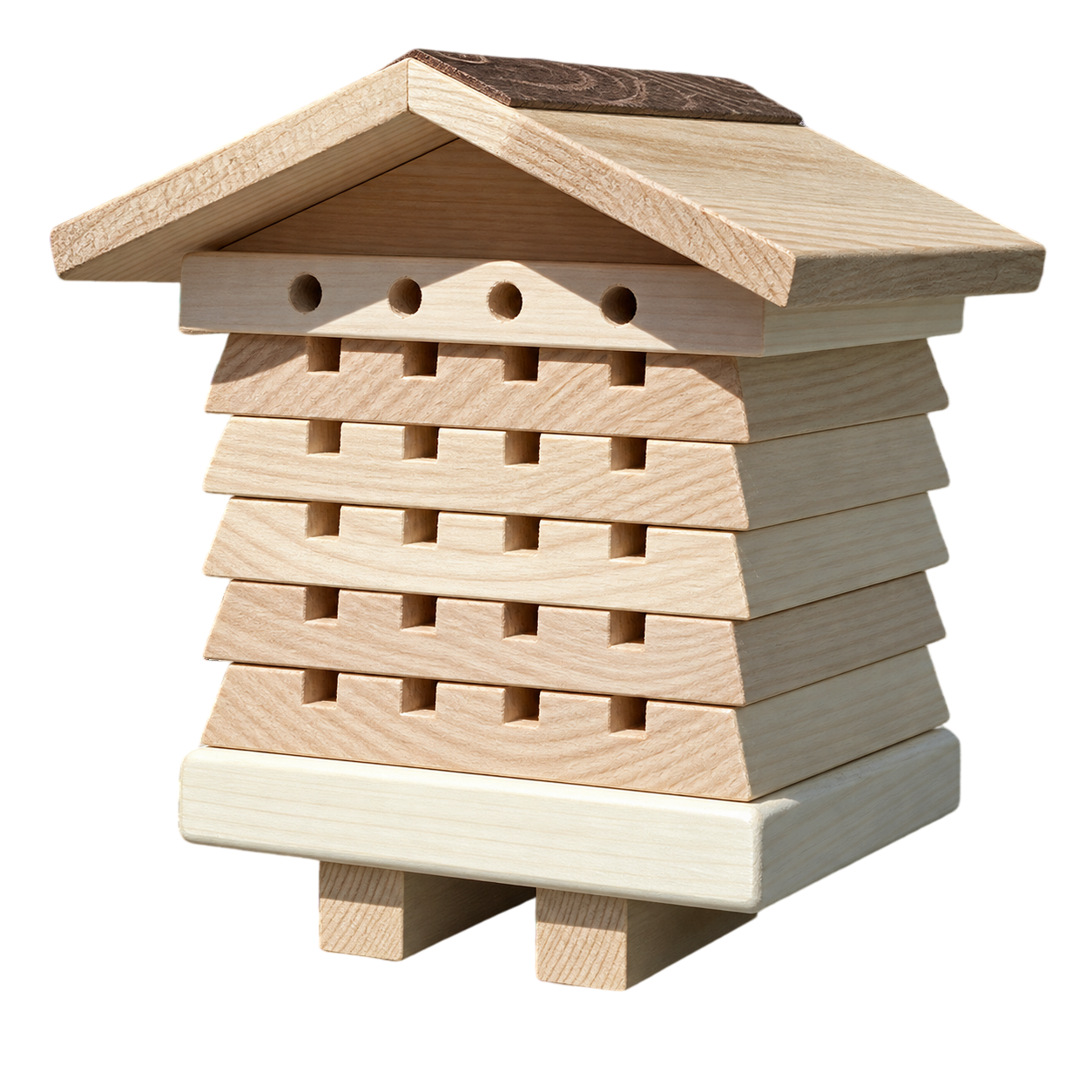
The Wild Bee Hotel is built specifically to eliminate the physical causes on this page: 19mm untreated Western red cedar that holds its shape, a hand-formed copper roof that overhangs the tunnel faces, hand-sanded tunnels from 2mm to 10mm at a depth that allows female cells, a solid rear panel, and a fixing point for a wall rather than a hook. It is £39.99 for one, with free worldwide shipping and 30 days to change your mind.
Questions people ask next
How long should I wait before worrying?
Does an empty hotel mean there are no bees nearby?
Should I move it if it is not being used?
Will bait or bee attractant sprays help?
Could wasps or predators be keeping bees away?
If the box is the weak link
Thin plywood, short loose bamboo and a flush roof cannot be fixed by moving them. A properly built hotel removes those causes entirely.
About Clayton Dawson
Cabinetmaker and solitary-bee keeper, and the maker of the Wild Bee Hotel. Clayton has kept red mason and leafcutter bees in his own garden for years, and every guide on this site is written and checked against what he sees in the tunnels each season rather than copied from a catalogue. Read the full story.
First published 12 August 2025 · last reviewed 20 September 2026.
What we based this on: Buglife, RHS, Wildlife Trusts.