About Wild Bee Hotel
We make one product and we make it properly: a solitary bee hotel built to the requirements of the bees rather than to a retail price point.
Why we started
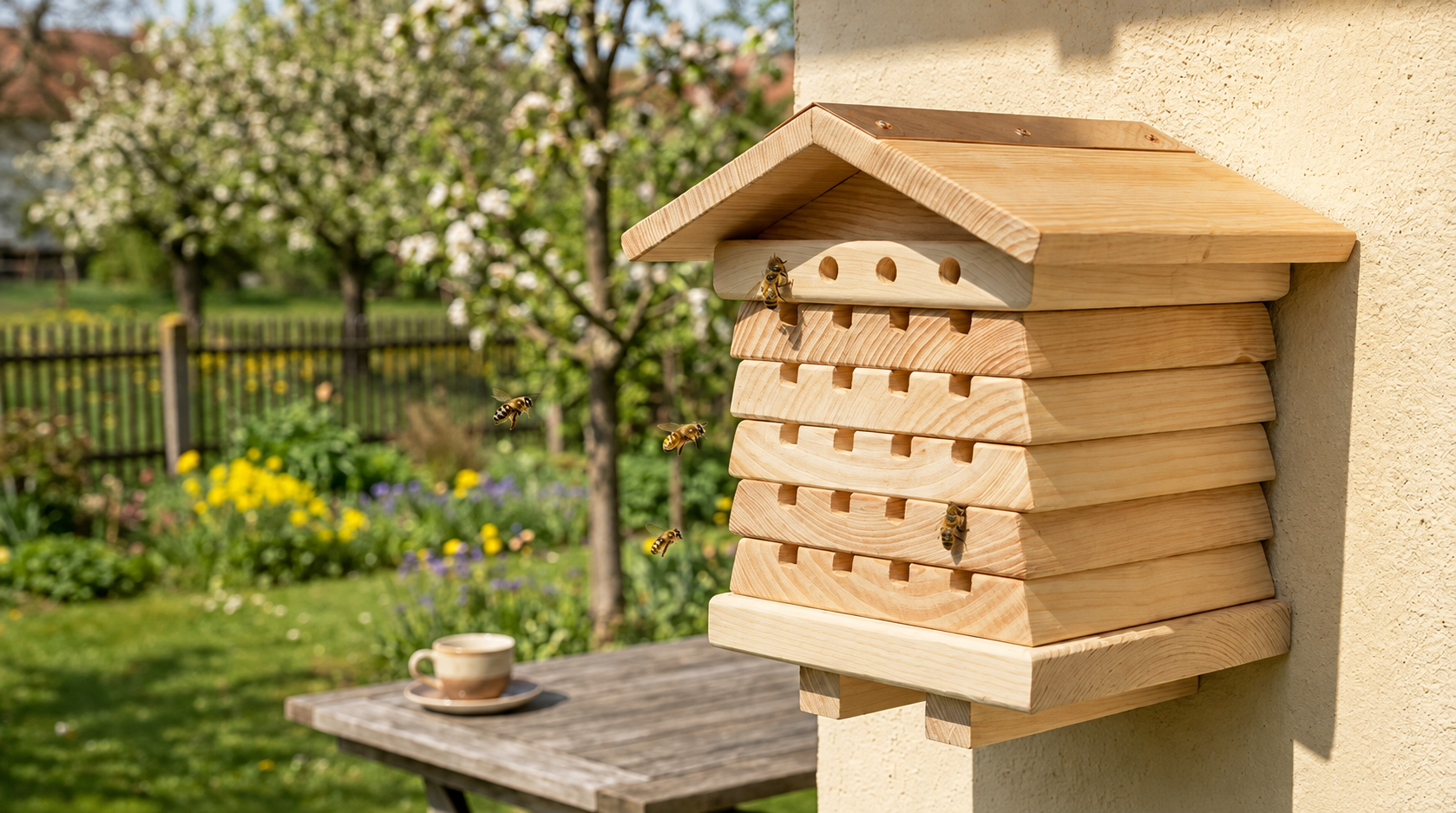
Bee hotels are sold by the million and most of them never get used. They are drilled at one diameter, made of thin painted softwood or cracked bamboo, roofed in felt that fails in a winter, and left open at the back so parasitic wasps can reach the brood. Gardeners buy them in good faith, hang them up, and nothing ever moves in — or worse, bees nest and the brood dies of damp before spring.
The frustrating part is that none of this is a mystery. Solitary bees have been studied for decades. We know red mason bees prefer tunnels around 8mm across and 10–15cm deep. We know leafcutters take narrower ones. We know females inspect a nest site and reject it if the surface smells of paint, if the tunnel walls are rough enough to tear a wing, or if the structure moves in the wind. The information was all there — it simply wasn't being built with.
We set out to build the opposite: a hotel where every decision follows from how solitary bees actually behave.
The maker
Wild Bee Hotel is made by Clayton Dawson — cabinetmaker and solitary-bee keeper, and the maker of the wild bee hotel. The guides on this site are written and checked by the same hands that build the hotels, which is why the advice here comes from watching bees use the product rather than from reading about them.
Cabinetmaking came first: years of joinery work where tolerances are measured in fractions of a millimetre and a roof that lets water in is a failed roof. The bees came later, through a first garden and a first cheap bee hotel that nothing ever nested in. Taking it apart showed why — splintered bamboo, tunnels drilled partway, a felt roof already curling. The bees hadn't failed the product; the product had failed the bees. Building one properly, and then watching eleven tunnels get sealed in its first April, is where this business began.
The decisions behind the design
Each feature exists because a bee needs it, and each one can be traced to a failure in the hotels sold in garden centres:
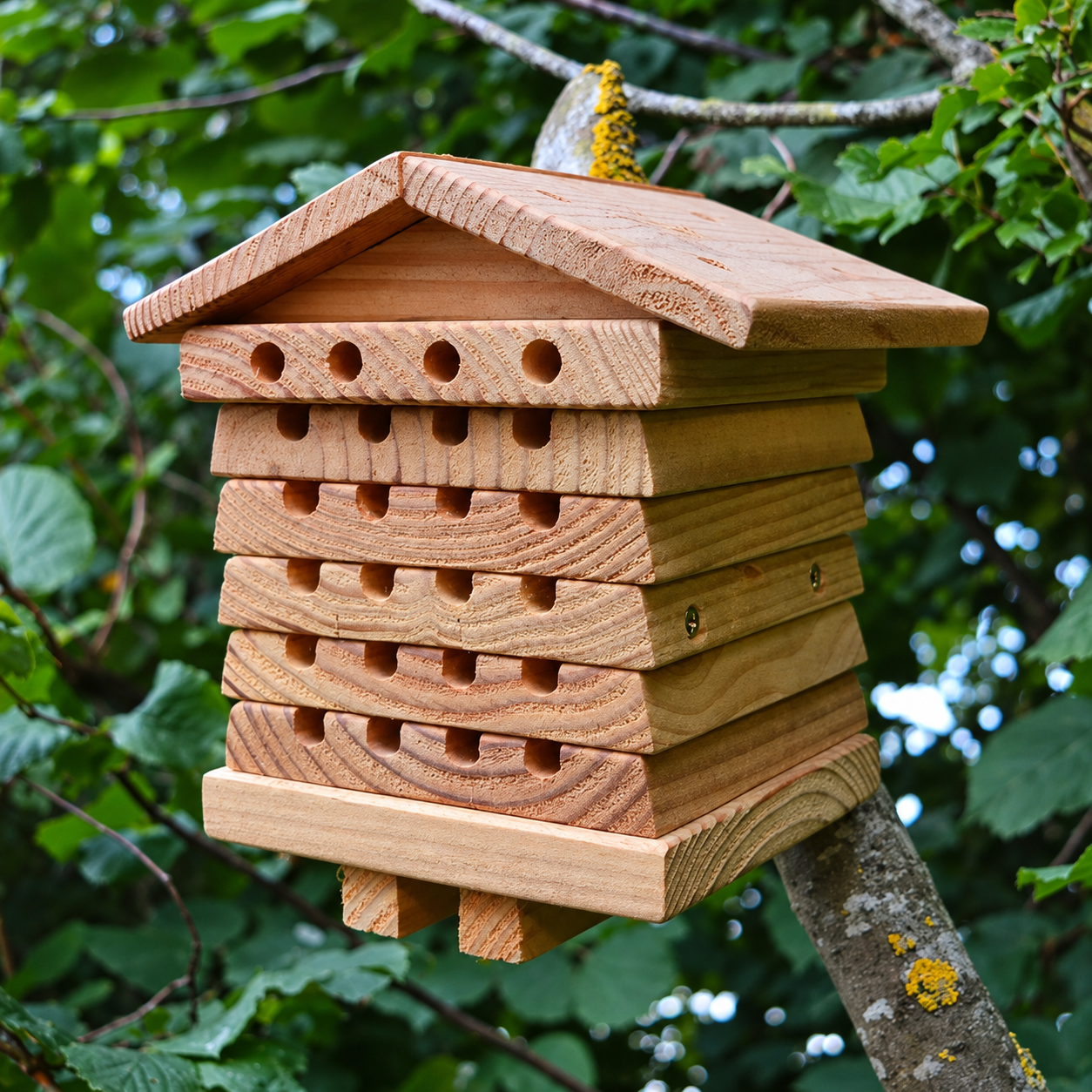
- Tunnels from 2mm to 10mm. Different species need different widths. A range fits many; one size fits almost none. Red mason bees take the 8mm tunnels, leafcutters the 6–7mm ones, and the smallest masked bees use tunnels a pencil lead wouldn't fit.
- Untreated Western red cedar, 19mm walls. No paint or lacquer to deter inspecting females, naturally rot-resistant, and thick enough to buffer temperature swings. Painted softwood looks tidy on a shelf; a bee smells it and moves on.
- A hand-formed copper roof. Overhangs on all sides so rain never reaches the nesting face. Damp brood is dead brood — felt and thin shingles fail in a winter, copper will not rust or split, and looks better as it ages.
- Hand-sanded interiors. A female enters and leaves her tunnel hundreds of times a season. Rough walls cost her wings, and machine-drilled tunnels left rough are the single most common reason cheap hotels sit empty.
- A solid rear panel. Parasitic wasps attack brood from behind. A solid back removes that route — open-backed designs give them a way in.
- A heavy-duty steel mount. Rigid on a wall, fence or post — bees reject nest sites that move, which is why a hotel dangling from a string stays empty no matter how pretty it looks.
How each hotel is made
- Timber selection. Kiln-dried Western red cedar, checked for straight grain and freedom from knots where the tunnels will run.
- Drilling. Tunnels are bored to their full depth in graduated diameters from 2mm to 10mm, never partway, never with a rough exit.
- Sanding. Every tunnel interior is sanded by hand until a fingertip finds no roughness — the step that takes the longest and matters the most.
- The roof. Copper sheet is cut, folded and formed by hand so it overhangs on all four sides and sheds water clear of the nesting face.
- Final inspection. Each hotel is checked tunnel by tunnel before it's packed. If a tunnel wouldn't suit a bee, it doesn't ship.
How we sell
Direct only, at £39.99 for a single hotel with free worldwide shipping, and multi-packs for gardens, gifts and allotments. No middle tier of retail margin, and no pressure: you get 30 days to hang it, look at it closely, and send it back for a full refund if it is not what we have described.
What we promise
Free worldwide shipping
Every hotel, every country, no minimum order.
Dispatched in 2 working days
Packed by hand and on its way quickly.
30-day money-back guarantee
Hang it, inspect it, return it if it isn't what we described.
A person answers
Every message is read and replied to by a human.
Where to find us
Questions about positioning, species or an order are welcome. Email support@wildbeehotel.com or write to us on the contact page and a person will answer — usually within one working day.
Built to the standard this guide describes
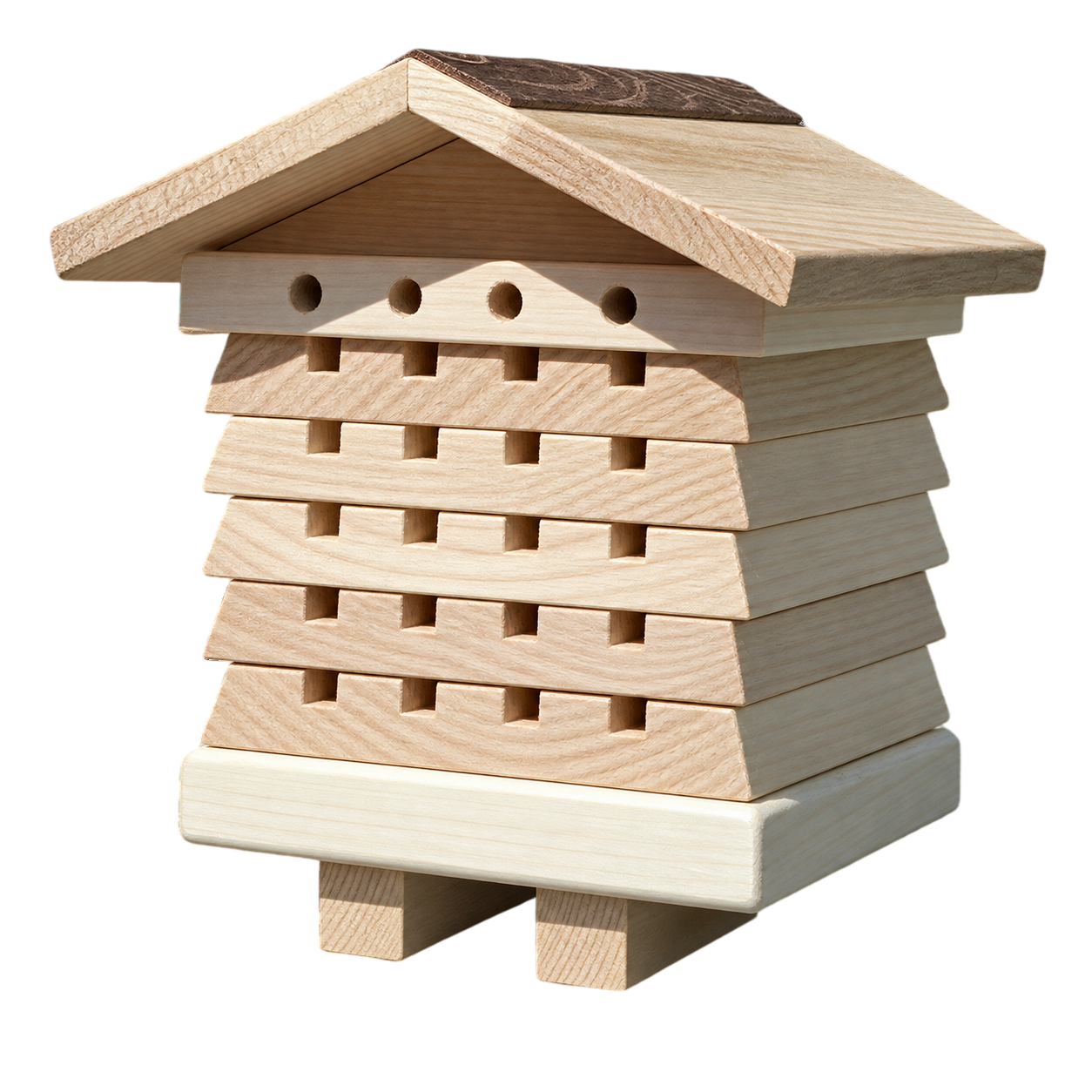
Untreated Western red cedar, a hand-formed copper roof, tunnels from 2mm to 10mm sanded mirror-smooth, and a solid rear panel. From £39.99 with free worldwide shipping and 30 days to change your mind.
About Clayton Dawson
Cabinetmaker and solitary-bee keeper, and the maker of the Wild Bee Hotel. Clayton has kept red mason and leafcutter bees in his own garden for years, and every guide on this site is written and checked against what he sees in the tunnels each season rather than copied from a catalogue. Read the full story.
First published 4 November 2025 · last reviewed 19 September 2026.