Bee hotel care guide: the little you should do, month by month
A well-built bee hotel is close to maintenance-free. Most of the damage gardeners do is well-intentioned: cleaning at the wrong time, opening tunnels to look, or bringing the hotel indoors for winter.
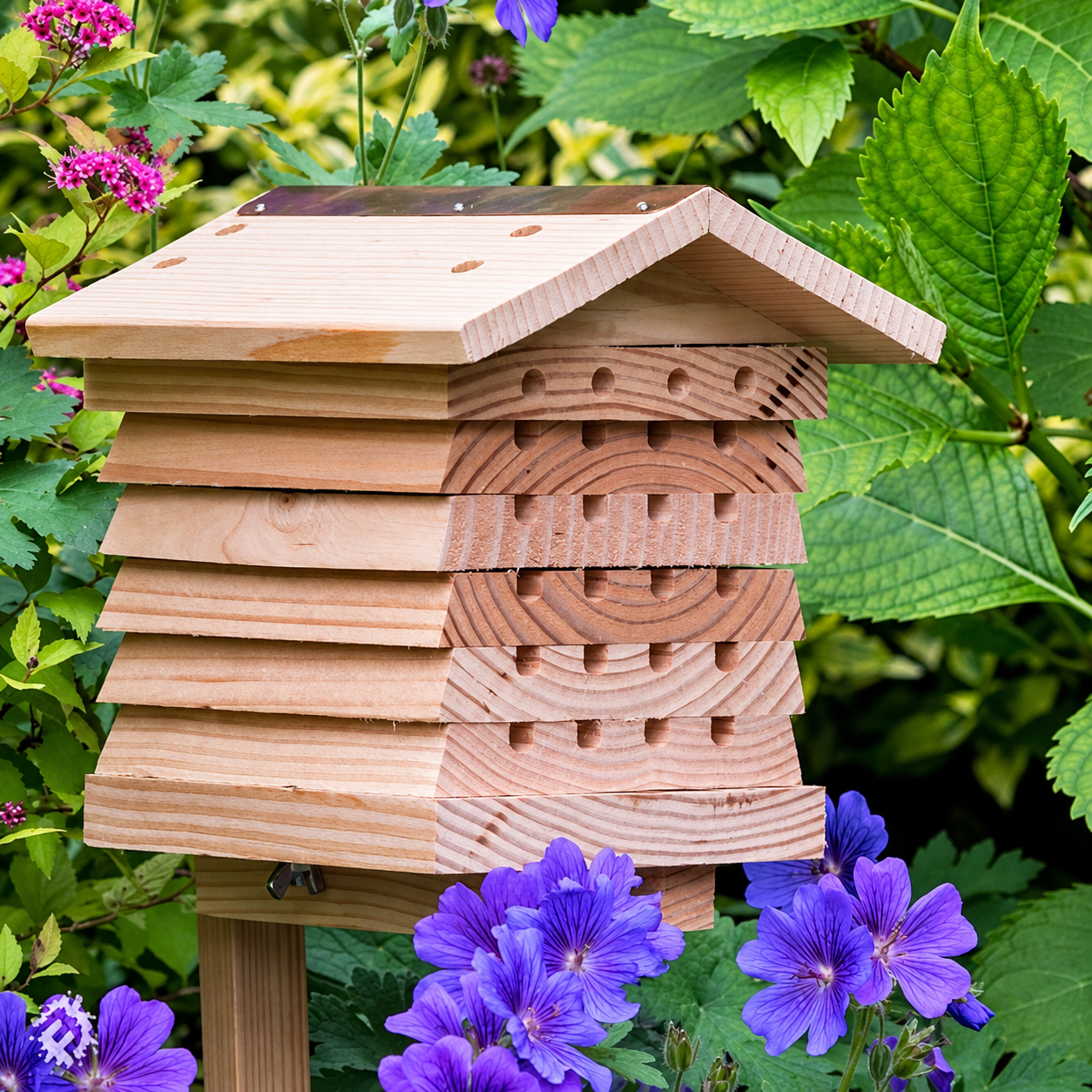
February to early March
Check the fixing is still tight and the roof is clear of debris. Clear leaves or cobwebs from the tunnel entrances with a dry brush — gently, and only from tunnels that are open. If you are putting a new hotel up, do it now, before emergence.
March to April
Mason bees emerge. Males patrol first; females follow and begin nesting. Make sure there is damp bare soil within a short flight for mud. Watch, do not intervene. This is also the time to stop any spraying in the garden entirely — including lawn treatments and rose sprays, which drift.
May to August
Peak season. Tunnels fill and cap: smooth mud plugs from mason bees, neat green leaf discs from leafcutters. Keep the entrances clear of growing foliage. Do not move the hotel, do not open sealed tunnels, and do not clean anything.
September to January
Nothing to see and nothing to do. Every sealed cell holds a larva or pupa that needs the natural cold to complete development and emerge on time. Leaving it outdoors is correct. Bringing it into a heated shed or garage causes early emergence into a garden with no flowers, which is usually fatal.
Mould, damp and parasites
Mould is a moisture problem, not a hygiene problem. If you see mould at tunnel entrances, the cause is almost always rain reaching the nesting face or a north-facing position — move the hotel next February, not mid-season. A roof with a proper overhang and a well-chosen position prevent nearly all of it.
Some parasitism is natural and healthy: tiny cuckoo bees and parasitic wasps are part of the ecosystem. A solid rear panel prevents the worst of it by blocking attacks from behind. Do not attempt to sterilise tunnels or harvest cocoons unless you know exactly what you are doing; enthusiastic intervention kills more brood than it saves.
Long-term care of cedar and copper
Leave both alone. Untreated Western red cedar weathers to a silver-grey and stays rot-resistant; oiling or painting it would seal the timber and put bees off. Copper develops a brown-then-green patina that is purely cosmetic and slightly protective. No annual treatment, no varnish, no replacement parts.
When to replace tunnels
With a hotel of this build you are looking at many seasons of use. If after several years tunnels look degraded or occupancy drops noticeably, add a second hotel elsewhere in the garden rather than disturbing the first — spreading nests out is better practice anyway.