Solitary bee hotels: matching tunnel size to species
Solitary bees do not share a nest, defend a colony or make honey. Each female raises her own brood in a tunnel — and she will only use a tunnel that fits her body closely.
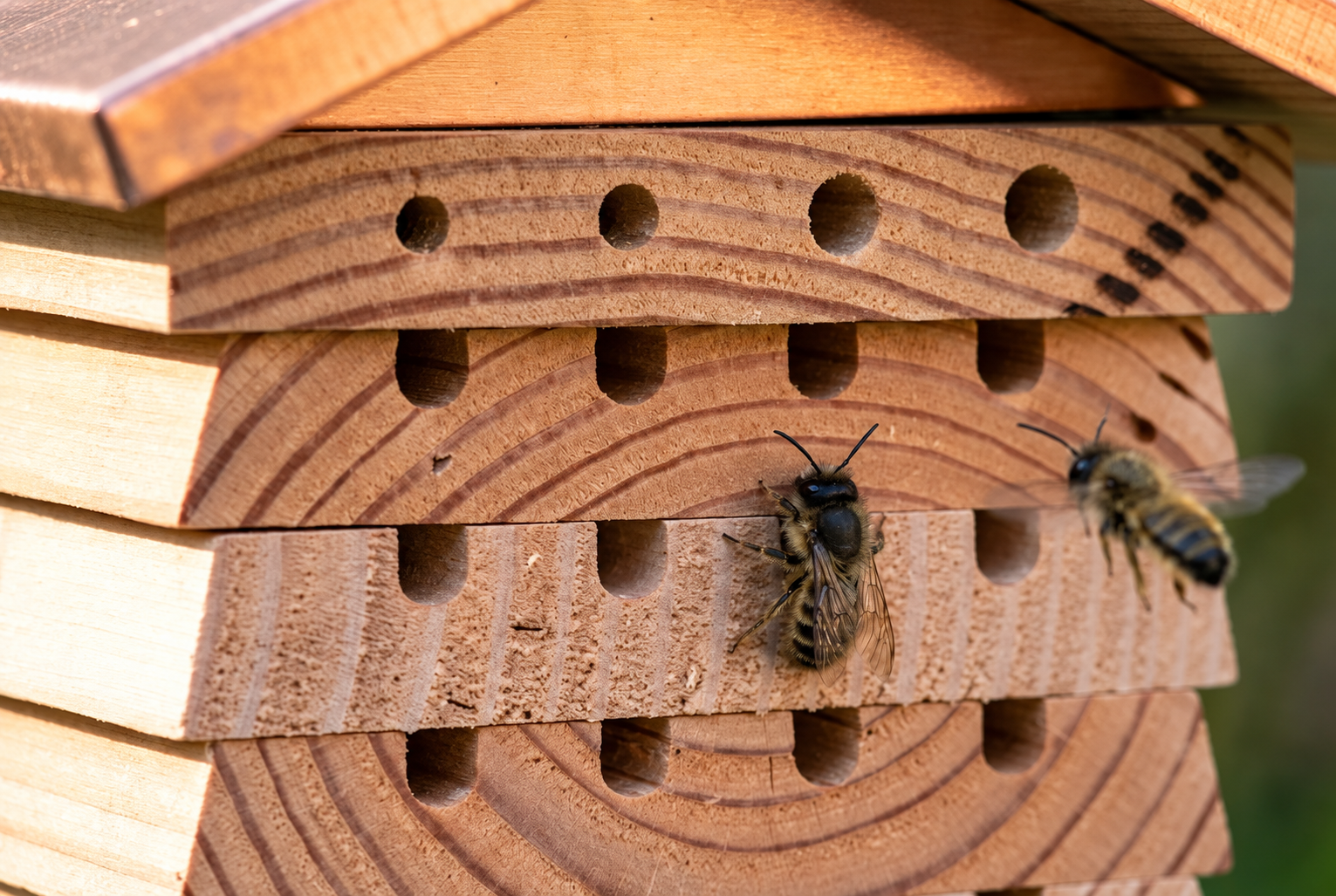
Why diameter decides occupancy
A female sizes a tunnel by touch. Too narrow and she cannot turn or pack pollen; too wide and she cannot seal the cell walls tightly, which lets in damp and parasites. That is why a single-diameter hotel sits empty while a hotel with a range fills up: somewhere in the range there is a tunnel that fits.
Rough diameter guide for UK garden species
- 2–4mm: masked and yellow-faced bees (Hylaeus), small carpenter bees, and some of the tiny wasps that pollinate incidentally.
- 5–7mm: leafcutter bees (Megachile) — the ones that cut neat semicircles out of rose leaves and cap their tunnels with green discs.
- 7–9mm: red mason bees (Osmia bicornis), by far the most common bee hotel resident in Britain, plus blue mason bees.
- 9–10mm: larger Osmia species and occasional bigger visitors in warmer southern gardens.
The Wild Bee Hotel carries the whole 2mm–10mm range across separate tiers, so more than a dozen species can find something suitable rather than one.
Are solitary bees safe around children and pets?
Yes — they are the most placid bees you will meet. With no hive and no stored honey, they have nothing to defend and no defensive behaviour to speak of. The females have stingers so fine they struggle to break human skin, and the males have none at all. You can stand a foot from an active hotel and watch them work with no reaction whatsoever.
Will it attract wasps?
Not the ones you are thinking of. Social wasps nest in large dark cavities — loft spaces, wall voids, compost bins. A row of 6mm cedar tunnels is no use to them. You may see tiny solitary wasps using the smallest tunnels; they hunt aphids and caterpillars and are useful to have.
The nesting year
Mason bees emerge with the first warm spell, often mid-March. Nesting runs through spring; leafcutters take over in early summer and work into August. After that the tunnels look dormant but each cell holds a developing larva that pupates and overwinters in place. The cold is essential — it keeps their internal clock on schedule so they emerge when blossom is actually available.
Getting a solitary bee hotel occupied in year one
- Hang it before mid-March, south or south-east facing, 1–2 metres up.
- Fix it rigidly so it cannot swing.
- Leave bare damp soil or a shallow mud patch nearby — mason bees need mud to build with.
- Keep some early flowers close: pulmonaria, fruit blossom, dandelions, comfrey.
- Then leave it completely alone. No feeding, no cleaning, no moving.