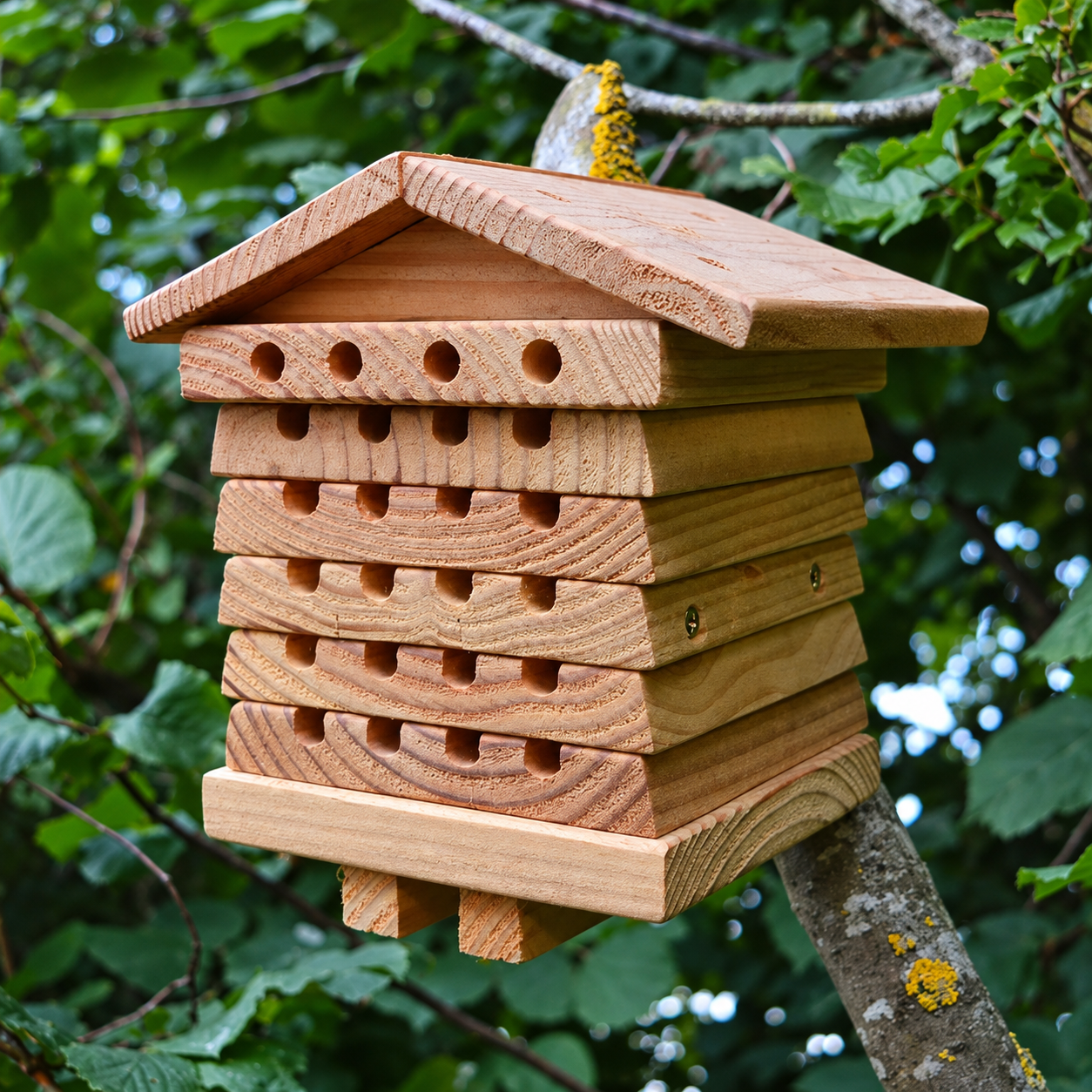
Solitary bee houses: matching the house to the bee
Nine in ten bee species live alone. No hive, no queen, no honey — just a single female who finds a dry tunnel, provisions it with pollen, lays her eggs and seals it. A solitary bee house is simply a supply of the tunnels she is short of.
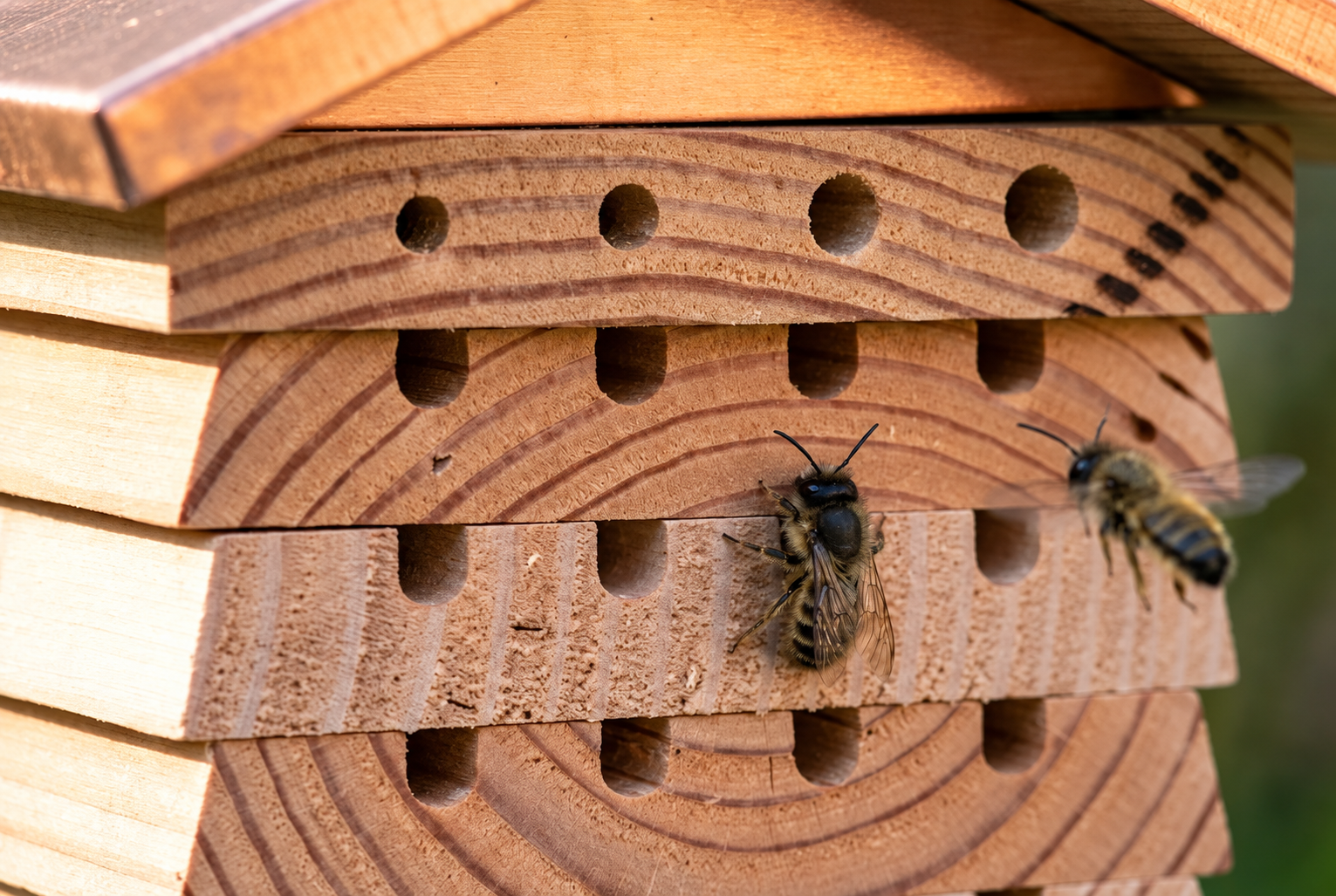
The species a house like this serves
Red mason bee (Osmia bicornis)
The earliest and most useful garden tenant, flying from March. She seals each cell with mud, so she needs damp bare soil nearby. Prefers tunnels around 8mm across.
Leafcutter bees (Megachile species)
Active through summer, cutting neat semi-circles from rose and lilac leaves to line their cells. Those notches in your roses are a compliment, not damage. Prefers 6–7mm.
Masked, yellow-faced and small carpenter bees
Much smaller, frequently overlooked, and shut out of most shop-bought houses because nothing is drilled small enough. They want 3–4mm and below.
What the house has to get right
- Dry tunnels. Damp pollen grows mould and mould kills brood. A projecting roof and thick timber do that job; a flat top and thin ply do not.
- Smooth interiors. She enters and leaves hundreds of times; splinters cost her wings.
- Sealed backs. Parasitic wasps attack larvae from behind through open tubes.
- Mixed diameters. You cannot know which species are within flying range, so offer the whole range and let them choose.
- No paint or preservative. Solvent smells deter inspecting females.
What to expect, season by season
Spring: females inspect tunnels, back in and out, then start carrying pollen. Summer: capped entrances appear — mud plugs from mason bees, chewed-leaf plugs from leafcutters. Autumn and winter: nothing visible; the brood is developing inside. Next spring: the caps break open and the new generation emerges, usually to nest in the same house.
The Wild Bee Hotel
Tiers of hand-sanded tunnels from 2mm to 10mm so mason, leafcutter and the small species all have something to choose from, 19mm untreated Western red cedar, a hand-formed copper roof overhanging on every side, a solid rear panel, and a steel mount. £39.99 with free worldwide shipping and a 30-day money-back guarantee.
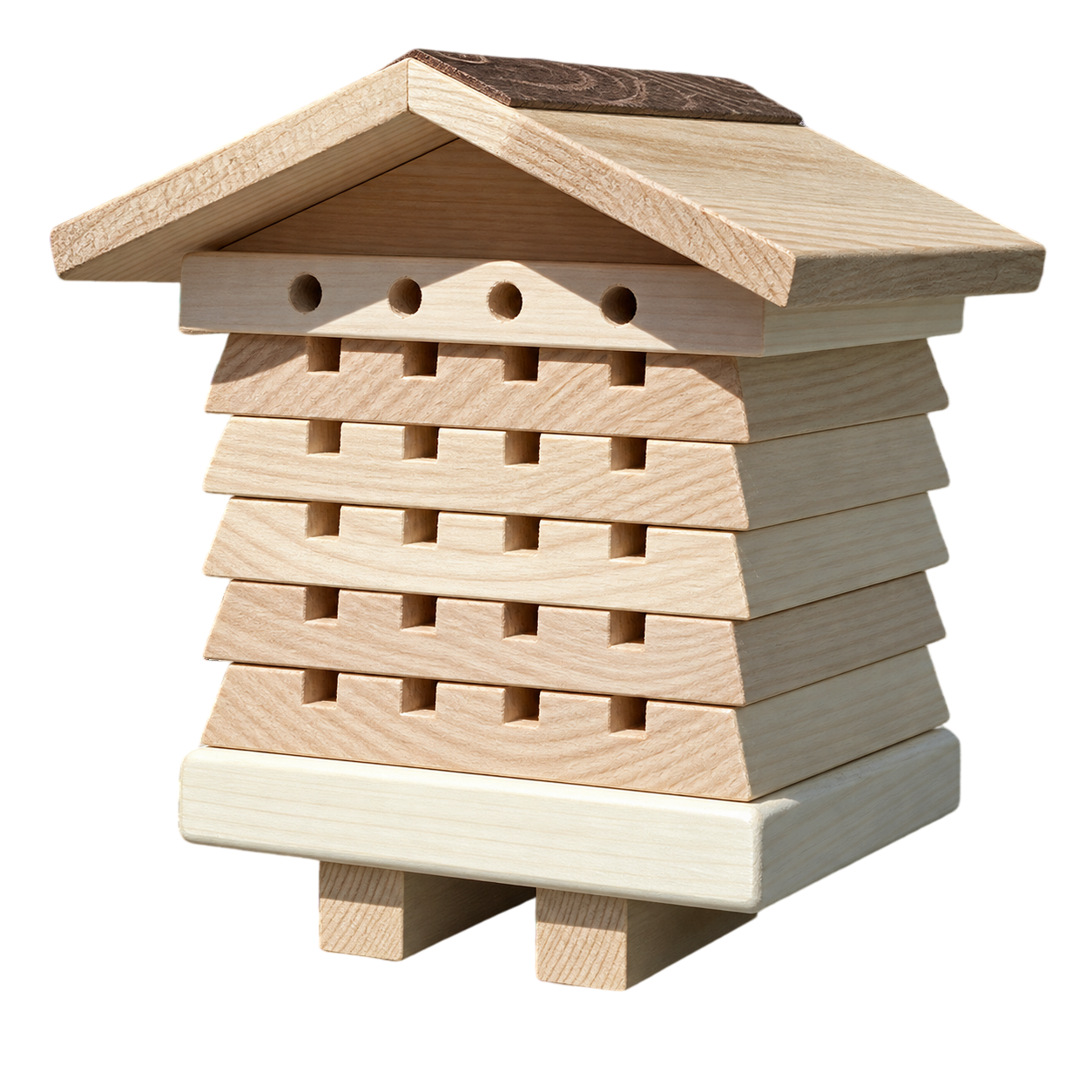
Built to the standard this guide describes
Untreated Western red cedar, a hand-formed copper roof, tunnels from 2mm to 10mm sanded mirror-smooth, and a solid rear panel. From £39.99 with free worldwide shipping and 30 days to change your mind.