Bee hotel setup guide
Everything to do between the parcel arriving and the first bee arriving: where to fix it, how to fix it so it cannot move, what to plant nearby, and what a normal first season looks like.
Step 1: unpack and check
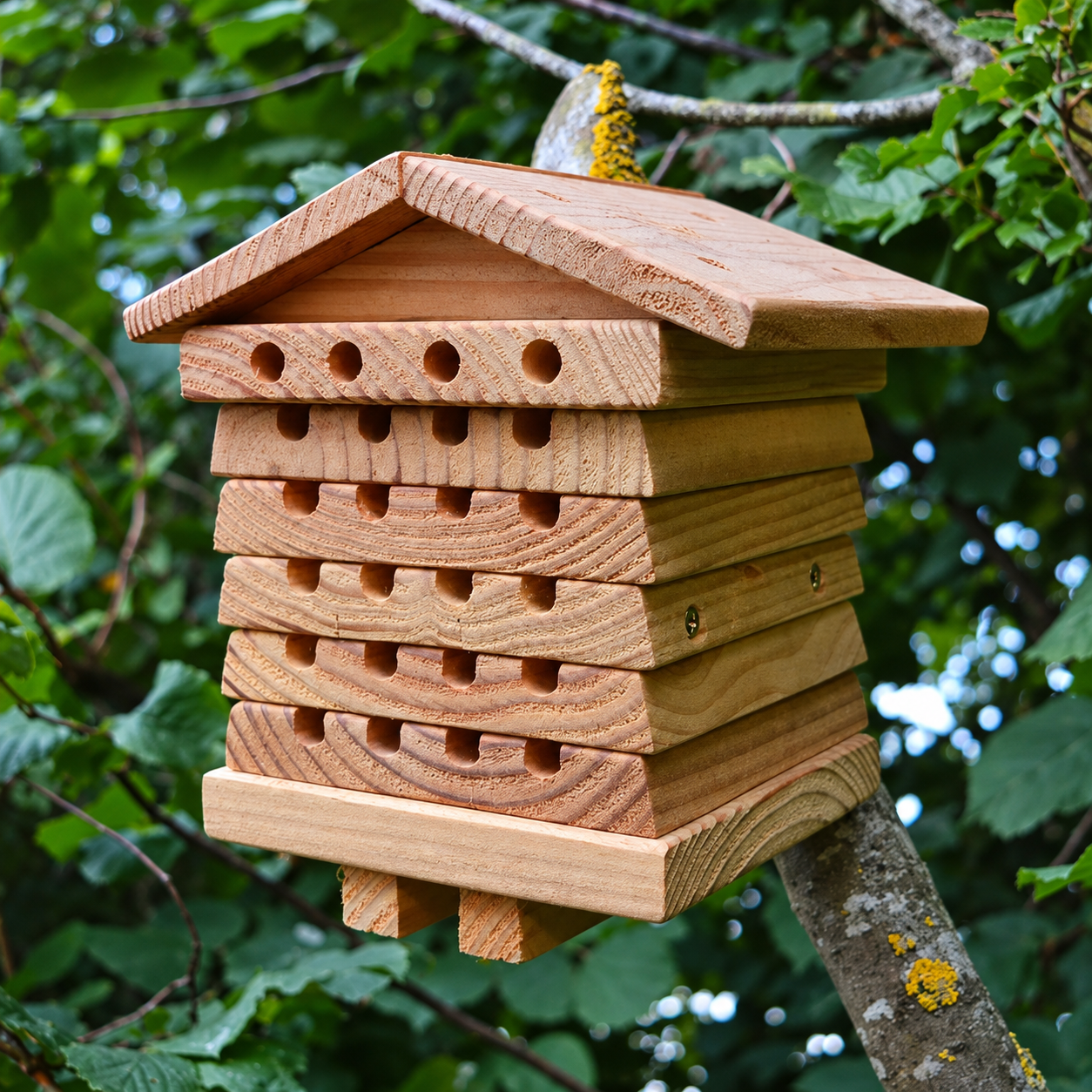
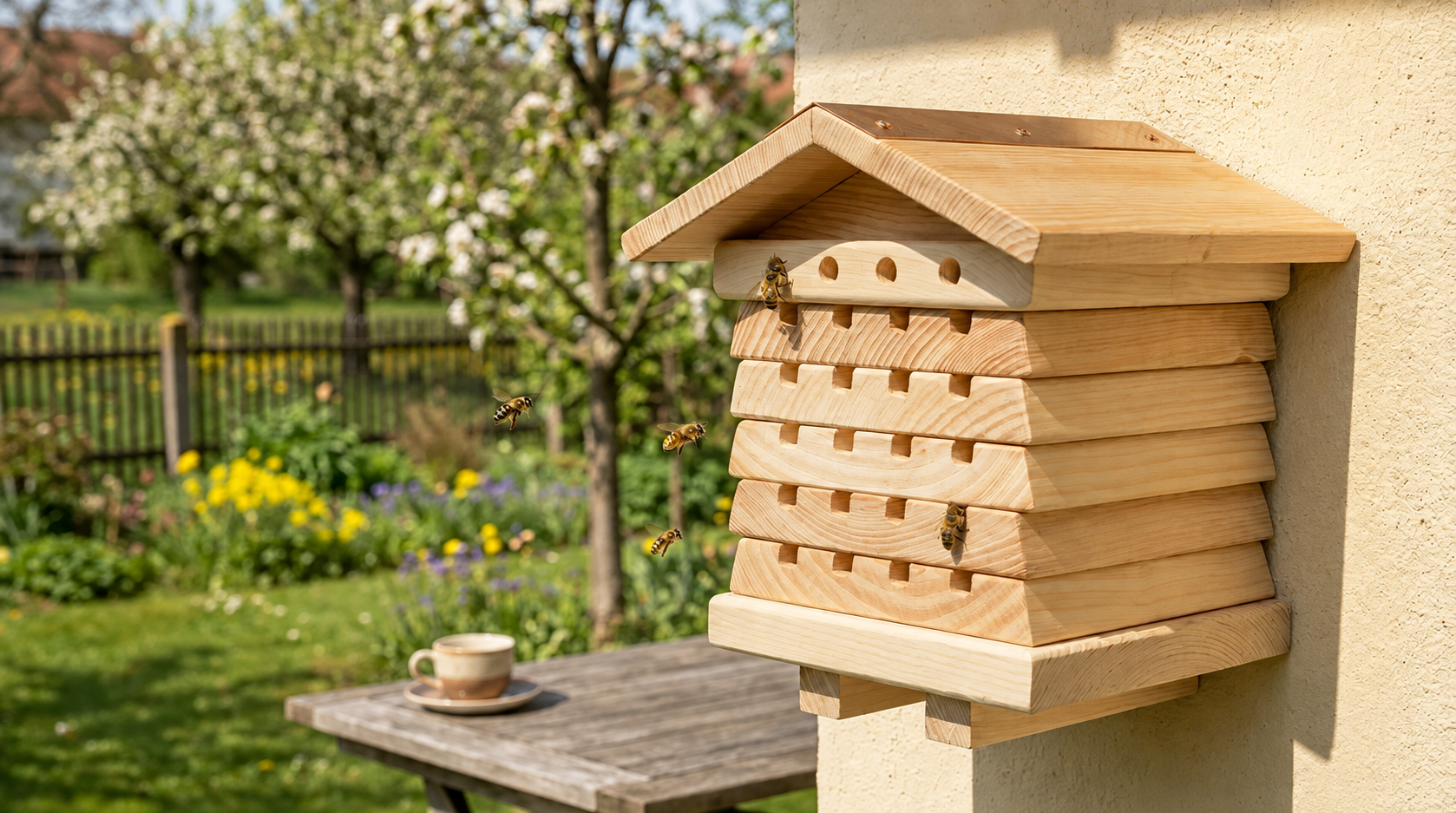
Take the hotel out of its carton and look down a few tunnels. They should be clean, dry and smooth, with no loose dust or splinters at the rims. The copper roof is hand-formed, so small variations in the hammered surface are normal and it will darken over time. If anything has arrived damaged in transit, photograph it and email us before fixing it up — replacements are straightforward within the 30-day window.
Step 2: choose the spot before you pick up a drill
Walk the garden in the morning rather than the afternoon and find a surface that is in sun by about nine o'clock, sheltered from driving rain and the prevailing wind, solid enough not to flex, and roughly chest height. A house or shed wall under an eave, or a firm fence post, are the usual winners. Full shade and anything that swings are the two choices that most reliably end in an empty hotel. The full decision is set out in where to put a bee hotel, with the compass detail in which direction it should face.
Step 3: fix it so it cannot move
Fix through into masonry with a plug and screw, or into a post or timber rail with two screws so it cannot rotate. Aim for the tunnel faces to sit vertical or tipped very slightly downwards at the front, which helps any wind-driven water run out rather than in. Do not hang it on a single nail, a cord or a hook. Do not screw through the roof. Keep the space in front clear so a bee can hover and reverse into a tunnel without brushing foliage. Practical fixing options, including no-drill approaches, are in where to hang a bee hotel.
Step 4: set up the garden around it
| What to provide | Why it matters |
|---|---|
| Open, single-flowered plants from March to September | Pollen is the food store for every cell; doubles are often useless |
| A patch of bare, damp soil | Mason bees build cell walls from wet mud and cannot nest without it |
| Early spring flowers close by | Mason bees fly before most gardens have much in bloom |
| No insecticide use on flowering plants | Sprays reach the pollen the larvae eat |
Fruit blossom, pulmonaria, aubretia, geraniums, borage, lavender, scabious and single dahlias cover the season well, and the attracting guide goes further.
Step 5: what a normal first season looks like
- Weeks 1–3: nothing. Females are searching a landscape they already know.
- First warm spell: bees hovering at the face, backing in and out. That is inspection, not nesting.
- Spring: the first mud caps appear. Each one is a completed nest of several cells.
- Summer: neat leaf discs at tunnel mouths as leafcutters take over vacated tunnels.
- Autumn and winter: complete stillness. The brood is dormant inside; leave it outdoors.
If the first spring passes with nothing at all, that is still within normal. Give it a second season before changing anything, then work through the troubleshooting list.
Step 6: the things not to do
Do not paint, varnish, oil or preserve it — solvent smells deter females and coatings close the tunnel walls. Do not bring it indoors for winter, because household warmth triggers emergence months before there are flowers. Do not open sealed tunnels to look inside. Do not add sugar water, which attracts ants and wasps and feeds nothing that nests. Do not move it mid-season once tunnels are being provisioned.
After season one
From the second year the job is simply keeping it dry, still and unobstructed, with a light clean only once tunnels have been used and emptied. Those routines are in the care guide and how to clean a bee hotel. If you do not own a hotel yet, the Wild Bee Hotel is 19mm untreated Western red cedar with a hand-formed copper roof, hand-sanded tunnels from 2mm to 10mm and a solid rear panel, from £39.99 with free worldwide shipping.
Questions people ask next
Does a bee hotel need assembling?
What is the best month to put it up?
Do I need to add anything inside the tunnels?
How soon will bees use it?
What maintenance does it need in year one?
Start the first season right
A well-built box, fixed firmly in morning sun before the first warm spell, is most of the job done.
About Clayton Dawson
Cabinetmaker and solitary-bee keeper, and the maker of the Wild Bee Hotel. Clayton has kept red mason and leafcutter bees in his own garden for years, and every guide on this site is written and checked against what he sees in the tunnels each season rather than copied from a catalogue. Read the full story.
First published 3 September 2025 · last reviewed 20 September 2026.
What we based this on: Buglife, RHS, Wildlife Trusts.