How to clean a bee hotel, and when to do it
At a glance
- Clean between October and late February, once the season's brood has sealed its cells.
- Never open or disturb tunnels between roughly March and October.
- Harvesting cocoons and storing them over winter is the most thorough method.
- No water, no bleach, no soaking — dry cleaning methods only.
- Cleaning matters most for reducing mites and parasitic wasp build-up over years.
Why cleaning matters at all
A bee hotel that is never cleaned is not doing the bees a favour by being left "natural" — wild nest sites like hollow stems break down and are abandoned after a season or two, while a durable wooden hotel keeps the same tunnels in use year after year. That durability is an advantage for you but it also means parasitic mites, fungal spores and the larvae of parasitic wasps can accumulate in old cells in a way they never would in a stem that rots away. Cleaning periodically resets that risk instead of letting it compound season on season.
When to clean: the two safe windows
| Window | Why it works | Trade-off |
|---|---|---|
| Autumn (October–November) | Nesting has finished; cocoons are fully formed and easy to handle | Cocoons need safe, cool, dry storage through winter yourself |
| Late winter (late January–February) | Cocoons have had a natural winter outdoors; less for you to manage | Must finish well before emergence, which can begin from mid-February in mild years |
Whichever window you choose, the one rule that matters more than the exact date is this: never clean while cells are active. If you are unsure whether nesting has finished, check our month-by-month timing guide before opening anything up.
How to clean it, step by step
- Bring the hotel somewhere dry and well lit. A shed or garage bench works better than doing this outdoors in damp weather.
- Open or remove the tunnels. If the tunnels lift out individually, take them out one at a time rather than working blind inside a fixed block.
- Harvest cocoons carefully. Gently tip or ease out the sealed clusters of mud or leaf-wrapped cocoons; do not prise them apart individually.
- Inspect, don't obsess. Discard anything visibly mouldy, crushed or with gritty residue; keep firm, intact cocoons.
- Brush the tunnels out dry. A soft bottle brush, pipe cleaner or twist of kitchen paper on a stick removes debris without introducing moisture.
- Store healthy cocoons cool and dry. An unheated shed, garage or ventilated box works; the aim is to mimic natural winter conditions, not to warm them.
- Return tunnels and cocoons in spring. Put cleaned tunnels back before the March emergence window and release stored cocoons nearby once temperatures rise.
What not to do
- Do not soak tunnels in water. Damp wood and damp cocoons both encourage the mould that is one of the two most common bee hotel failures.
- Do not use bleach, disinfectant sprays or essential oils. Residue left behind can affect the next occupant far more than the mites you were targeting.
- Do not clean mid-season "just to check". Opening active tunnels between March and October can kill developing larvae or cause a provisioning female to abandon the nest entirely.
- Do not throw a hotel away because it looks "used up". Mud caps, chewed leaf discs and old plugs are signs of a successful season, not damage.
Mites and parasites: what cleaning does and does not fix
Cleaning will not eliminate parasites entirely — some level of mite and parasitic wasp pressure is normal in any outdoor nest site, wild or man-made. What it does is stop old, contaminated cells being reused as a reservoir year after year, which is the main way small problems become large ones in a hotel that is otherwise well sited. For the separate question of wasps investigating the hotel itself rather than parasitising it, see our page on whether bee hotels attract wasps.
What to look for in a hotel that is easier to clean
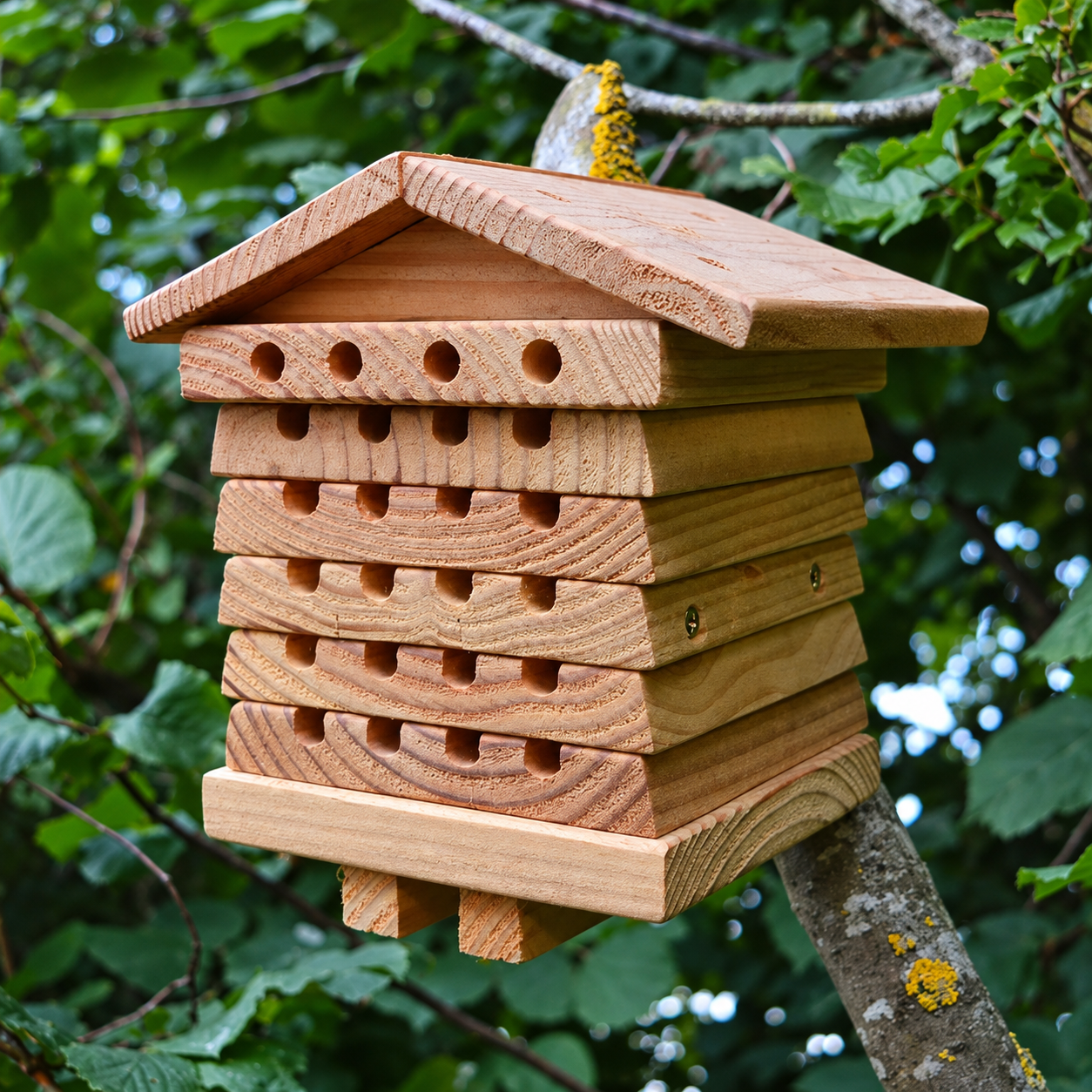
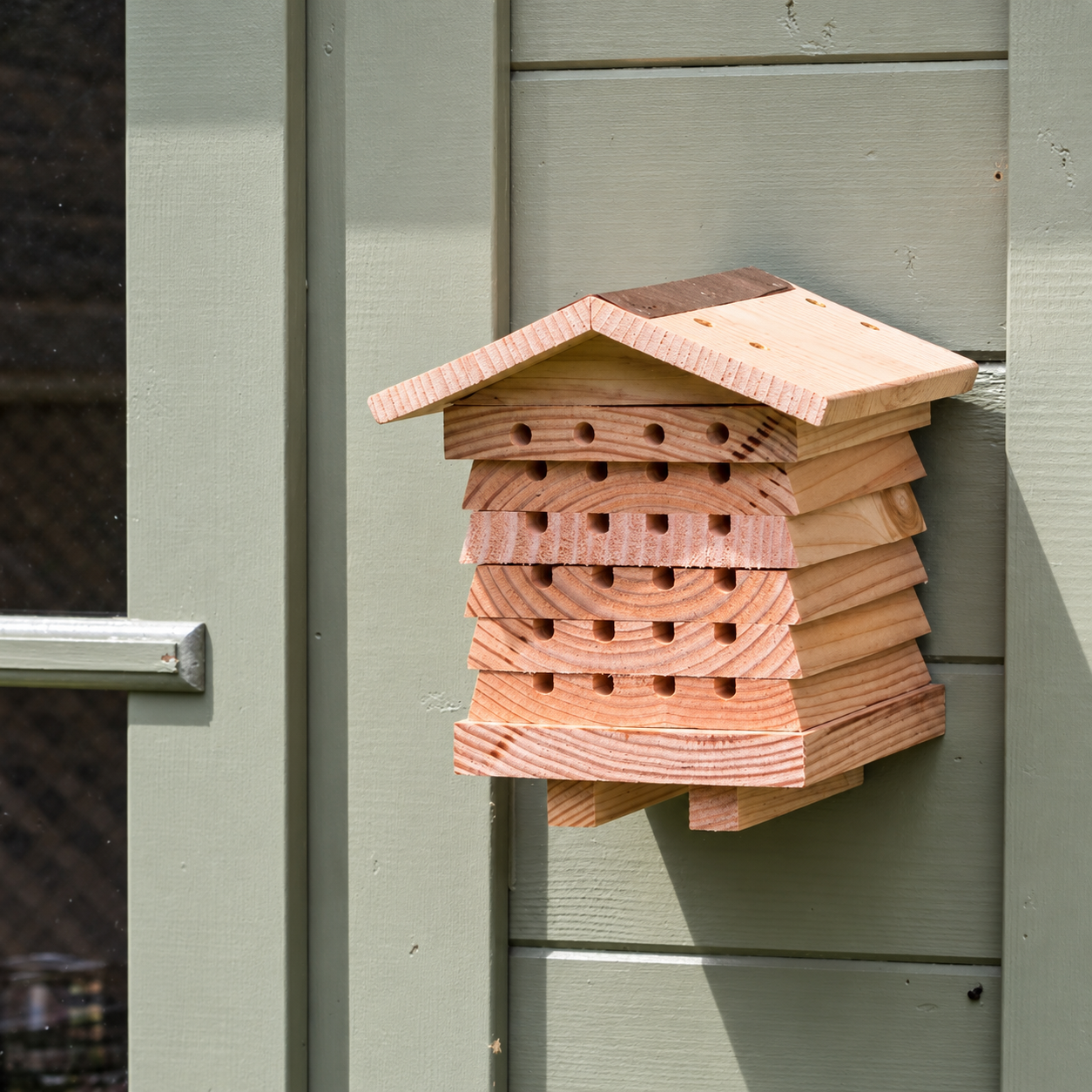
Cleaning is far more practical with tunnels you can actually access — fixed, non-removable drilled blocks make dry brushing awkward and cocoon harvesting close to impossible without damaging the wood. The Wild Bee Hotel is built with a solid rear panel that keeps the back of each tunnel sealed against damp and parasites entering from behind, and hand-sanded interiors that make debris easy to brush free without snagging. £39.99, free worldwide shipping and a 30-day money-back guarantee, with the one sensible exception that a hotel bees have already moved into cannot be returned.
Questions people ask next
Do I have to clean a bee hotel every year?
What happens if I never clean it at all?
Can I clean a bee hotel by just running water through the tunnels?
Is it safe to move cocoons I find while cleaning?
How do I know if a tunnel has mites without a microscope?
Should I disinfect the tunnels with bleach or chemicals?
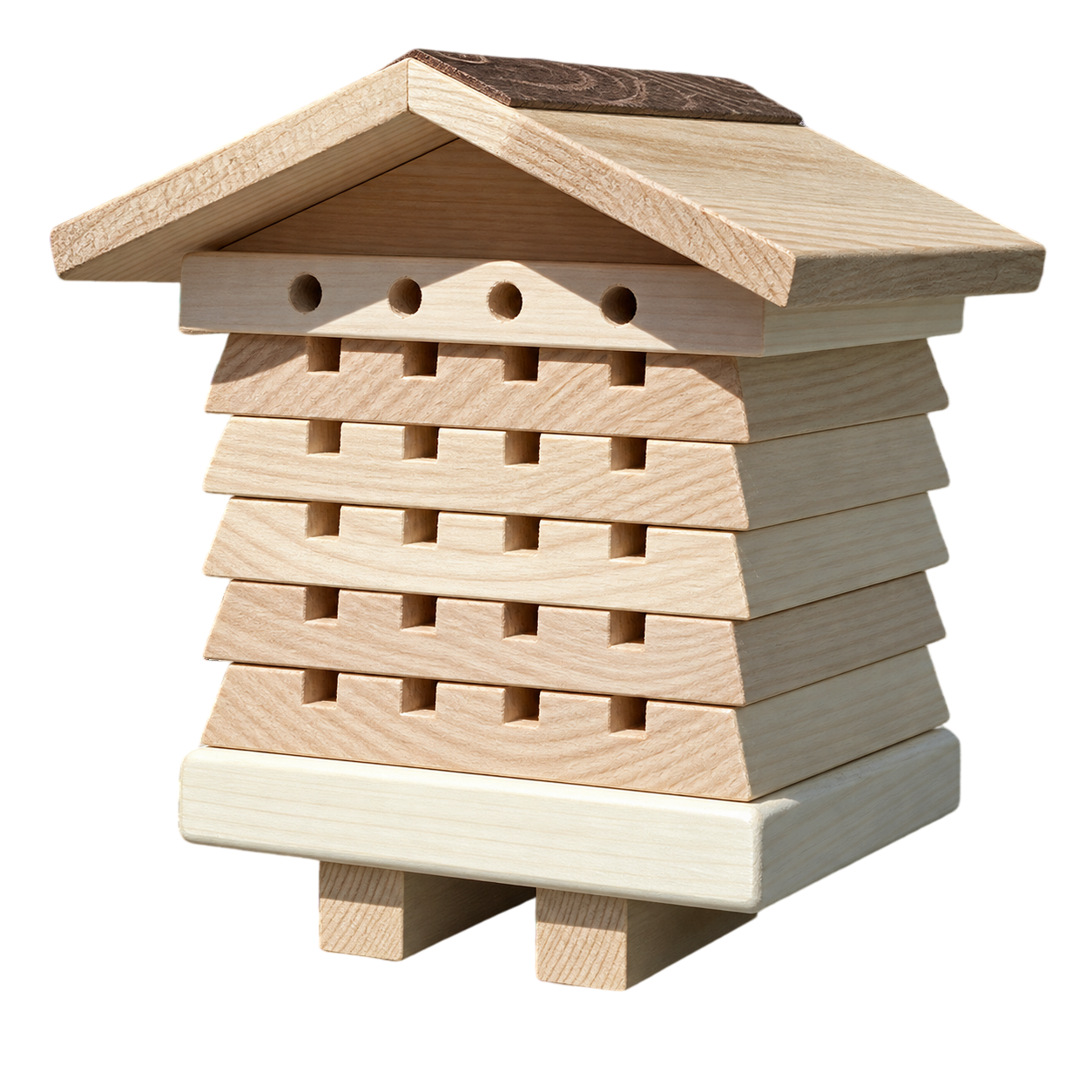
Built to be checked, not just hung and forgotten
Sealed rear panel, sanded tunnels and a roof that keeps damp out in the first place — the fewer reasons you have to intervene, the better for the bees inside.
About Clayton Dawson
Cabinetmaker and solitary-bee keeper, and the maker of the Wild Bee Hotel. Clayton has kept red mason and leafcutter bees in his own garden for years, and every guide on this site is written and checked against what he sees in the tunnels each season rather than copied from a catalogue. Read the full story.
First published 6 October 2025 · last reviewed 20 August 2026.
What we based this on: Bumblebee Conservation Trust, Buglife.