Do bee hotels attract wasps?
At a glance
- Social wasps (paper-nest builders) never use bee hotel tunnels.
- Some solitary wasps do use them, and are non-aggressive and beneficial.
- Tiny parasitic wasps target bee larvae inside cells — the genuine issue.
- Tunnels capped around 10mm favour bees over larger solitary wasp species.
- Cleaning old tunnels each year helps limit parasitic wasp build-up.
Three different insects share one name
Most confusion about wasps and bee hotels comes from three very different insects being lumped together under "wasp." Sorting them out first makes the rest of this straightforward.
| Type | Nests in tunnels? | Risk to people |
|---|---|---|
| Social wasps (e.g. common wasp) | No — build paper nests from chewed wood pulp | Can sting defensively near their nest; unrelated to bee hotels |
| Solitary wasps (e.g. Ectemnius, Trypoxylon) | Yes, in similar tunnel widths to bees | Effectively none — not defending a colony |
| Parasitic wasps (e.g. Chrysididae, Ichneumonidae) | Lay eggs inside occupied bee cells, not in empty tunnels | None to people; the real cost is to bee larvae |
Why social wasps are not the issue
The wasps most people are picturing when they ask this question build a papery, layered nest from chewed wood fibre and saliva, usually in a cavity like a loft, shed or hedge. That nest structure has nothing in common with a drilled or bundled tunnel, and a queen wasp founding a colony is not looking for anything a bee hotel offers. If you have ever had a wasp nest in a roof space, it did not come from, and will not move into, a bee hotel.
Solitary wasps: harmless, and arguably useful
Several solitary wasp species will nest in exactly the tunnel widths that also suit small bees, particularly in the 4–8mm range. Rather than pollen, females provision their cells with prey — aphids, small flies or spiders, depending on species — making them a genuinely useful predator to have in the garden. They behave much like the bees discussed in our tunnel diameter guide: non-aggressive, focused entirely on their own nest, and not remotely interested in people nearby.
Parasitic wasps: the one worth understanding
The wasps that actually matter for bee hotel health are ones you are unlikely to notice at all. Tiny parasitic species locate occupied cells and lay their own eggs inside, so their larvae consume the bee grub's food store or the grub itself. This is a normal part of any wild nesting system rather than evidence a hotel is faulty, but it is also the strongest reason to clean or replace tunnels periodically rather than leaving the same cells in continuous use for years — see our cleaning guide for how and when to do that.
What actually controls who moves in
Tunnel diameter does more work here than any other design choice. Diameters from 2mm to roughly 10mm sit squarely in the range solitary bees use, while noticeably larger holes are what tends to draw in bigger solitary wasp species looking for a cavity of their own. A hotel built with a capped, bee-appropriate size range is simply less attractive to the wasps people worry about, without needing any wasp-specific deterrent at all.
Common misconceptions worth clearing up
- "Any wasp near the hotel means a nest is forming." A single solitary wasp investigating one tunnel is not building a colony and will not attract more.
- "Wasps and bees compete for the same tunnels." In practice bees tend to occupy a hotel first if it is put out early and sized correctly; see when to put a hotel out for why timing helps.
- "A wasp in the hotel means it should be destroyed." Removing an occupied tunnel kills a beneficial predator for no real safety benefit.
What to look for when buying, if this is your concern
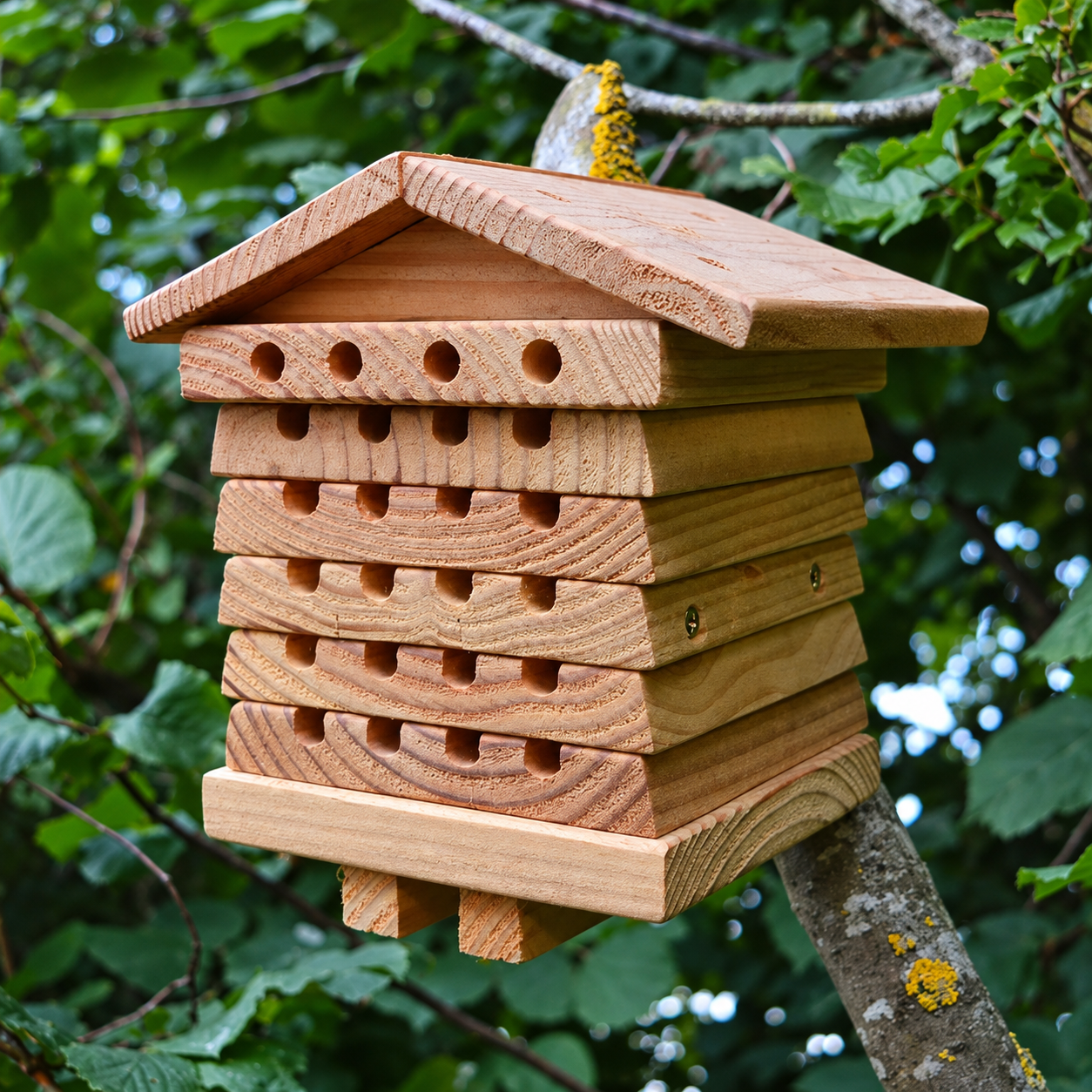
If avoiding solitary wasps as much as possible is a priority, look at the tunnel range before anything else — a hotel with holes capped around 10mm, like this one, favours bees over the wasp species that prefer wider cavities. The Wild Bee Hotel's tunnels run from 2mm to 10mm, hand-sanded and set into 19mm untreated Western red cedar with a solid rear panel. £39.99, free worldwide shipping and a 30-day money-back guarantee.
Questions people ask next
Will a bee hotel bring aggressive wasps into my garden?
What do solitary wasps that use bee hotels look like?
Can solitary wasps sting?
What is a parasitic wasp, and should I worry about it?
Does tunnel size really change which species turns up?
Should I remove a hotel if I find wasps in it?
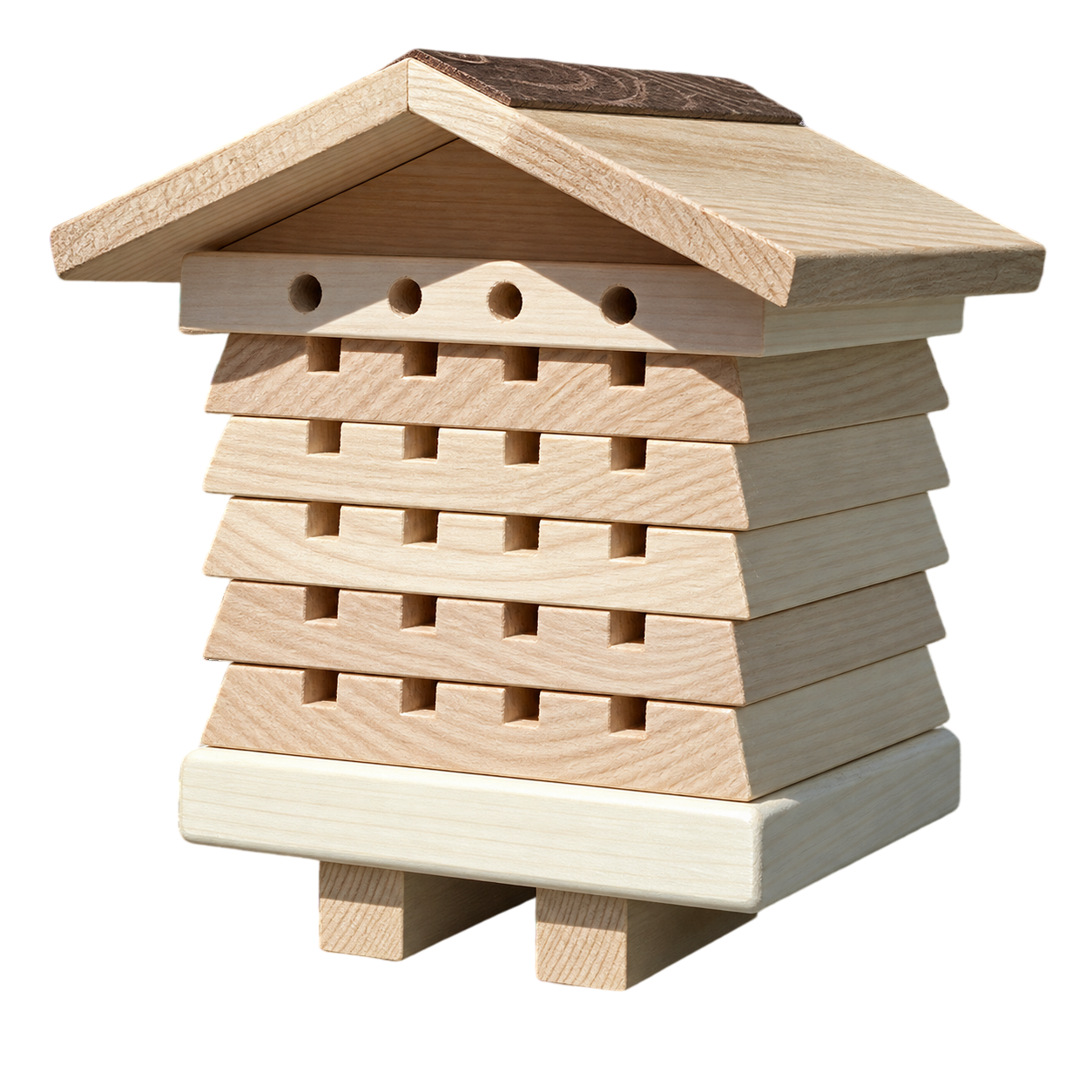
The size range that keeps this in your favour
Wider holes above 10mm are what pull in larger solitary wasps looking for a home. This hotel's tunnels top out at 10mm, tuned for mason and leafcutter bees.
About Clayton Dawson
Cabinetmaker and solitary-bee keeper, and the maker of the Wild Bee Hotel. Clayton has kept red mason and leafcutter bees in his own garden for years, and every guide on this site is written and checked against what he sees in the tunnels each season rather than copied from a catalogue. Read the full story.
First published 1 December 2025 · last reviewed 27 August 2026.
What we based this on: Buglife, Wildlife Trusts.