The real problems with bee hotels — and how to avoid them
Problem one: disease and mould build-up
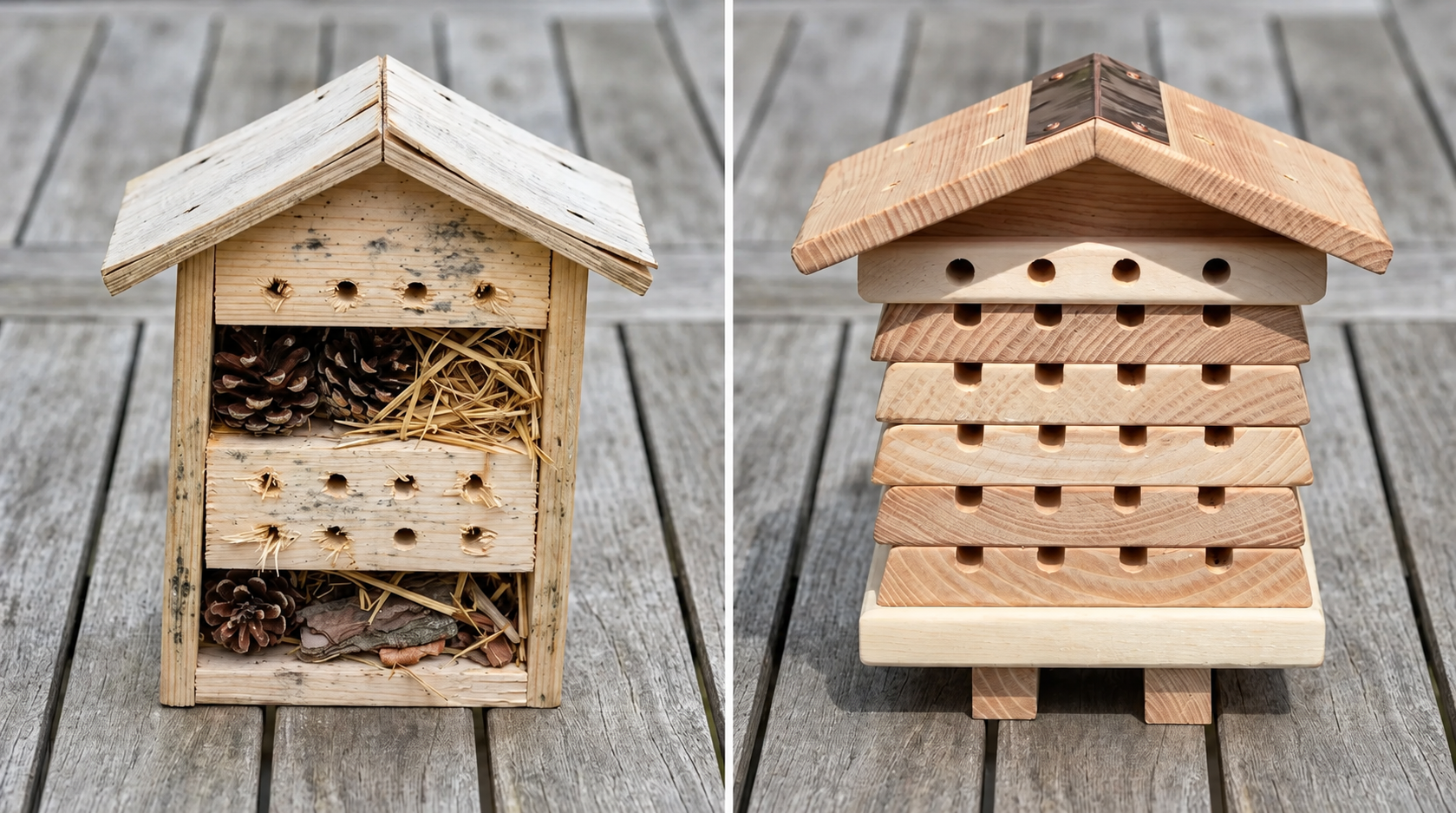
In the wild, nests are spread across many separate cavities. Pack dozens of nests into one block, reuse it for years without any attention, and fungal spores and chalkbrood can accumulate. Damp makes it far worse, because mould grows on the stored pollen loaf and the larva starves or is poisoned.
How to prevent it
- Buy a hotel that stays dry: thick timber, an overhanging metal roof, tunnels tilted very slightly down.
- Never site it where a downpipe, sprinkler or overhanging leaf drips onto the face.
- Choose a design with replaceable or accessible tunnel tiers where you can, and rotate use over the years rather than piling on more and more hotels in one spot.
- Spread hotels around the garden instead of hanging several side by side.
Problem two: parasites and predators
Cuckoo bees, parasitic wasps, houdini flies and pollen mites all target solitary bee nests, and a dense block is an easy target. Open-backed tubes are the worst case, letting wasps reach larvae from behind without going in the front. Birds — great tits especially — will also peck out capped tunnels in late winter if the hotel is unprotected and easy to perch on.
How to prevent it
- Insist on a solid rear panel; never use through-drilled or open-ended tubes.
- Mount at 1–1.5m on a firm surface, without a convenient perch directly in front.
- If birds are a problem locally, fit fine mesh a few centimetres clear of the face over winter so bees can still fly in and out in spring.
- Do not overcrowd one site; more hotels in one place means more parasite pressure.
Smaller problems worth knowing
- Overheating. Thin-walled boxes in full afternoon sun cook brood. Thick timber and a shading roof overhang prevent it.
- Wing damage. Splintered drilling and sawn bamboo rims wear wings over hundreds of trips.
- Well-meant cleaning. Opening or scrubbing tunnels during the season destroys nests. Leave capped tunnels entirely alone.
- Hollow confidence. A hotel is not a substitute for flowers, mud and bare ground; without forage nearby it will stay empty however good it is.
Design that answers both problems
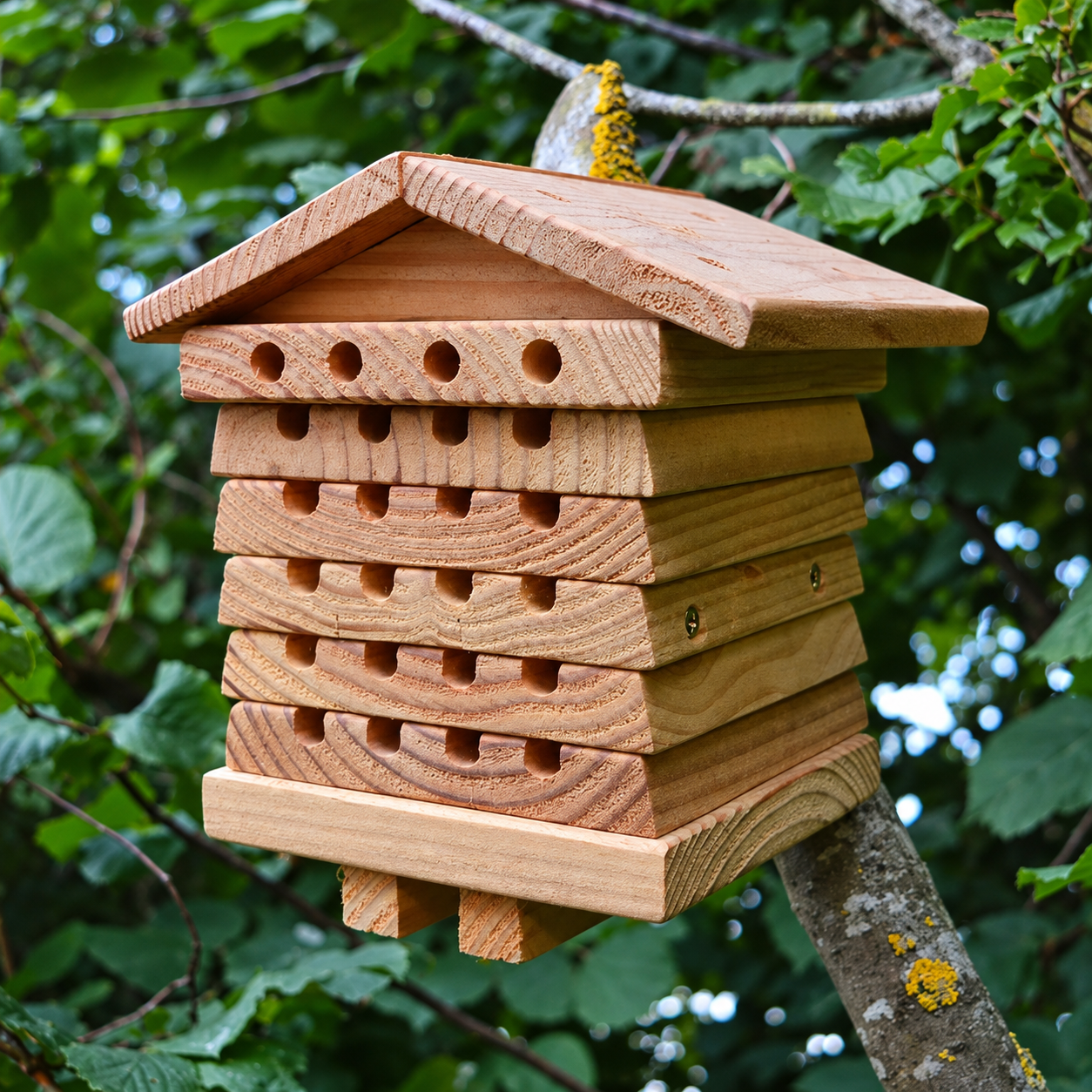
The Wild Bee Hotel was drawn around these failure modes: 19mm untreated Western red cedar to buffer heat and shed moisture, a hand-formed copper roof overhanging on every side, a solid rear panel against parasitic wasps, hand-sanded tunnels from 2mm to 10mm so no bee is forced into the wrong fit, and a rigid steel mount. £39.99, free worldwide shipping, 30-day money-back guarantee.
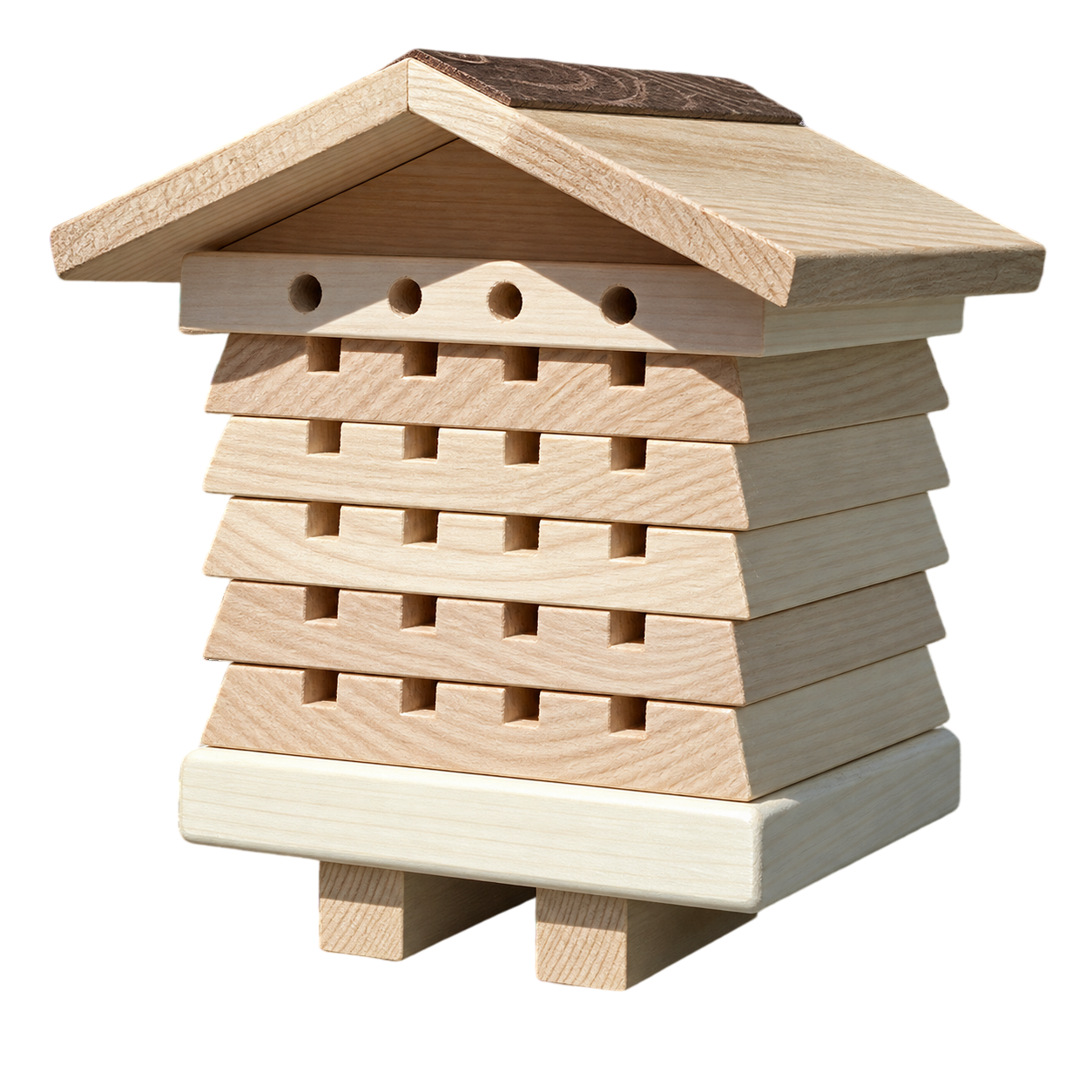
Built to the standard this guide describes
Untreated Western red cedar, a hand-formed copper roof, tunnels from 2mm to 10mm sanded mirror-smooth, and a solid rear panel. From £39.99 with free worldwide shipping and 30 days to change your mind.