Where to hang a bee hotel — and the mistakes that keep one empty
Position matters as much as build quality. A superbly made hotel in the wrong spot stays empty; get the direction, height and fixing right and occupancy usually follows within weeks.
The short version
- Direction: south or south-east facing, catching morning sun.
- Height: 1–2 metres above the ground.
- Fixing: rigid — screwed to a wall, fence or post, with no movement.
- Tilt: level, or a fraction nose-down so any rain runs out.
- Surroundings: entrances clear of leaves, grass and branches.
- Timing: up before mid-March, ahead of the first emergence.
Why morning sun matters so much
Solitary bees are cold-blooded. Until the nesting face warms, a female cannot fly. Early sun gets her working hours earlier each day, which over a season means substantially more cells provisioned. Morning sun also dries dew off the entrances quickly, and dryness is what keeps the brood alive.
A north-facing wall stays cold and damp all day and is the single most common reason a good hotel is ignored. Full blazing afternoon sun on a dark south-west wall can be too much in a heatwave — thick cedar walls buffer that, but a spot with morning sun and light afternoon shade is ideal.
Height and access
One to two metres keeps the hotel above splash-back from the ground, out of reach of most ground predators, and at a height where you can watch the tunnels without a ladder. Very low mounting attracts damp; very high mounting simply makes it harder for you to enjoy.
Never let it swing
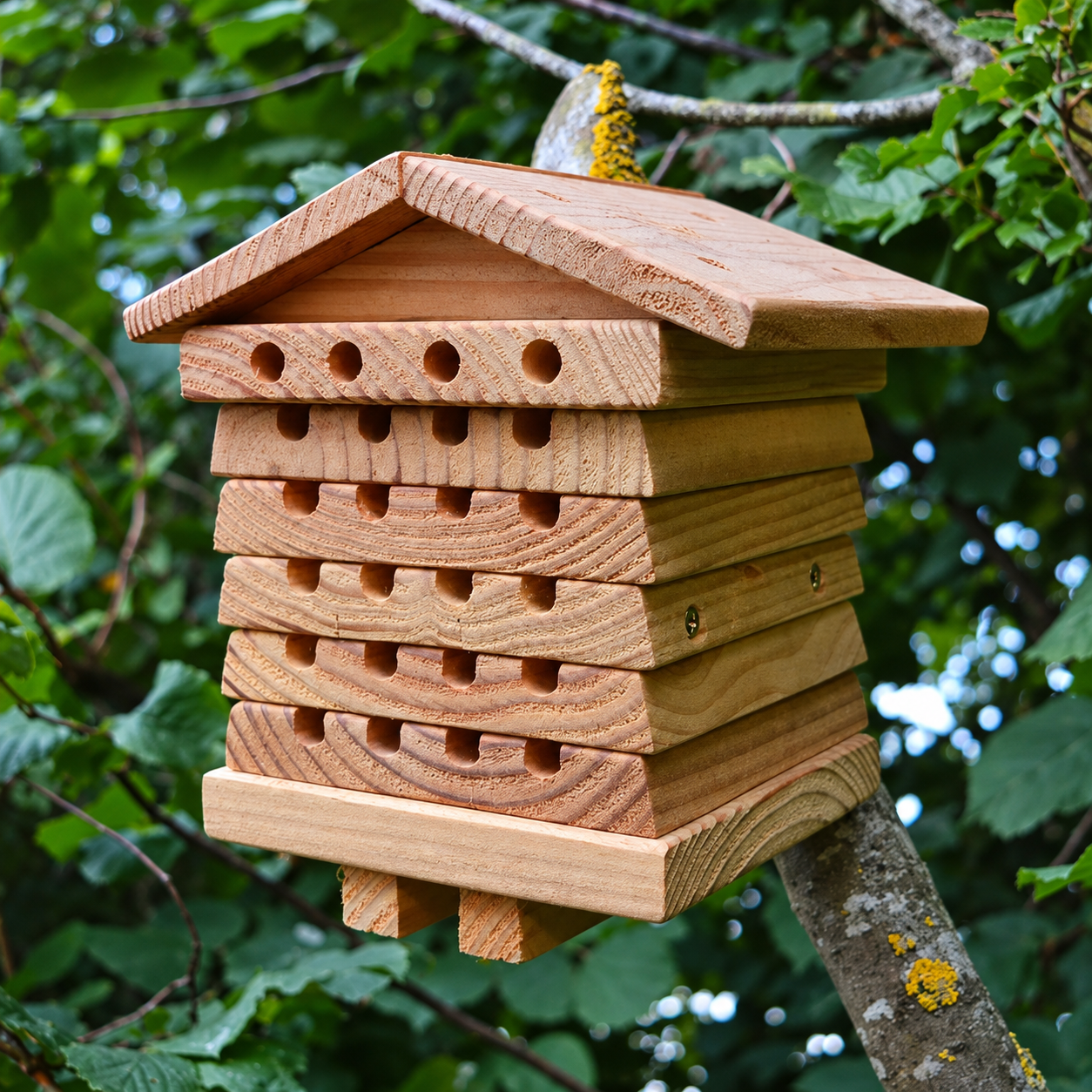
This is the mistake people make most often with hanging models: they suspend it from a branch on a cord and it twists in the wind. Females reject moving nest sites during inspection. If you hang it from a branch, fix it against the trunk or a crossbar so it cannot rotate.
Give them mud and early flowers
Mason bees need wet soil to build cell walls. A small patch of bare damp earth, or a tray of loam kept moist, within a short flight is plenty. Early nectar helps too: pulmonaria, dandelions, fruit blossom, comfrey, willow catkins.
Once a tunnel is sealed, stop
Do not move the hotel, not even a metre. A returning female navigates to a precise position and will be lost if the site shifts. Leave it in place through autumn and winter as well: the larvae need the cold to develop on schedule. If the hotel is properly roofed there is nothing to protect it from.
Positioning checklist
- Pick a south or south-east wall, fence or post.
- Measure 1–2 metres up and mark the fixing point.
- Screw the steel mount in firmly; check it cannot move by hand.
- Clear foliage from in front of the tunnels.
- Expose or create a small patch of damp soil nearby.
- Walk away and watch from a distance.