Mason bee houses: the fruit grower's pollinator
Red mason bees (Osmia bicornis) are the bees most likely to move into a garden nesting box in Britain, and they are formidable pollinators of apples, pears, plums and soft fruit.
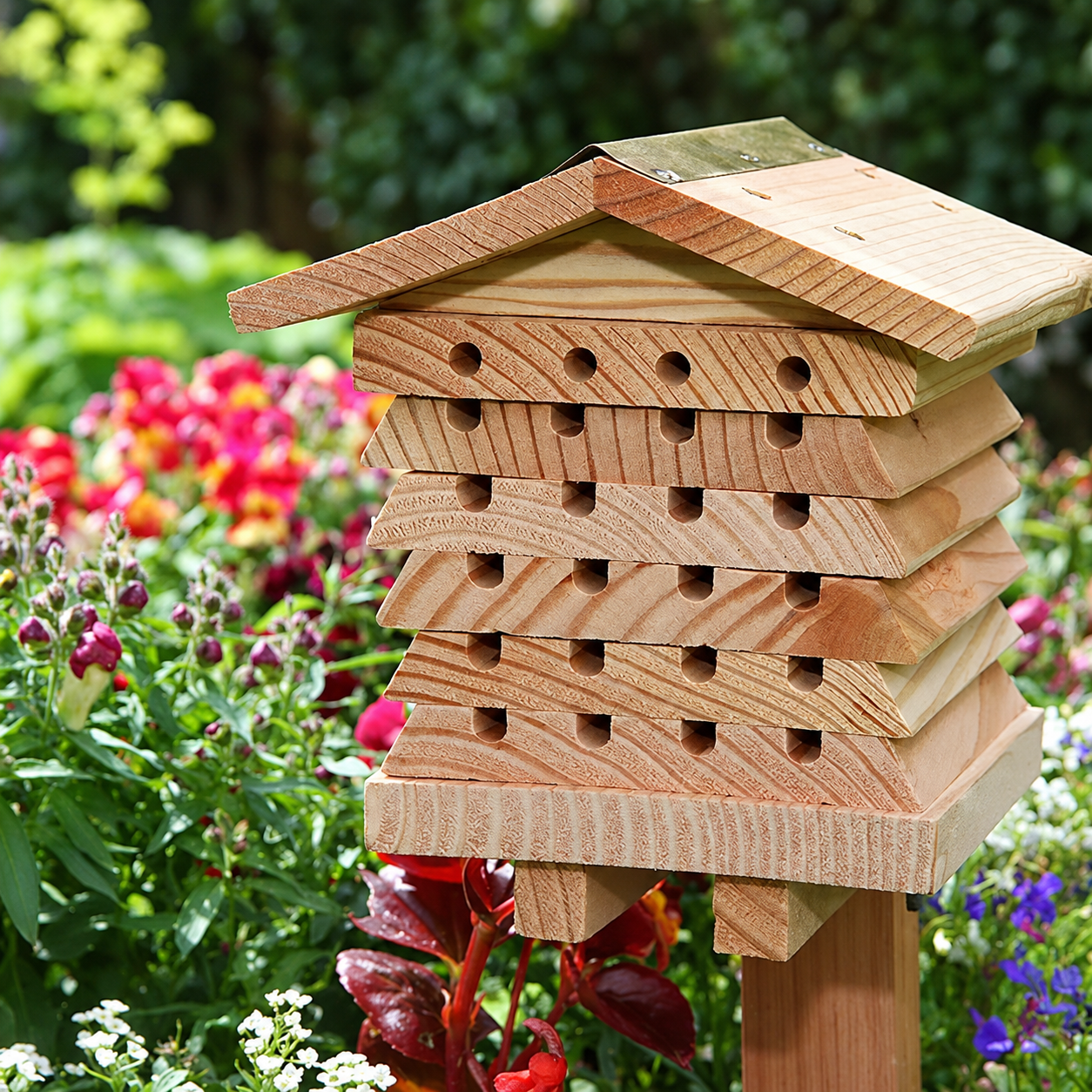
Why mason bees outperform honeybees on blossom
A honeybee wets pollen and packs it tightly into baskets on her legs, which makes it hard to dislodge onto the next flower. A mason bee carries dry pollen loose in a brush of hairs under her abdomen and belly-flops into each blossom, shedding pollen everywhere she goes. She also flies in cooler, duller weather — which in a British April is most of it. For an orchard or a few fruit trees, a handful of mason bees is worth a great many honeybee foraging trips.
What a mason bee house needs
Tunnels around 8mm, 10–15cm deep
Roughly 7–9mm suits a female red mason bee. Depth matters too: in a deep tunnel she lays female eggs at the safe back end and males towards the front, so shallow tunnels skew the population male. A range of diameters alongside the 8mm tunnels means leafcutters and smaller species can use the same house later in the season.
Mud within flying distance
Mason bees build their cell walls from wet soil — hence the name. If your garden is all paving, decking and dry gravel, she has nothing to build with. Keep a patch of bare damp earth, or sink a shallow tray of loamy soil and keep it moist through spring.
A dry nesting face
Mud plugs soften in driving rain and the pollen stores behind them go mouldy. An overhanging copper roof throws rain clear of the entrances, which is the difference between a full hotel in July and an empty one the following spring.
Recognising mason bee activity
- Males appear first in March, patrolling the entrances and never entering to nest.
- Females arrive days later, inspect tunnels closely, then start carrying pollen.
- You will see her reversing in — she packs pollen tail-first.
- Finished tunnels are capped with a smooth mud plug, slightly recessed.
- Neat green leaf discs instead of mud mean leafcutter bees, not masons.
What not to do
Do not open sealed tunnels to look inside, do not bring the house into a warm shed or garage for winter, and do not spray insecticide anywhere near it — including lawn and rose treatments, which drift further than people expect. If the house is well built, doing nothing is the correct maintenance for ten months of the year.
The Wild Bee Hotel for mason bees
Mason-bee-sized tunnels alongside the full 2mm–10mm range, all hand-sanded smooth; 19mm untreated cedar walls; a hand-formed copper roof; a solid rear panel that keeps parasitic wasps out of the brood; and a steel mount for a wall, fence or post. £39.99, free worldwide shipping, 30-day money-back guarantee.