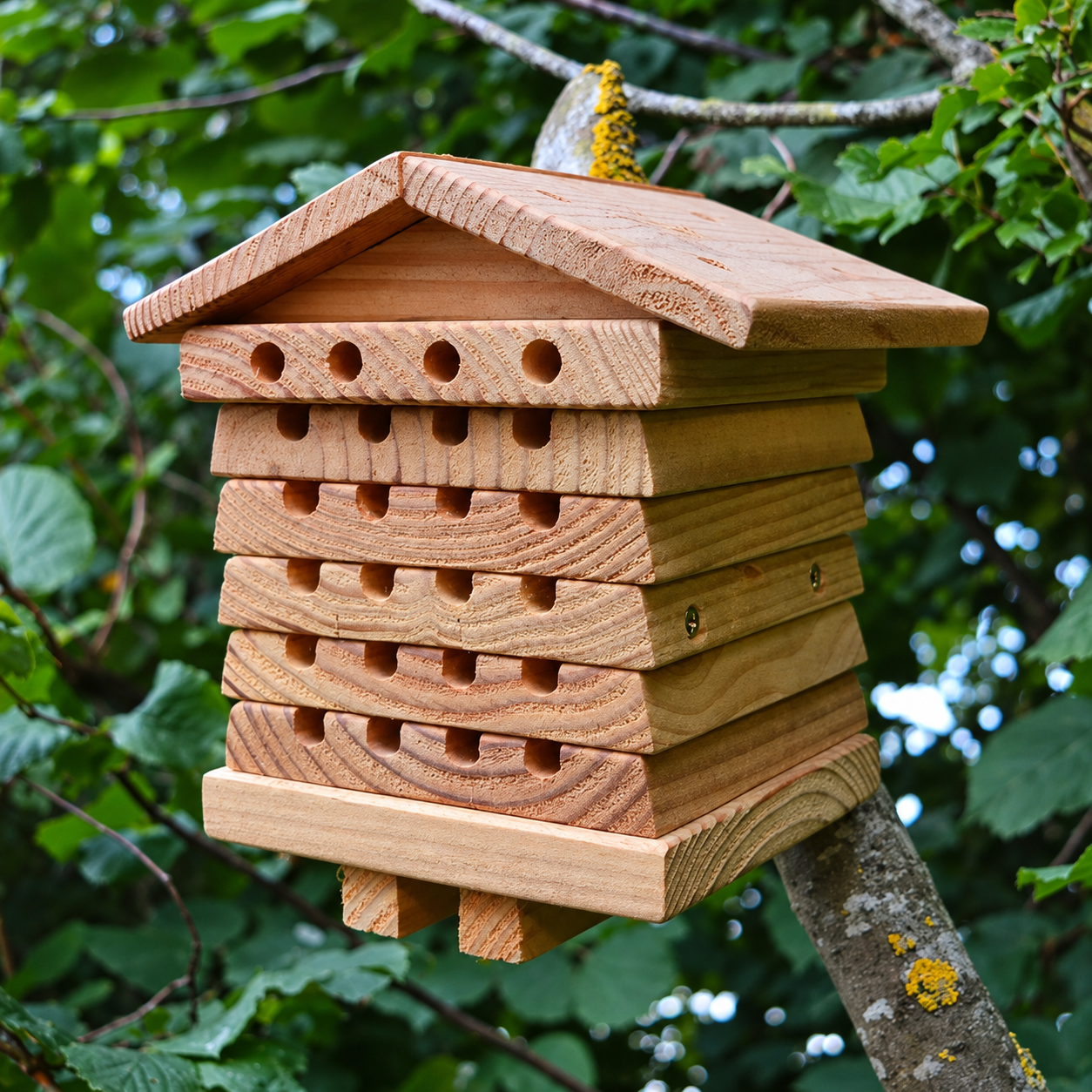
What direction should a bee hotel face?
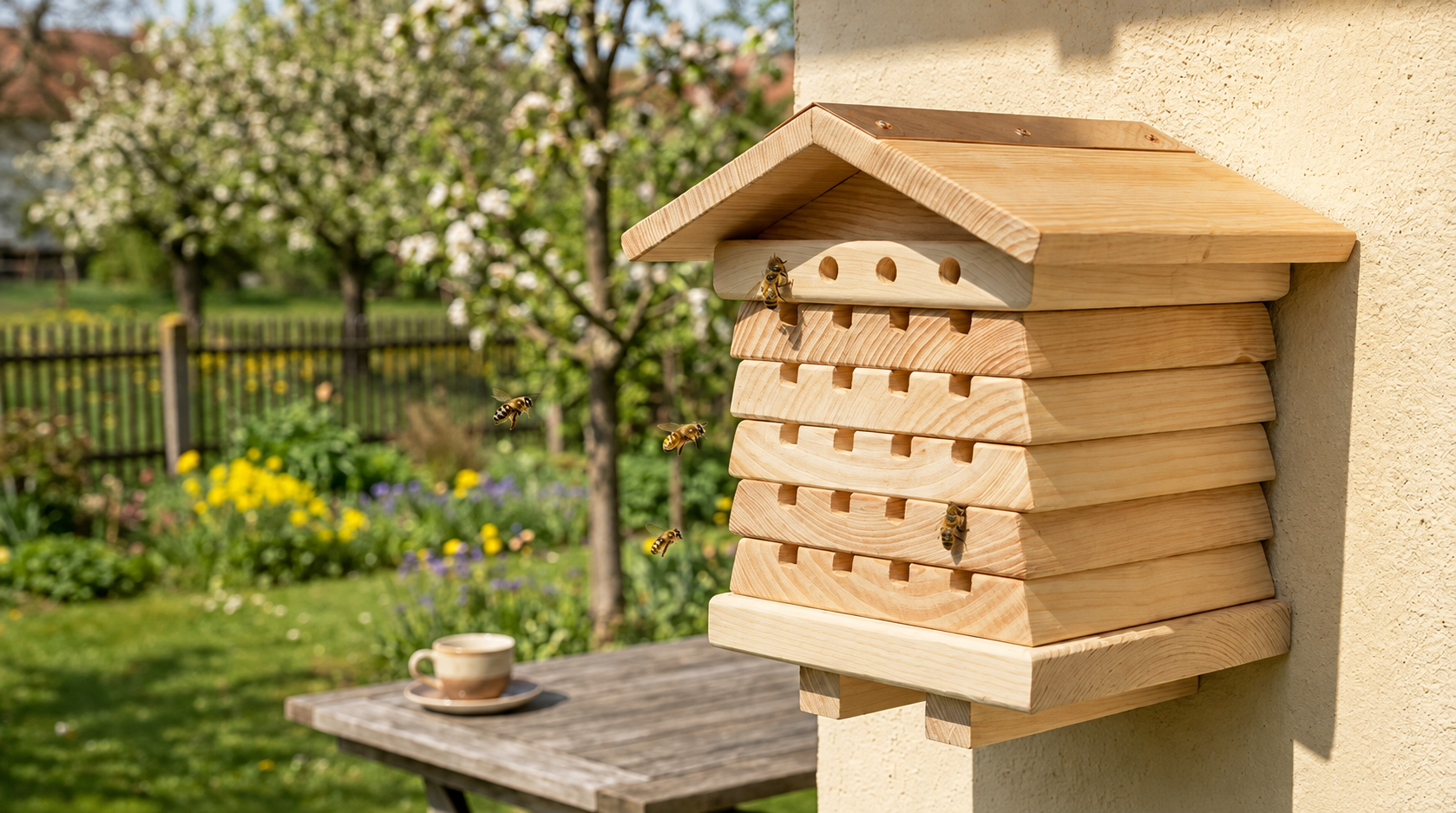
At a glance
- Best: south or south-east, catching direct morning sun.
- Avoid: north-facing, and unshaded full west if the site is exposed to driving rain.
- Height: 1–1.5m, easy to watch and above ground splash.
- Tilt: level, or a couple of degrees nose-down.
- Fixing: rigid, with a clear, unobstructed flight path to the entrances.
Morning sun decides everything
Why direction is the single biggest lever
Solitary bees are cold-blooded, so their flight muscles need warmth before they can work at all. A tunnel face that catches the sun early in the day lets a female start foraging hours before a shaded hotel would allow her to. Over a flying season that is only a few weeks long for any one species, those extra hours compound: more foraging trips mean more provisioned cells, which means more offspring. This is why direction consistently outranks almost every other siting factor when people diagnose why one bee hotel gets busy and an apparently similar one, a few metres away in the shade, does not.
It is worth reading this alongside the hole-size guide, because a hotel can have exactly the right tunnel widths and still sit empty simply because of where it has been hung. Size determines who can use it; direction determines how well they can.
South versus south-east versus other directions
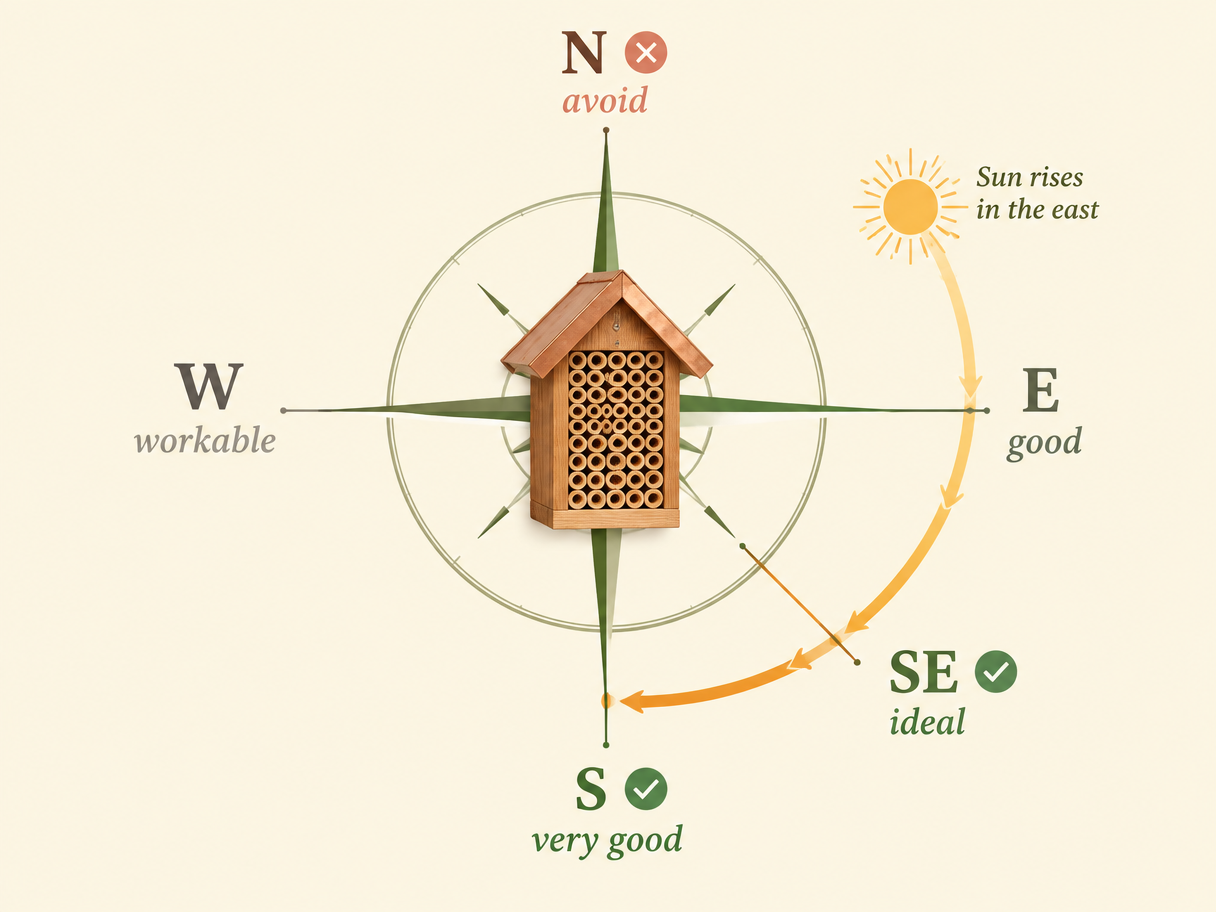
| Direction | Outcome |
|---|---|
| South-east | Ideal — early warmth, some relief from the hottest afternoon sun |
| South | Very good — strong warmth all day, benefits from roof overhang and thick timber |
| East | Good — early sun, cooler afternoons, slightly less total warmth than south-east |
| West | Workable if sheltered, but often the wettest, windiest side in the UK |
| North | Avoid — cold and shaded for most or all of the day |
Directions and positions to avoid
- North-facing: cold and shaded all day. The likeliest reason for an otherwise well-made hotel to be ignored.
- Full west with no shelter: in Britain and Ireland that is often the wettest, windiest side, and driven rain can reach the tunnels.
- Deep permanent shade under a tree canopy or a heavy eaves overhang all day — shelter from rain is good, permanent shade from the sun is not.
Getting the rest of the siting right
Direction matters most, but it works alongside a short list of other factors. Height of 1–1.5m keeps the hotel easy to watch, above ground splash-back and away from many casual predators, and it is covered in more depth in where to hang a bee hotel. The hotel should be fixed rigidly rather than left to swing, tilted a fraction nose-down so water drains out rather than in, and positioned with a clear flight path free of leaves and long grass in front of the entrances.
What good direction looks like through the seasons
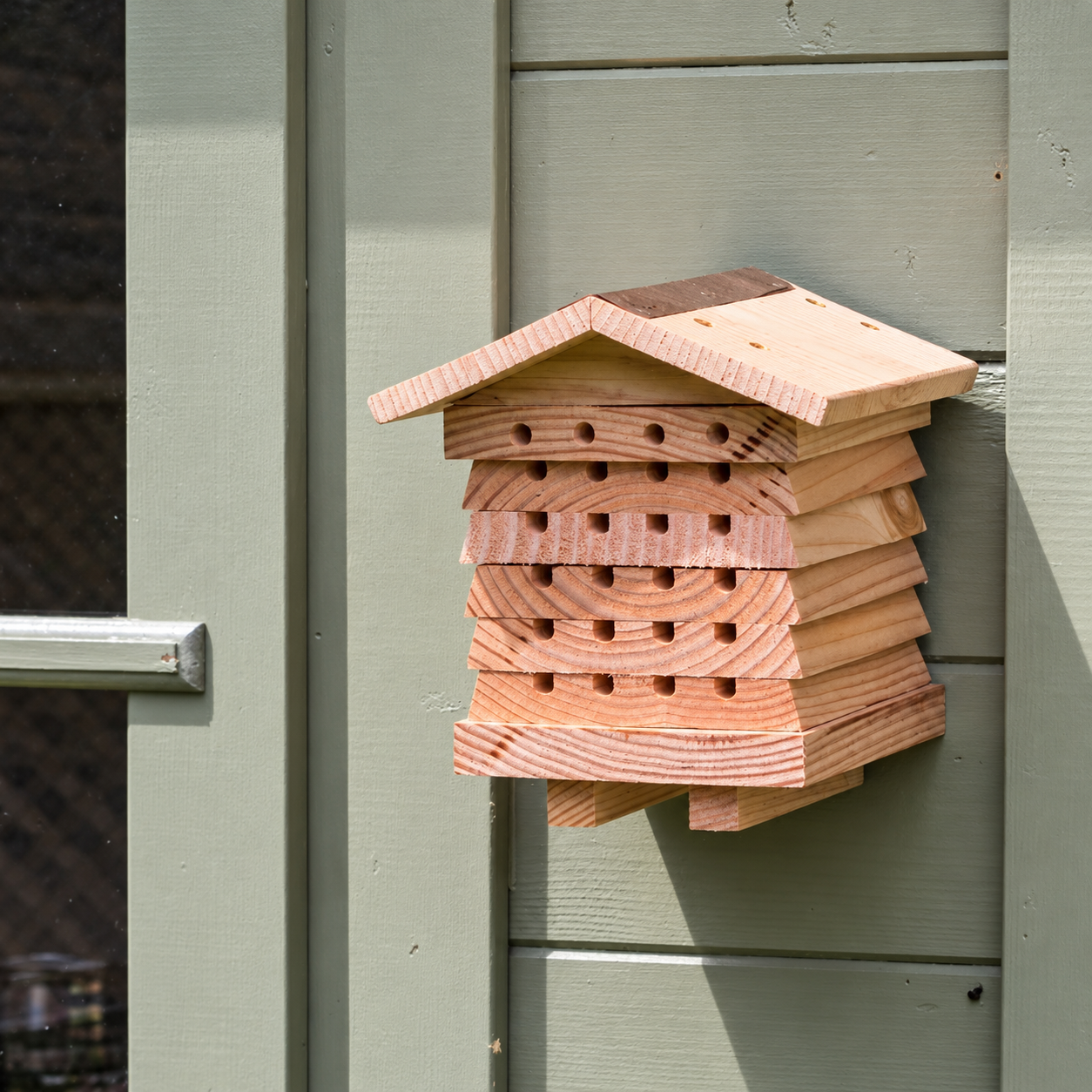
In early spring, a south or south-east face warms fast enough for red mason bees to start flying as soon as temperatures allow, often gaining a real head start over a shaded hotel a few gardens away. Through summer, the same orientation keeps leafcutter bees active for longer each day without cooking the brood, provided the roof overhang and timber thickness do their job of buffering peak heat. By autumn, direction matters less for activity but still affects how quickly morning dew clears from the entrances, which has a small but real effect on dampness inside the tunnels.
Common mistakes with direction
The most frequent mistake is choosing a spot for convenience — a shed wall by the back door, a fence that happens to be handy — without checking which way it faces. The second is assuming "gets some sun" is enough without checking it is morning sun specifically. The third is putting a hotel on a south-facing wall with no roof overhang at all, which can genuinely overheat tunnels in a heatwave; a thick timber and a proper overhang solve this rather than requiring you to pick a cooler direction instead.
The most frequent mistake is choosing a spot for convenience — a handy shed wall, a fence that happens to be nearby — without ever checking which way it faces.
Can you move it once it is up?
Before nesting starts in spring, yes, freely. Once tunnels are capped, leave the hotel exactly where it is — returning females navigate back to a precise remembered position, and moving it even a short distance can mean they fail to find their own nest again. If a hotel absolutely must be moved, keep the same orientation and height and do it outside the flying season.
In the southern hemisphere, flip the compass
Everything above assumes the northern hemisphere, where the sun tracks across the southern sky. In Australia, New Zealand, South Africa and the rest of the southern hemisphere the sun tracks across the northern sky instead, so the same logic points the other way: face the hotel north to north-east to catch the morning sun, and treat a south-facing wall the way a British gardener treats a north-facing one. Height, tilt, rigid fixing and the clear flight path all stay exactly the same — only the compass direction reverses.
A hotel built for a sunny, exposed spot
The Wild Bee Hotel's 19mm untreated cedar walls buffer the swing between a cold night and a sun-baked afternoon, and its hand-formed copper roof overhangs on all sides so a south-facing front stays dry through a sudden shower. £39.99 with free worldwide shipping and a 30-day money-back guarantee.
Questions people ask next
Is south-east always better than due south?
What if my only sunny wall faces west?
Can I put a bee hotel on a north-facing wall?
Does the hotel need to face a garden or can it face a wall of foliage?
Should the hotel tilt forward or backward?
Does this advice flip in the southern hemisphere?
Does direction matter as much as tunnel size?
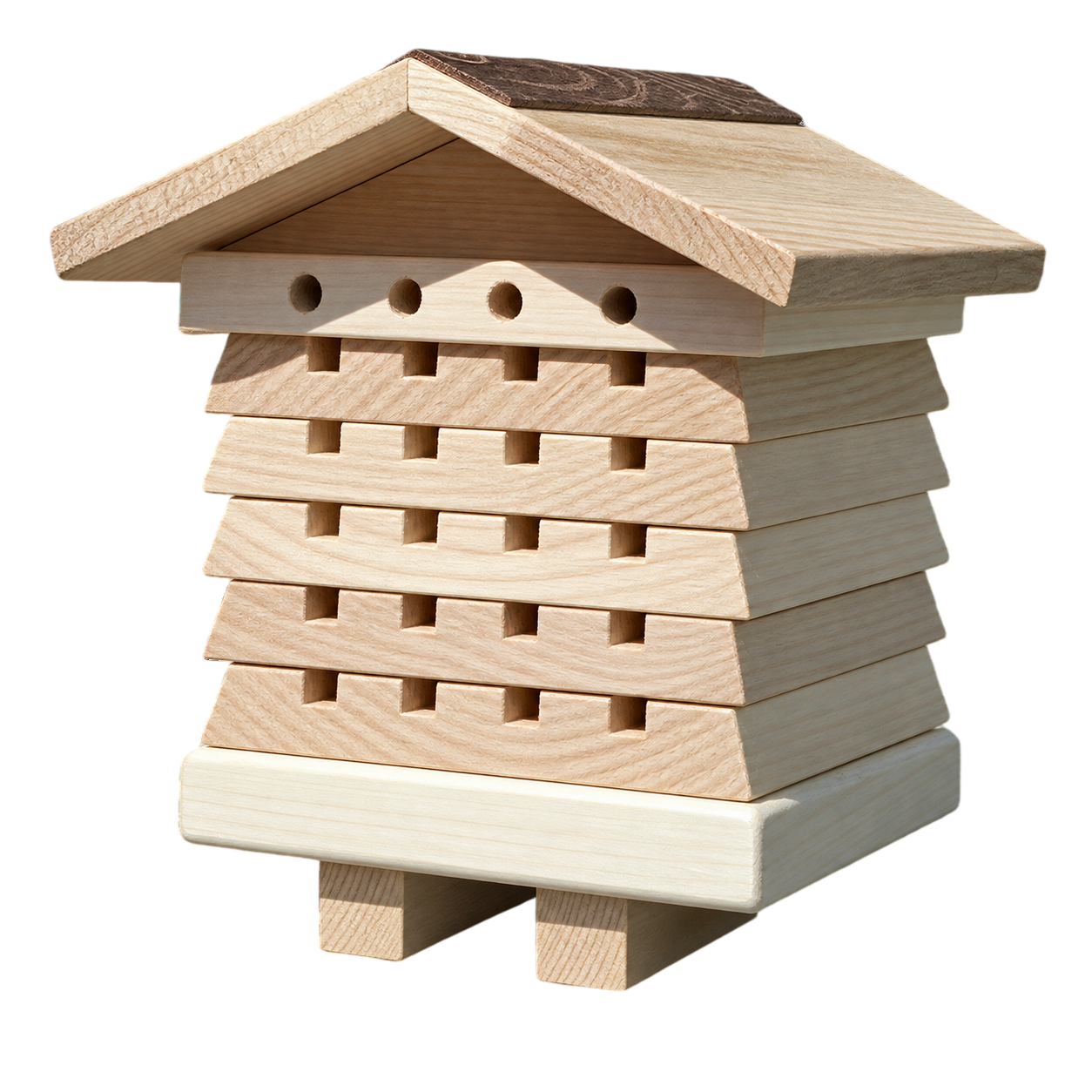
Made for a sunny, exposed spot
19mm untreated cedar and a copper roof that overhangs on every side, so the orientation this guide recommends works in practice, not just in theory.
About Clayton Dawson
Cabinetmaker and solitary-bee keeper, and the maker of the Wild Bee Hotel. Clayton has kept red mason and leafcutter bees in his own garden for years, and every guide on this site is written and checked against what he sees in the tunnels each season rather than copied from a catalogue. Read the full story.
First published 27 March 2025 · last reviewed 19 August 2026.
What we based this on: Bumblebee Conservation Trust, RHS, Buglife.