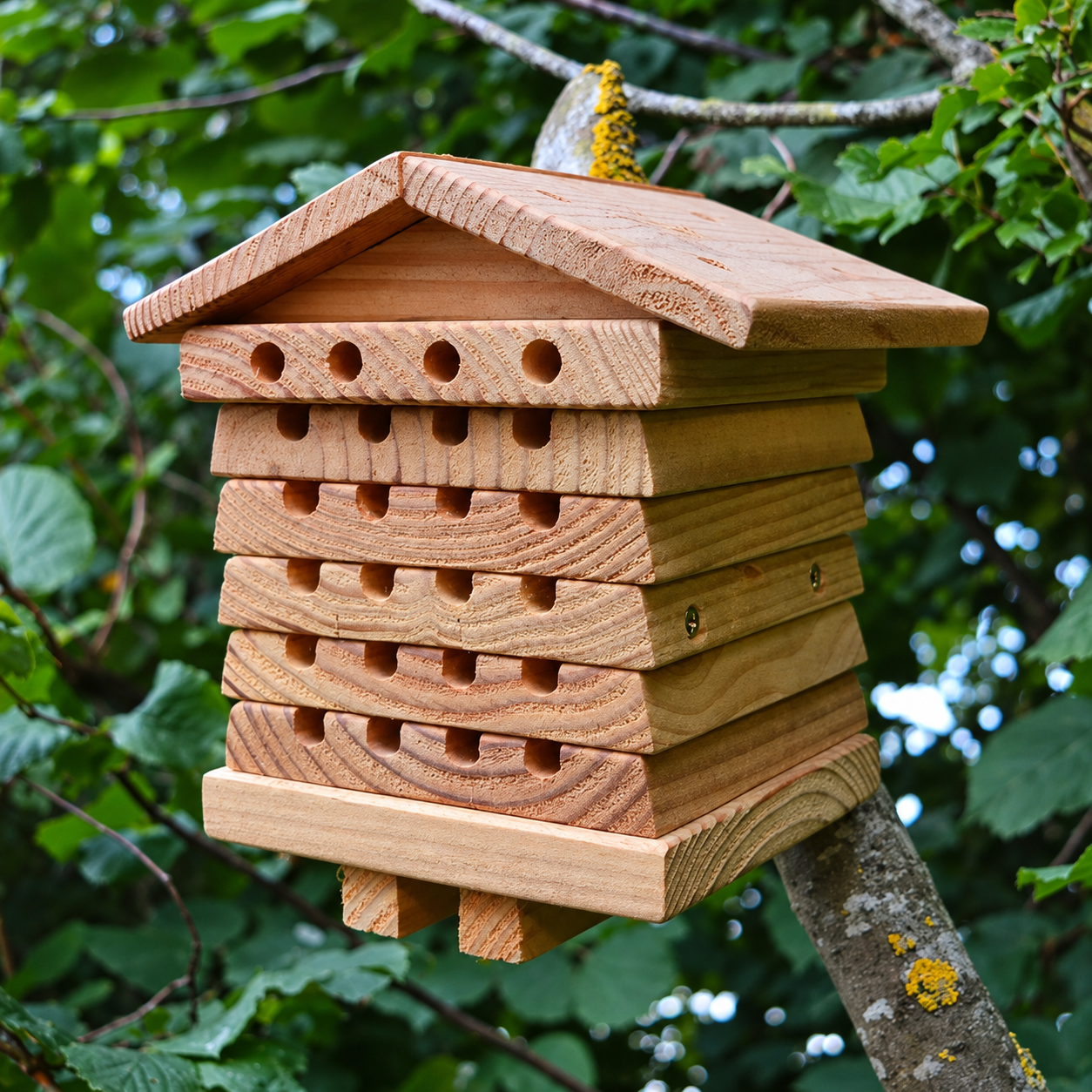
How to attract bees to a bee hotel
At a glance
- Position beats every other factor: morning sun, rigid fixing, 1–1.5m high.
- Offer several tunnel widths from 2mm to 10mm rather than one uniform size.
- Nearby mud and flowers in bloom from March to September do real work.
- Occupancy usually climbs sharply in year two, not year one.
- Sugar water, bright paint and stocking up on cheap hotels do not help.
Eight things that work
- Hang it before March. Mason bees choose tunnels within days of emerging — see our timing guide for the full calendar.
- Morning sun on the tunnel face. South or south-east, never north; warmth at the entrance in the early hours gets bees flying and provisioning sooner in the day.
- Fix it rigidly. A hotel swinging on wire reads as unsafe to a nesting female; screw it to a wall, fence post or shed at 1–1.5m so it does not move in wind.
- Offer several tunnel widths. 2mm–10mm covers mason, leafcutter and smaller species, so whichever bees are locally common find a fit — see our tunnel diameter chart for the detail.
- Provide mud. Red mason bees seal cells with wet, clay-ish soil. A patch of bare damp earth, or a shallow tray of soil kept moist within 20m, makes a measurable difference to nesting rates.
- Keep something in bloom from March to September. Pulmonaria, fruit blossom, hardy geranium, borage, comfrey, lavender, scabious and single-flowered dahlias cover the season without needing a dedicated wildlife border.
- Stop using insecticides. Sprays anywhere near the nesting front kill provisioning females outright and contaminate the pollen stored for their brood.
- Be patient and leave it alone. Do not open, clean or reposition it mid season. Occupancy usually climbs sharply in year two as the first generation returns to nest close to where it hatched.
Three things that do not help
| Popular tip | Why it does not work |
|---|---|
| Sugar water or "bee attractant" sprays | Nesting females are searching for tunnels, not food, and sticky residue draws ants |
| Painting it bright colours | The colour is for the garden's benefit; the solvent smell can put off inspection |
| Buying several cheap hotels instead of one good one | Damp, splintered tunnels attract fewer bees than a single dry, smooth, well-sited one |
How to tell it is working
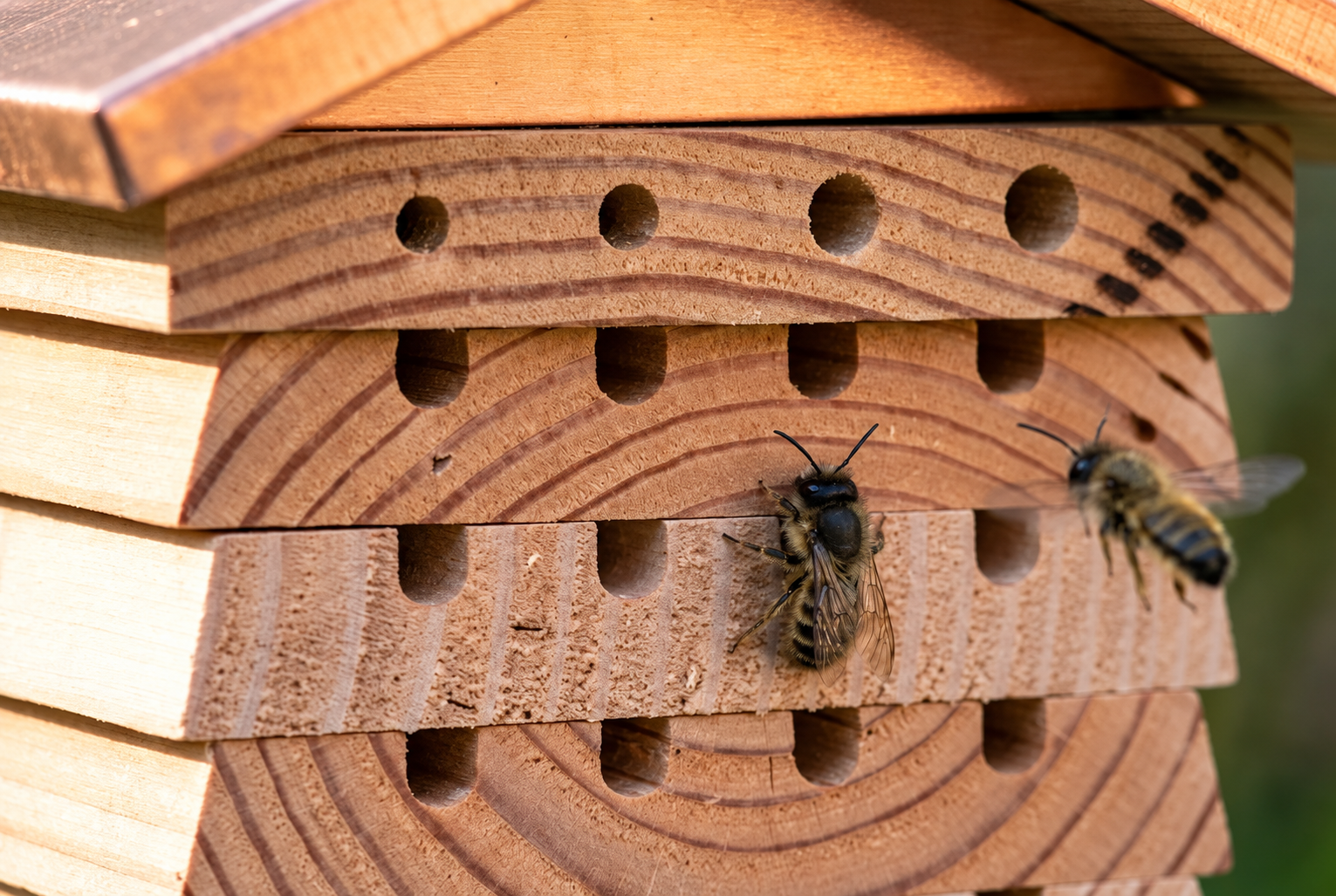
Watch on the first warm mornings: a female hovers, reverses into a tunnel, comes back out, and tries another a few times before settling. Days later she arrives carrying pollen visible on her hind legs or the underside of her abdomen. Then mud caps or chewed leaf discs appear across several entrances — that is a completed nest, several cells deep, and the clearest possible sign the siting has worked.
What to check before assuming it has "failed"
A single quiet season rarely means the hotel is wrong. Before changing anything, confirm the face gets real morning sun, that it does not move in a breeze, and that the tunnels are dry and free of the wear covered in our common problems guide. Most so-called failures turn out to be a shaded wall or a hotel hung too low, not a fault with the tunnels themselves.
Start with a hotel worth siting well
The Wild Bee Hotel gives you the parts you cannot fix later with any amount of good siting: hand-sanded tunnels from 2mm to 10mm, 19mm untreated Western red cedar, a hand-formed copper roof overhanging on every side, a solid rear panel and a rigid mount. £39.99, free worldwide shipping, 30-day money-back guarantee — the only exception being a hotel bees have already moved into.
Questions people ask next
How long does it take for a new bee hotel to get used?
Does the colour of a bee hotel matter?
Will a bee hotel attract bees away from my flowers?
Why has nothing moved in after a whole year?
Do I need to plant specific flowers to attract nesting bees?
Can I attract bees to a hotel on a balcony or small yard?
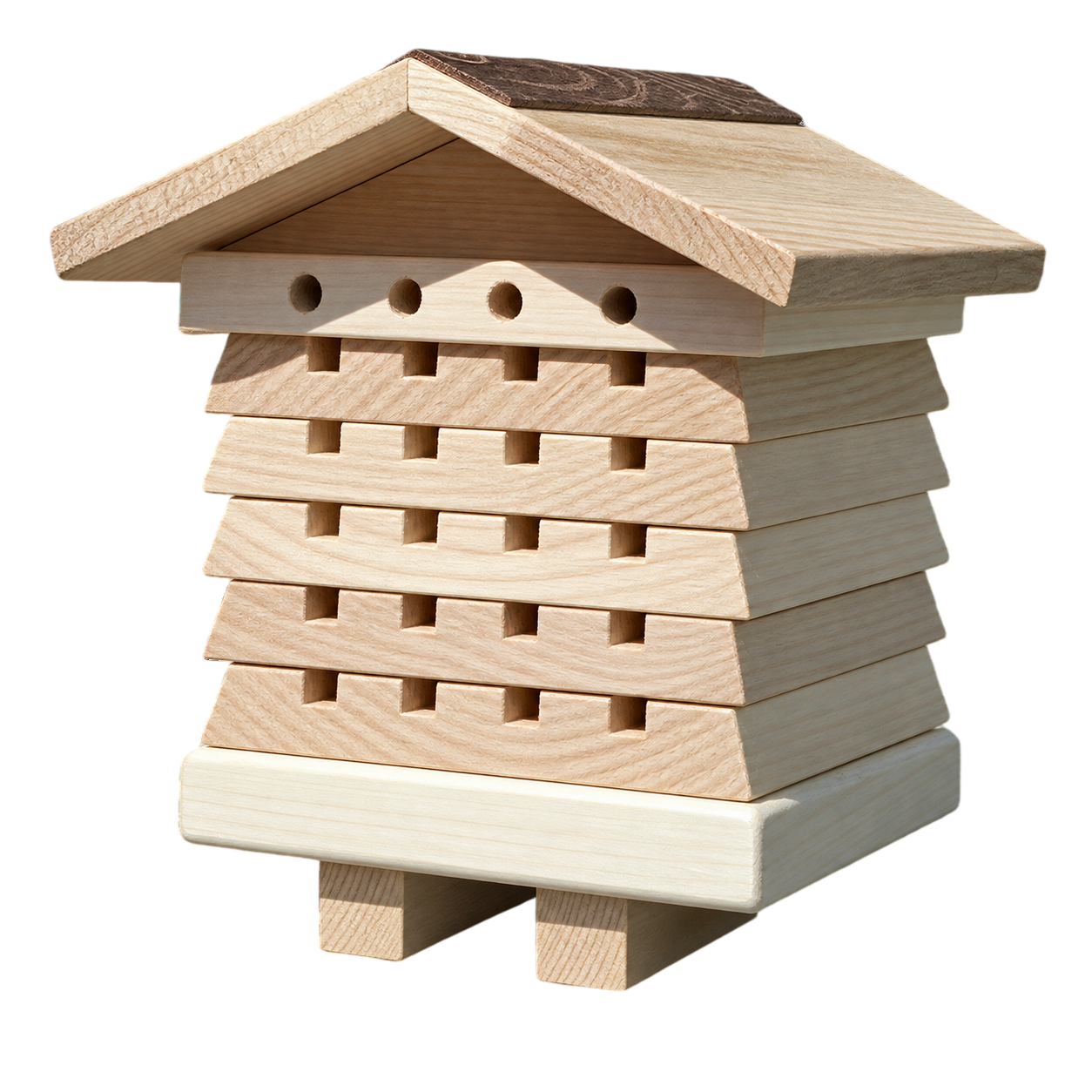
The siting advice only works with the right hotel
Perfect positioning cannot fix damp, splintery or badly spaced tunnels. Start with cedar that is sanded, sealed and roofed properly, then follow the steps below.
About Clayton Dawson
Cabinetmaker and solitary-bee keeper, and the maker of the Wild Bee Hotel. Clayton has kept red mason and leafcutter bees in his own garden for years, and every guide on this site is written and checked against what he sees in the tunnels each season rather than copied from a catalogue. Read the full story.
First published 22 September 2025 · last reviewed 11 July 2026.