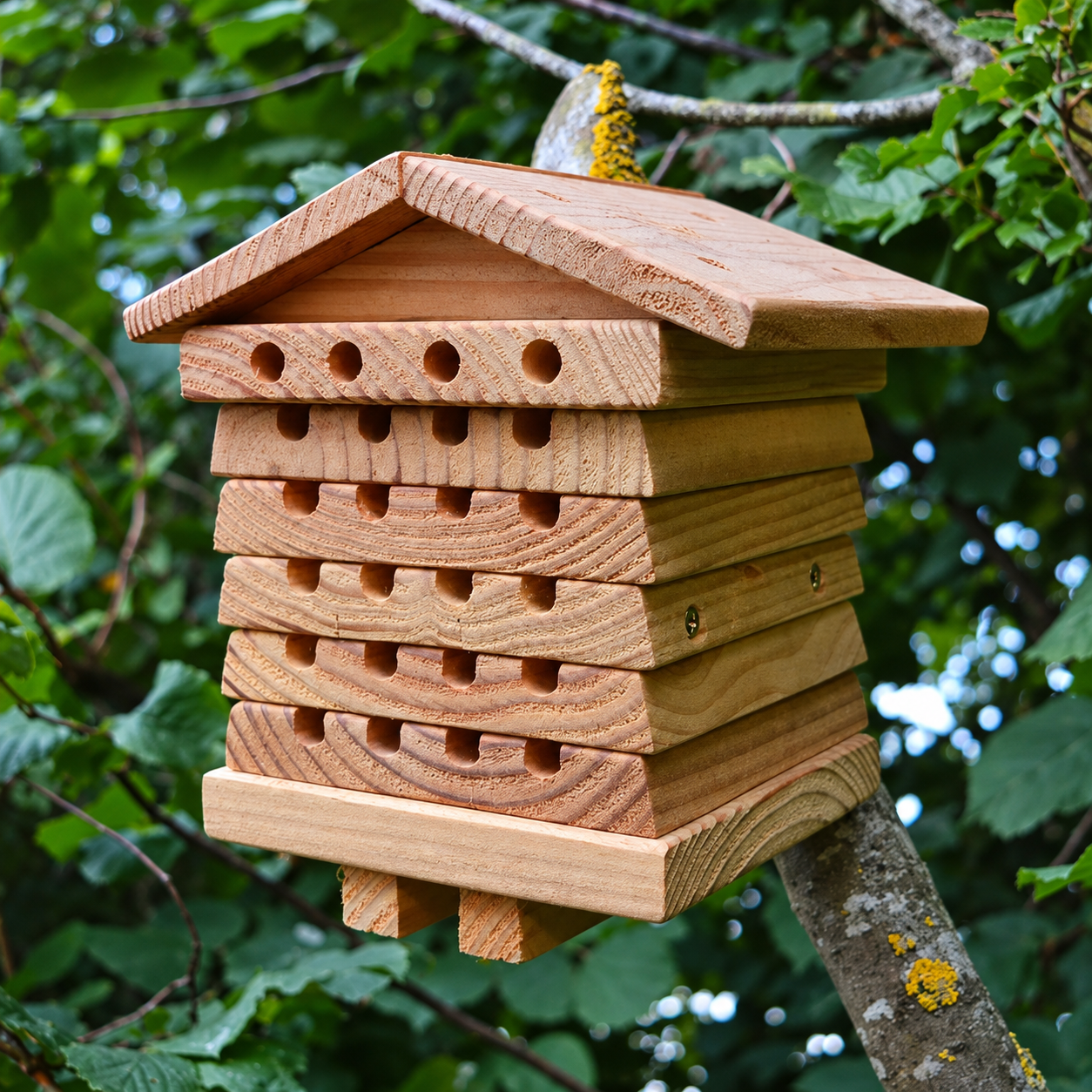
Bug hotels and bug houses: what really moves in, and what doesn't
A bug hotel is a stack of different habitats in one frame — hollow stems, pine cones, bark, straw, drilled wood. Each layer targets a different creature, and each layer has a different success rate. Here is what fills up and what sits empty year after year.
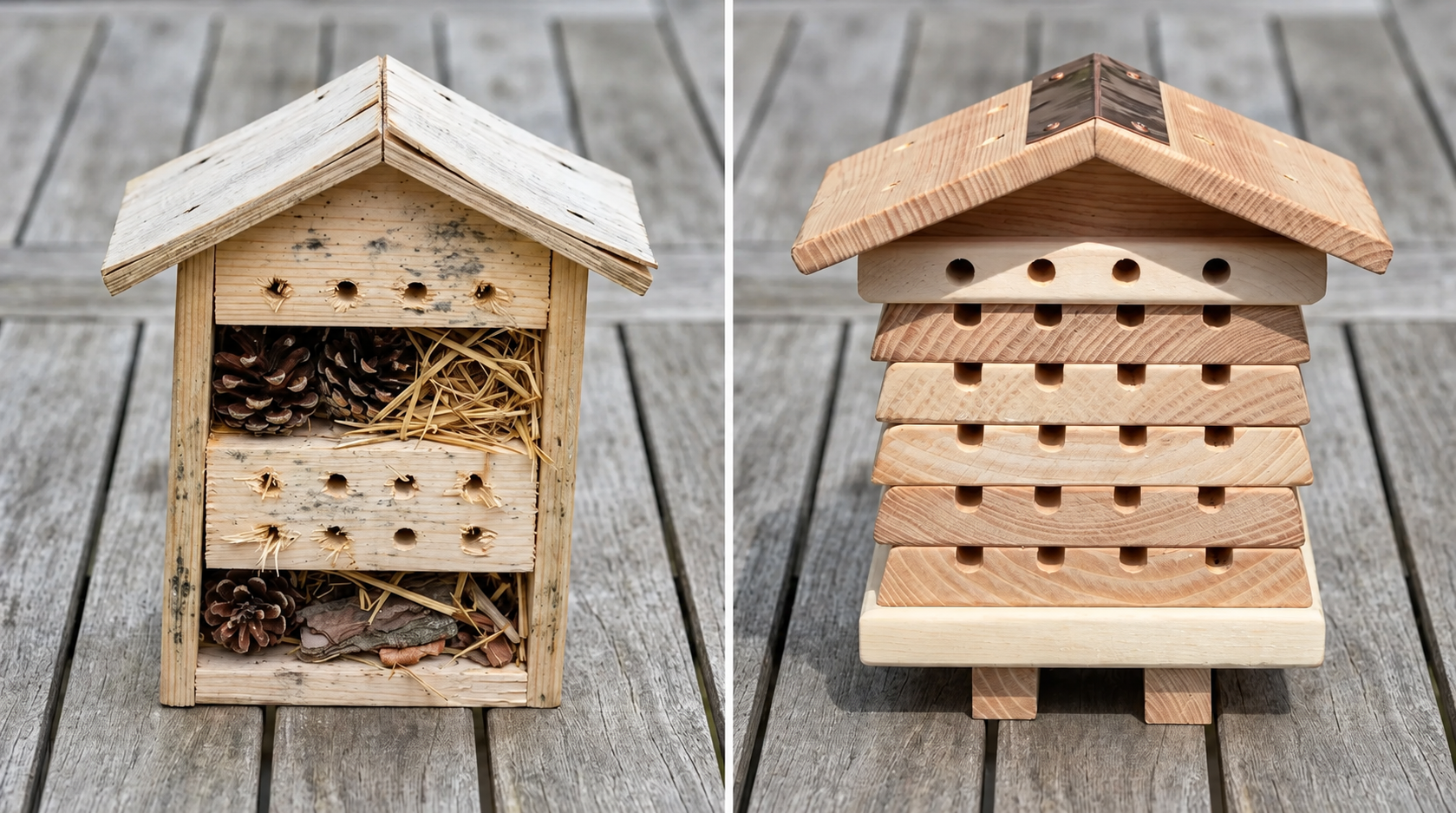
The layers in a typical bug hotel, ranked by what they achieve
Drilled hardwood blocks — the layer that always works
Cavity-nesting solitary bees and small solitary wasps use dry tunnels in wood. This is the one section of a bug hotel that reliably fills within a season or two, provided the tunnels are the right widths, smooth inside, dry and closed at the back. It is also the section most mass-produced bug hotels get wrong: a single drill bit used throughout, splintered holes, and an open back that lets parasites in.
Hollow stems and bamboo canes — works, with a warning
Bamboo is the right shape but the wrong cut. Canes sawn through a node leave a sharp rim that damages wings, and canes left open at both ends are a corridor, not a nest. If you build your own, cut just behind a node so the back is sealed, and sand the entrance rim.
Pine cones, straw and dry leaves — occasional lodgers
These loose-fill layers shelter ladybirds and lacewings over winter. They rarely fill in the first year and they need replacing as they rot, because damp packing in the middle of a frame spreads mould into the nesting layers beside it.
Bark slabs and log offcuts — slow but genuine
Beetles, woodlice and centipedes will use decaying timber at the base of a stack. Keep this section low and separate from the bee tunnels: it wants to stay damp, and the bees need to stay dry. Mixing the two in one small box is the commonest design mistake in cheap bug hotels.
Bug hotel or bee house? A straight answer
If you want a school or family project with a bit of everything, build a bug hotel out of pallet wood and fill it seasonally. If you want to see something arrive, nest and hatch in your own garden, buy a bee house. Solitary bees are the fastest habitat to occupy, the easiest to watch, and the most useful to your fruit and vegetables — one red mason bee pollinates as much as many honeybees because she carries dry pollen loose on her body.
There is no reason not to do both. A well-sited bee house on a sunny wall and a rough log and leaf pile in the shade of a hedge cover far more species than one crowded stack ever will.
What to avoid when buying
- Painted, stained or varnished timber — the solvent smell puts nesting females off.
- Plastic or felt roofs that split after one winter and let rain into the tunnels.
- Open-backed frames, which let parasitic wasps reach larvae from behind.
- One tunnel width throughout, which limits you to a single species at best.
- Glued-in loose fill you cannot replace, so the whole unit rots together.
The Wild Bee Hotel: the layer that works, built properly
Rather than stacking six habitats and doing none of them well, the Wild Bee Hotel does the proven one to a high standard: hand-sanded tunnels from 2mm to 10mm so several species can choose, 19mm untreated Western red cedar, a hand-formed copper roof overhanging on all sides to throw rain clear, a solid rear panel against parasites, and a steel mount for a wall, fence or post. £39.99 with free worldwide shipping and a 30-day money-back guarantee.
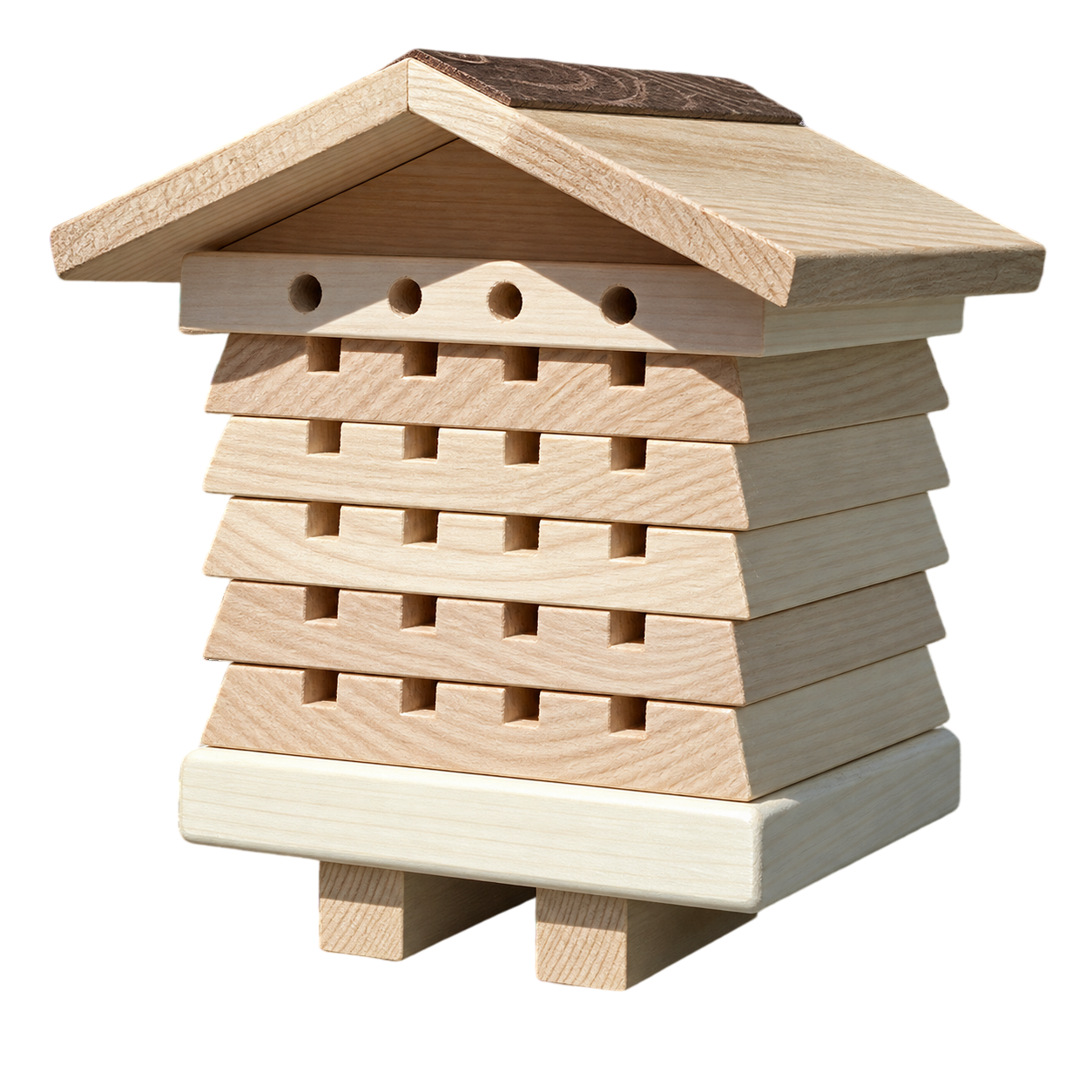
Built to the standard this guide describes
Untreated Western red cedar, a hand-formed copper roof, tunnels from 2mm to 10mm sanded mirror-smooth, and a solid rear panel. From £39.99 with free worldwide shipping and 30 days to change your mind.