Insect hotel buying guide: the tiers, the materials, and what actually gets used
Insect hotels are sold across a huge price range, from flat-packed pine at £8 to hand-finished cedar boxes at £40 or more. The materials and construction quality inside that range vary far more than most listings let on. Here is what separates each tier, so the price difference makes sense before you buy.
What to look for in an insect hotel
The three price tiers, honestly
| Tier | Typical price | What you usually get |
|---|---|---|
| Budget flat-pack | £5–£15 | Thin pine or plywood, unsorted bamboo bundle, stapled felt roof, unsanded holes |
| Mid-range multi-compartment | £15–£30 | Thicker softwood, mixed pine cone/straw/bamboo fill, painted or lightly treated finish |
| Purpose-built hardwood | £30–£50+ | Cedar or oak body, metal roof, graded and hand-finished tunnels, solid rear panel |
None of these tiers is inherently wrong to buy — a school project box does not need cedar and copper. What matters is knowing which tier you are actually paying for, since listing photographs at every price point tend to look similarly appealing.
Timber: the material that decides how long it lasts
Softwood pine is cheap and workable but moves with moisture and rots within a few seasons unless treated — and treatment chemicals are exactly what a nesting female avoids. Western red cedar and oak are naturally rot-resistant without any coating, and their density buffers the nesting chamber against temperature swings between a cold night and a hot afternoon far better than thin pine. That buffering matters more than it sounds: developing bee larvae are sensitive to rapid temperature change.
Roofing: where cheap hotels fail first
Felt and thin plastic roofing are the most common failure point in budget and mid-range insect hotels. Felt splits and curls within one or two winters; thin plastic goes brittle in frost and cracks. Once the roof fails, rain reaches the tunnel entrances directly, and wet tunnels are one of the two most common reasons a nest fails outright (the other is a through-hole open at the back). Metal roofing — copper especially — sheds water for decades without maintenance and never needs replacing.
Fill material: bamboo, cardboard, drilled wood
Unsorted bamboo bundles are the cheapest way to fill a frame quickly, but garden-centre bamboo is rarely cut cleanly: sawn-through nodes leave a sharp rim, and canes left open at both ends offer no back wall for a female to build against. Cardboard tube inserts are tidy and replaceable but flex more than timber and can wick damp from a poorly ventilated frame. Drilled hardwood blocks, done well, give the most consistent, cleanly finished tunnel — which is why they are the base of nearly every design worth its price. Our page on tunnel diameters and depths covers exactly which sizes matter and why.
Finishing: the detail listings rarely show
A drill leaves a rough, sometimes splintered bore. Hand-sanding the inside of every tunnel and the entrance rim takes real time per unit, which is why it is common on purpose-built hardwood hotels and almost never mentioned on budget listings — it does not photograph, but a bee inspecting the tunnel with her legs and antennae notices it immediately.
Common mistakes across all tiers
- Buying on compartment count rather than tunnel diameter range and finish.
- Treated or painted timber, which puts off nesting females regardless of shape.
- Assuming a metal-look roof photograph means a genuine metal roof.
- Ignoring the back of the tunnels — an open back is a corridor, not a nest.
- Hanging any tier loosely, so wind sway discourages nesting altogether.
Season by season, whichever tier you buy
Red mason bees (Osmia bicornis) inspect tunnels from March through June; leafcutter bees (Megachile species) follow from June to August, sealing cells with cut leaf discs rather than mud. Whatever tier of hotel you own, leave it undisturbed and in place over autumn and winter — the next generation is developing inside sealed tunnels.
What to look for when buying
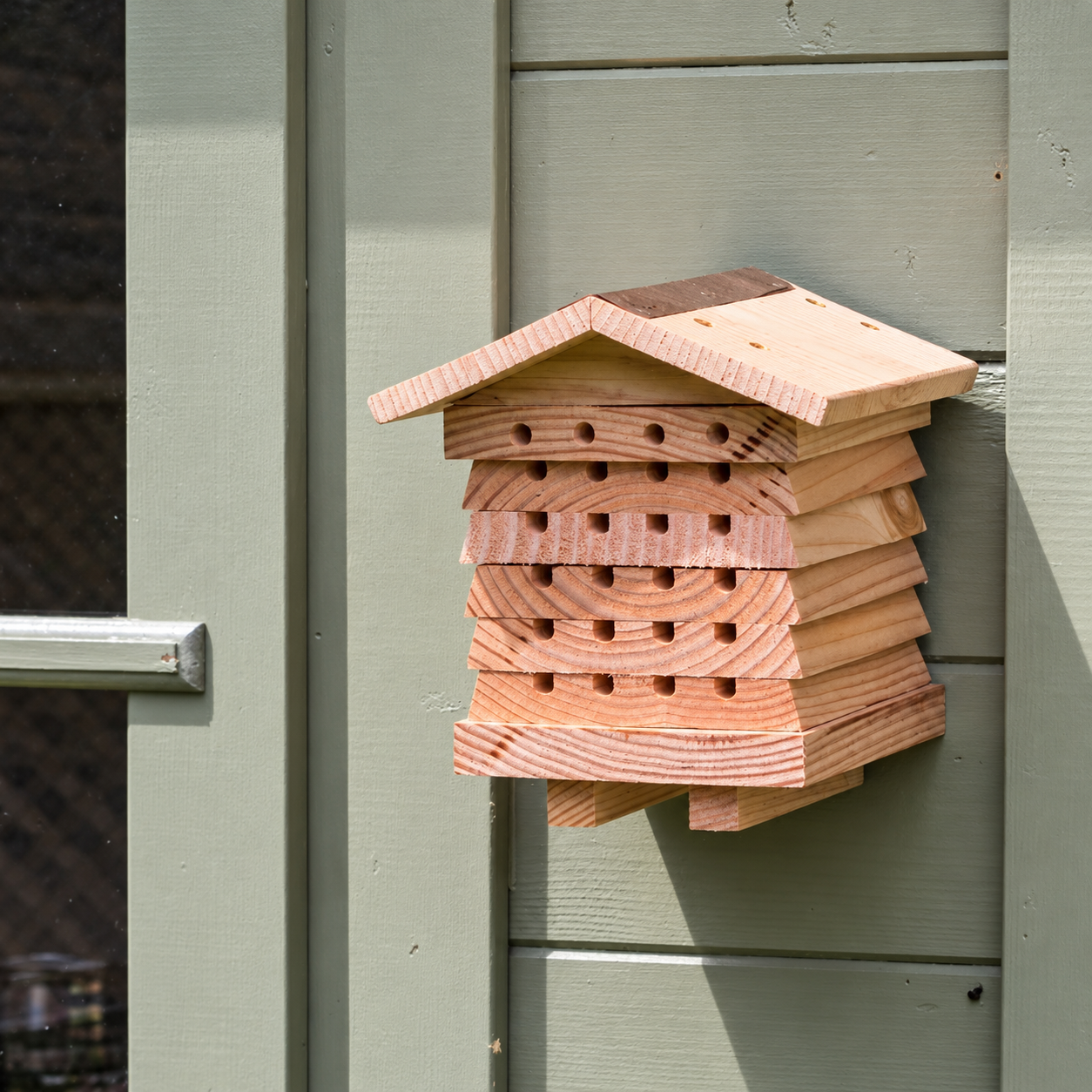
Whatever the price, check for a spread of tunnel diameters from roughly 2mm to 10mm, untreated timber, a genuinely overhanging weatherproof roof, smooth tunnel interiors and a solid rear panel. Our best bee hotel comparison scores products against exactly these fundamentals rather than the number of features listed.
Where the Wild Bee Hotel sits
The Wild Bee Hotel is built at the top tier as standard: 19mm untreated Western red cedar, a hand-formed copper roof overhanging on every side, tiers of hand-sanded tunnels from 2mm to 10mm, a solid rear panel and a heavy-duty steel mount. £39.99 for one, multi-packs from £49.99, free worldwide shipping and a 30-day money-back guarantee.
Questions people ask next
Why do insect hotels vary so much in price?
Is plastic ever a reasonable material for an insect hotel?
Do more expensive insect hotels attract more species?
What is the minimum specification worth buying?
How long should a well-made insect hotel last outdoors?
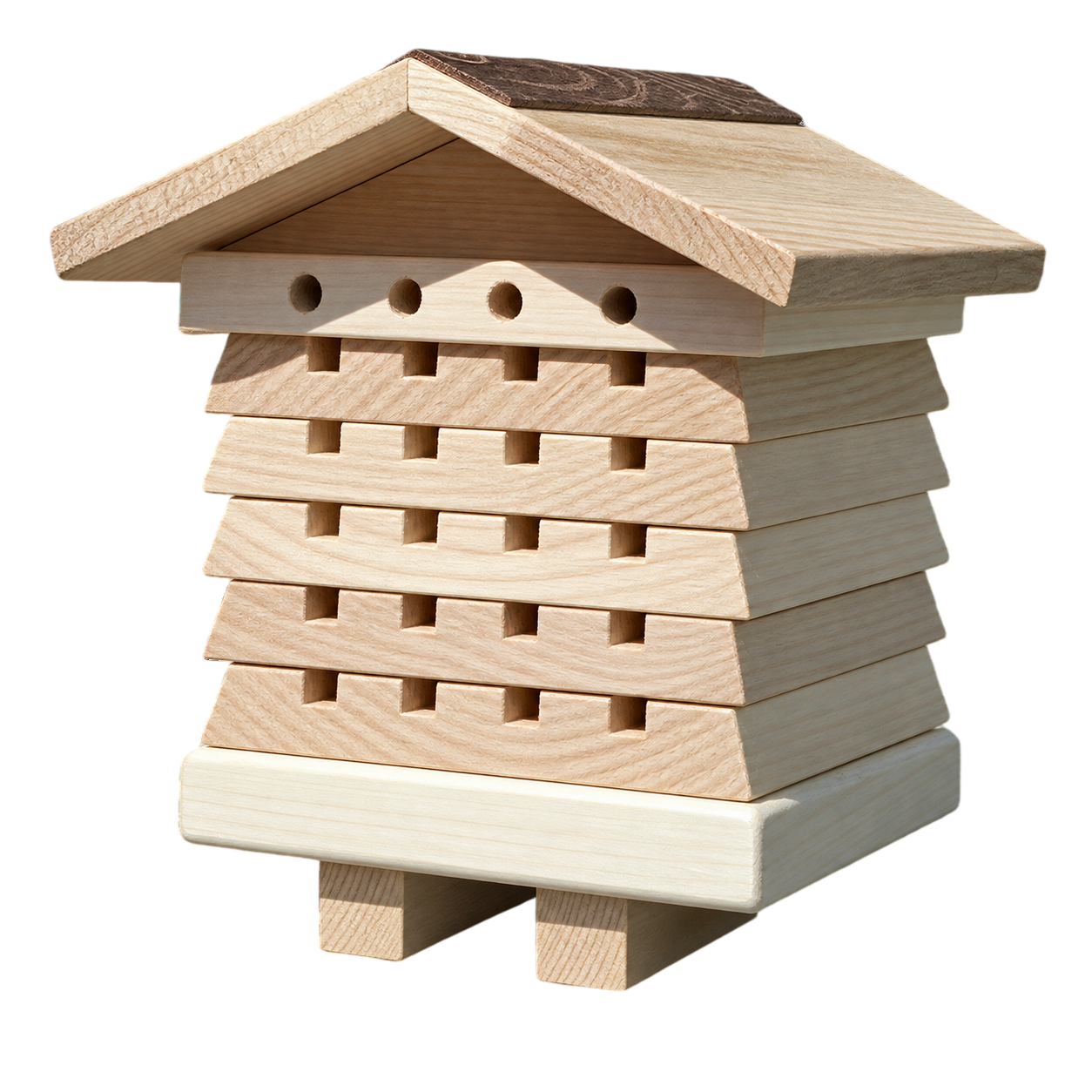
The materials that separate a top-tier insect hotel from the rest
Western red cedar, hand-formed copper, hand-sanded tunnels and a solid rear panel — the specification this guide describes, built as one product.
About Clayton Dawson
Cabinetmaker and solitary-bee keeper, and the maker of the Wild Bee Hotel. Clayton has kept red mason and leafcutter bees in his own garden for years, and every guide on this site is written and checked against what he sees in the tunnels each season rather than copied from a catalogue. Read the full story.
First published 6 May 2025 · last reviewed 17 August 2026.
What we based this on: RHS, Buglife, Wildlife Trusts.