Bug houses: what actually moves in
At a glance
- A bug house is a mixed-habitat box, not a bee nest.
- Shallow compartments and damp interiors are the usual reason nothing settles.
- Ground-level shade suits beetles and ladybirds; bees want sun and height.
- Loose bamboo cut short is the most common weak point for bees.
- For bees specifically, a single-purpose tunnel block is a far better bet.
What is inside a typical bug house
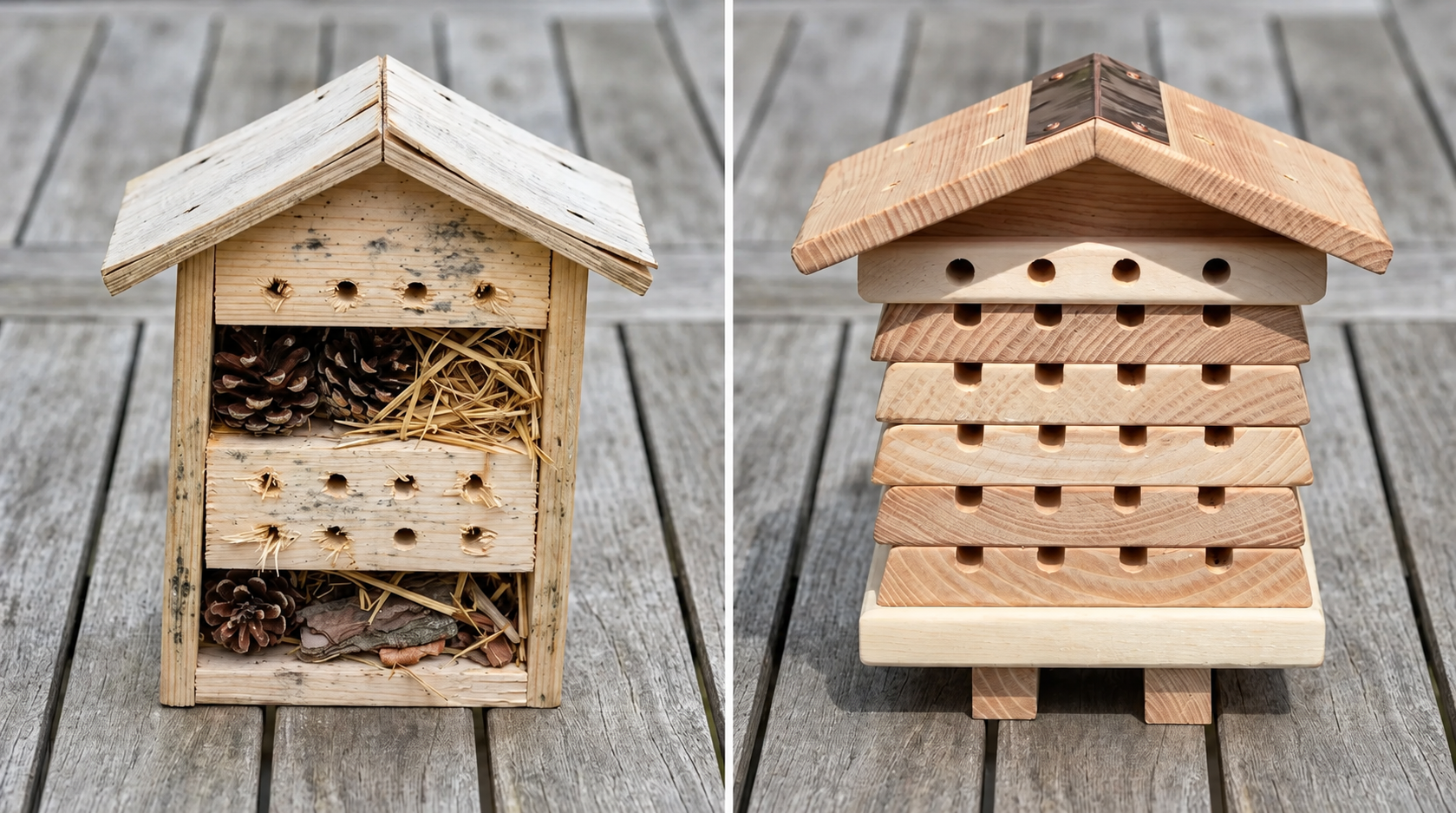
Open most bug houses and you find the same four or five materials stacked in a frame: short lengths of bamboo, drilled softwood, thin slatted gaps, pine cones and a handful of straw or wood wool. Each is aimed at a different group. The slats and straw are for ladybirds and lacewings looking for somewhere dry to overwinter. The cones and loose material suit beetles and spiders. The bamboo and drilled wood are the only parts a solitary bee would consider, and they are the parts most often done badly.
There is nothing dishonest about that design. A mixed box genuinely does provide winter shelter, and a garden with one is better off than a garden with bare fence panels. The problem is the mismatch between what buyers expect and what the box can deliver: people buy a bug house hoping for bees, then judge it a failure when what turns up is a spider.
Why the bee part usually fails
| What bug houses commonly do | What nesting bees need |
|---|---|
| Bamboo cut to 5–7cm and left loose | Tunnels of roughly 10–15cm, held firmly in place |
| Rough sawn or split cane ends | Smooth rims and walls that do not shred wings |
| Open backs and through-holes | Dead-end tunnels with a solid rear panel |
| Flush roofs, thin plywood | An overhanging roof and timber thick enough to stay dry |
| One or two hole sizes | A spread from about 2mm to 10mm |
Depth matters more than it sounds. In a short tunnel a female can only lay a few cells, and the cells nearest the entrance are usually male, so a shallow box quietly produces far fewer female bees per nest than a deep one. That is the mechanism behind most disappointing occupancy, and it is covered in more detail in the hole-size guide.
Getting more out of a bug house you already own
You do not need to throw it away. Move it somewhere sheltered and low, near dense planting or a log pile, where the beetle and ladybird sections can do real work. Fix it so it cannot rock in wind. Remove any plastic sheeting that traps condensation. Pull out short loose bamboo that is splitting, because open damp cane is a straightforward parasite and mould trap. Then judge it for what it is good at — winter shelter and general habitat — and put a proper tunnel block somewhere sunny for the bees.
Bug house, bug hotel, insect house: the same thing?
Broadly yes, and the labels are used interchangeably in shops. "Bug hotel" and the larger stacked habitat piles tend to be bigger, "insect house" tends to be the tidier boxed version, and "bug house" sits between them. None of the three names tells you anything reliable about the build quality, which is the only thing that decides whether the box is used. Read the materials and dimensions instead of the name.
When a bee hotel is the better buy
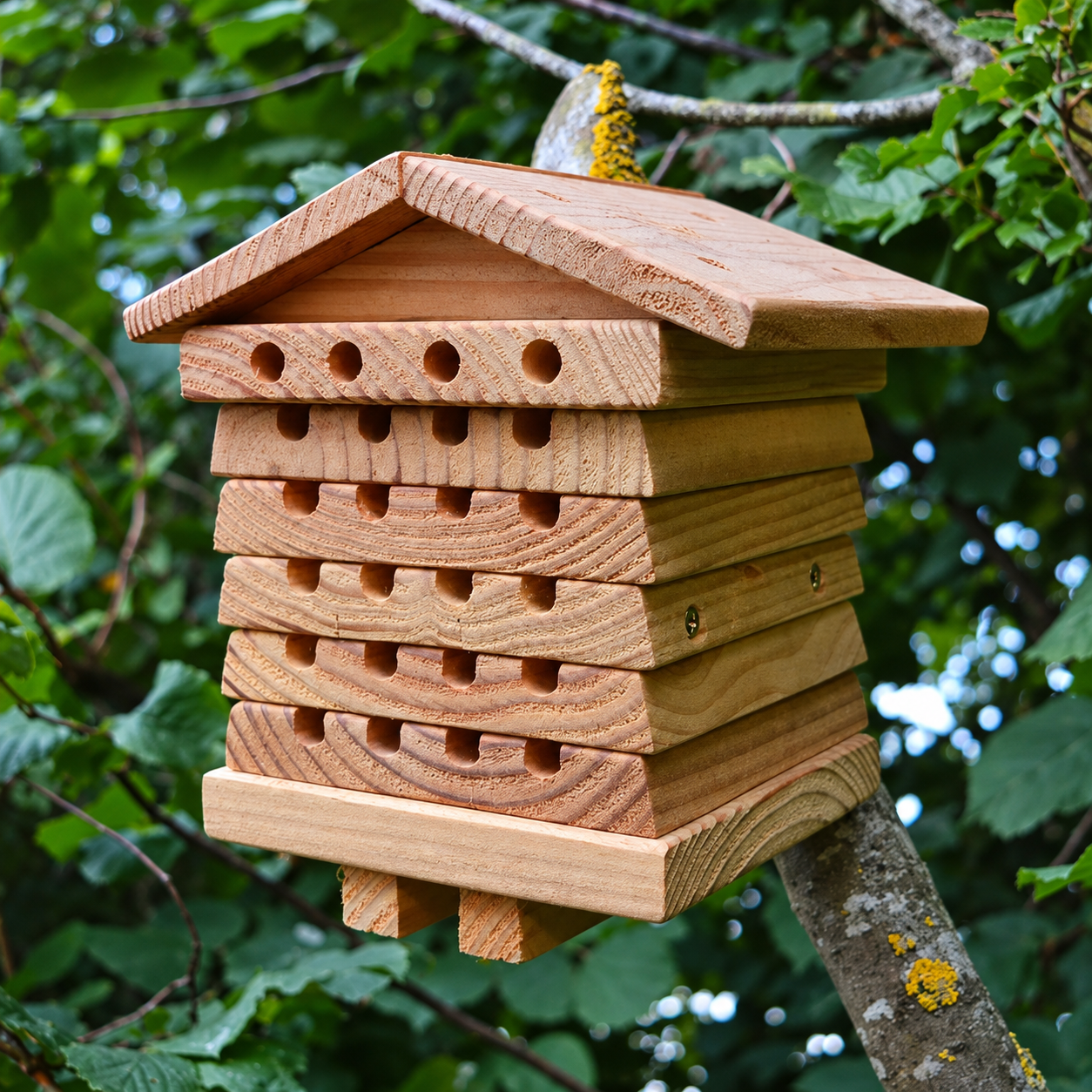
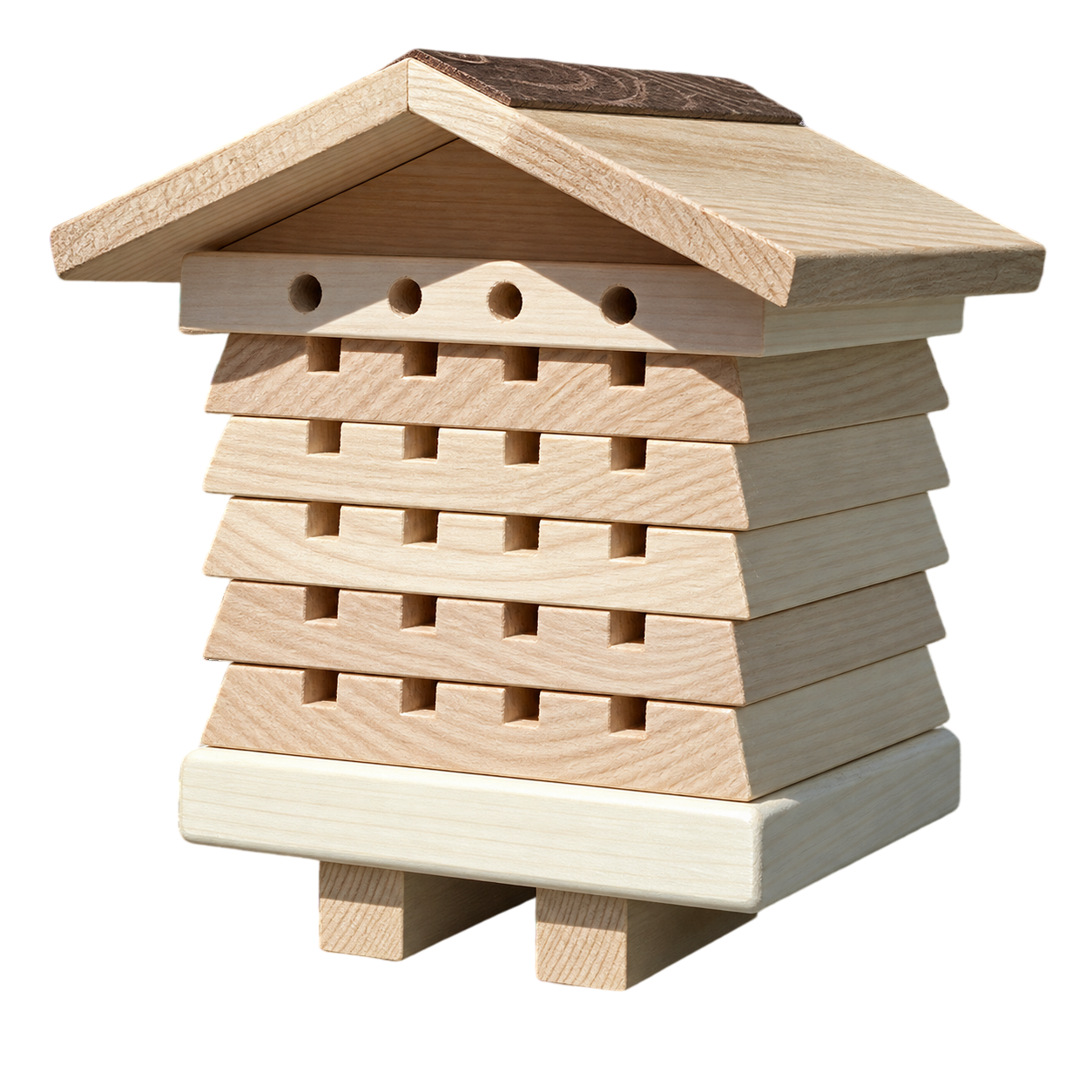
If your reason for buying is to watch bees nest, to help solitary pollinators, or to give a gift that visibly does something, a purpose-built bee hotel is the more reliable choice. It does one job with the right depths, widths and materials rather than five jobs approximately. The Wild Bee Hotel is 19mm untreated Western red cedar with a hand-formed copper roof, tunnels from 2mm to 10mm hand-sanded inside and at the rim, and a solid rear panel, from £39.99 with free worldwide shipping and a 30-day money-back guarantee. If a broad habitat box is what you want, keep the bug house too — they are not in competition in the same garden.
Questions people ask next
What insects use a bug house?
Why is my bug house empty?
Is a bug house the same as a bee hotel?
Where should a bug house go?
Do bug houses need cleaning?
If bees are the point, buy for bees
Deep tunnels from 2mm to 10mm, sanded smooth, in untreated cedar under a copper roof with a solid back — the parts of a bug house that usually fall short.
About Clayton Dawson
Cabinetmaker and solitary-bee keeper, and the maker of the Wild Bee Hotel. Clayton has kept red mason and leafcutter bees in his own garden for years, and every guide on this site is written and checked against what he sees in the tunnels each season rather than copied from a catalogue. Read the full story.
First published 2 June 2025 · last reviewed 20 September 2026.
What we based this on: Buglife, RHS, Wildlife Trusts.