Bee hotel vs bug hotel: what's actually different, and which do you want?
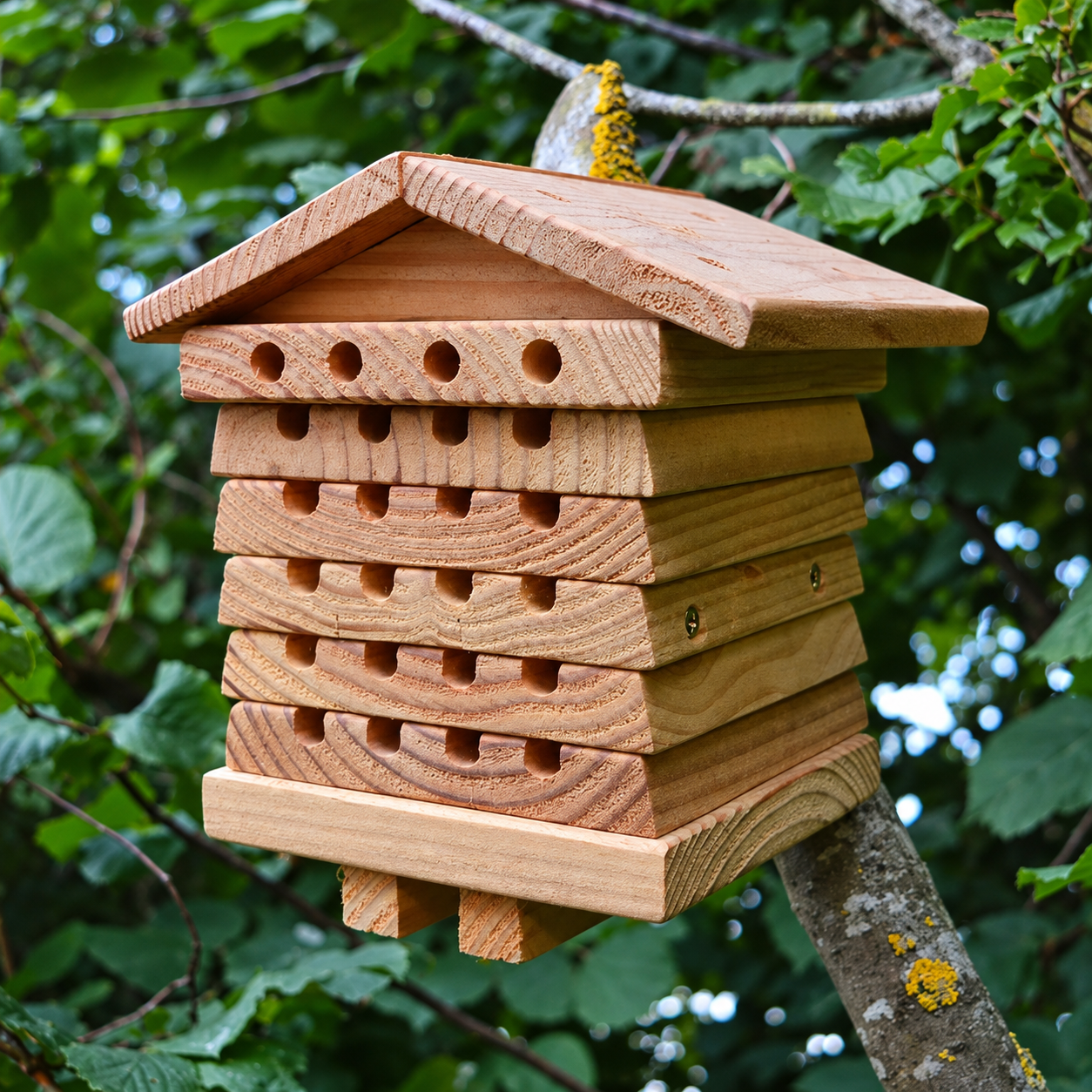
A bee hotel is built around one job — narrow, sealed, sanded tunnels sized for cavity-nesting solitary bees. A bug hotel is a mixed structure with several materials and cavity sizes aimed at a wider cast of garden invertebrates. Both are worth having; they solve different problems.
At a glance
- Bee hotel: narrow sealed tunnels, one purpose — cavity-nesting solitary bees.
- Bug hotel: mixed materials and cavity sizes, aimed at many invertebrates.
- Both sit outdoors year-round; neither houses honeybees or wasps' nests by design.
- A bee hotel needs precise tunnel diameter and depth; a bug hotel needs variety, not precision.
These two terms get used interchangeably in garden centres, which causes real confusion for anyone trying to actually attract solitary bees. They are related but not the same product, and knowing the difference decides whether you get bees using it this spring or not.
What a bee hotel is built around
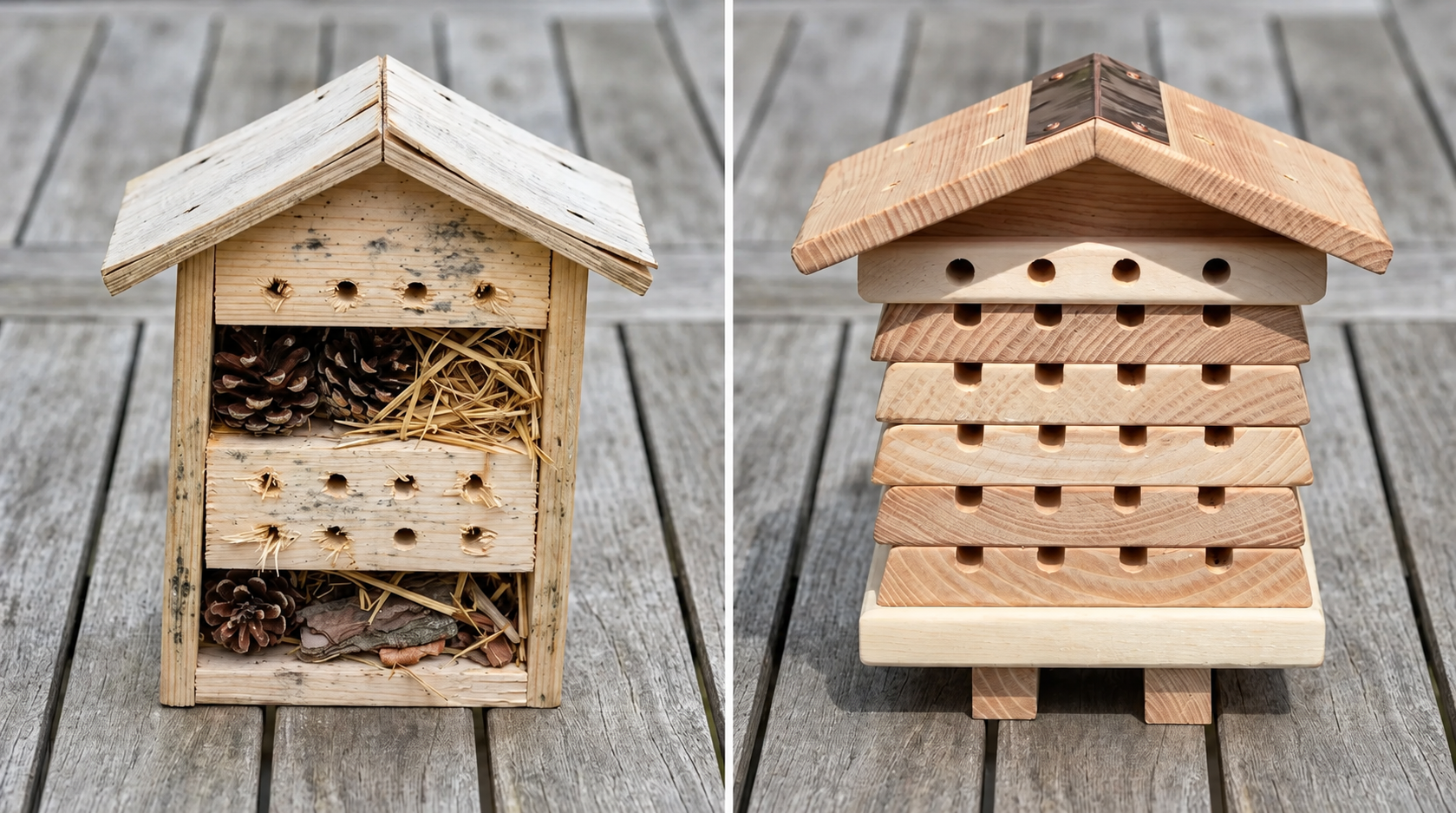
A proper bee hotel is, at heart, a block of tunnels: hollow bamboo, drilled hardwood, or cardboard tubes, typically 2mm to 10mm in diameter and 10–15cm deep, closed at the back, sanded smooth inside, and protected from rain by an overhanging roof. Nothing else goes into it — no bark, no pinecones, no straw. Every design decision serves one goal: getting a female red mason or leafcutter bee to lay a full clutch of eggs safely.
What a bug hotel is built around
A bug hotel is a stacked, multi-chambered structure — often a wooden frame divided into sections — filled with a deliberate mix of materials: drilled logs, hollow stems, dry leaves, bark, pinecones, straw and loose stones. Each material suits a different visitor: leaf litter for woodlice and beetles, hollow stems for lacewings overwintering, loose bark for spiders. It's a shelter for many species rather than a nest for one.
Side-by-side comparison
| Feature | Bee hotel | Bug hotel |
|---|---|---|
| Primary purpose | Nesting site for solitary bees | Shelter for varied invertebrates |
| Materials | Sanded wood, bamboo or cardboard tunnels | Logs, bark, straw, pinecones, stones, leaf litter |
| Cavity sizing | Precise: 2–10mm, sealed at the back | Mixed and often unsealed |
| Typical occupants | Red mason bees, leafcutter bees | Beetles, spiders, woodlice, lacewings, occasional bees |
| Placement | South-facing, fixed, 1–1.5m high | Anywhere sheltered, often at ground level |
| Maintenance | Annual check for damp, mould, parasites | Minimal — left to weather naturally |
| Best if you want… | To watch a bee's full nesting cycle | General garden biodiversity |
Where the confusion comes from
Retailers often label a mixed-material structure a "bee and bug hotel" because bees are the headline attraction, even when the actual tunnel sizes inside are wrong for any bee species to use. A tunnel drilled at 12–15mm, or an open-ended bamboo cane, will sit empty of bees regardless of how attractive the surrounding structure looks. If bees are genuinely the goal, check the tunnel specification, not the marketing name — our guide on hole sizes covers exactly what to look for.
A bug hotel invites whoever turns up. A bee hotel is an invitation addressed to one guest.
Common mistakes with each
- Bug hotel: packing it too tightly, leaving no airflow, so contents rot rather than shelter anything.
- Bug hotel: siting it in full sun, which dries out the leaf litter and bark too fast to be useful.
- Bee hotel: buying one with uniform, oversized holes that only suit wasps.
- Bee hotel: mounting it loosely so it swings in wind while a female is mid-nest.
Season by season
A bee hotel is busiest and most watched March to August, then quiet — but occupied — through autumn and winter while broods develop, as covered in our guide to how a bee house works across the year. A bug hotel, by contrast, sees rotating activity most of the year: overwintering insects in winter, breeding beetles in spring, and a broader mix through summer.
Verdict: which should you buy?
For most gardeners who searched specifically for bee nesting, a purpose-built bee hotel is the better first purchase — see our full guides library for siting, hole sizes and seasonal care once you've chosen.
Questions people ask next
Can I have both a bee hotel and a bug hotel in the same garden?
Will solitary bees ever nest in a bug hotel?
Which is better for children learning about garden wildlife?
Do bug hotels need cleaning out like bee hotels do?
Is a bug hotel more or less work to build well?
Choosing between the two?
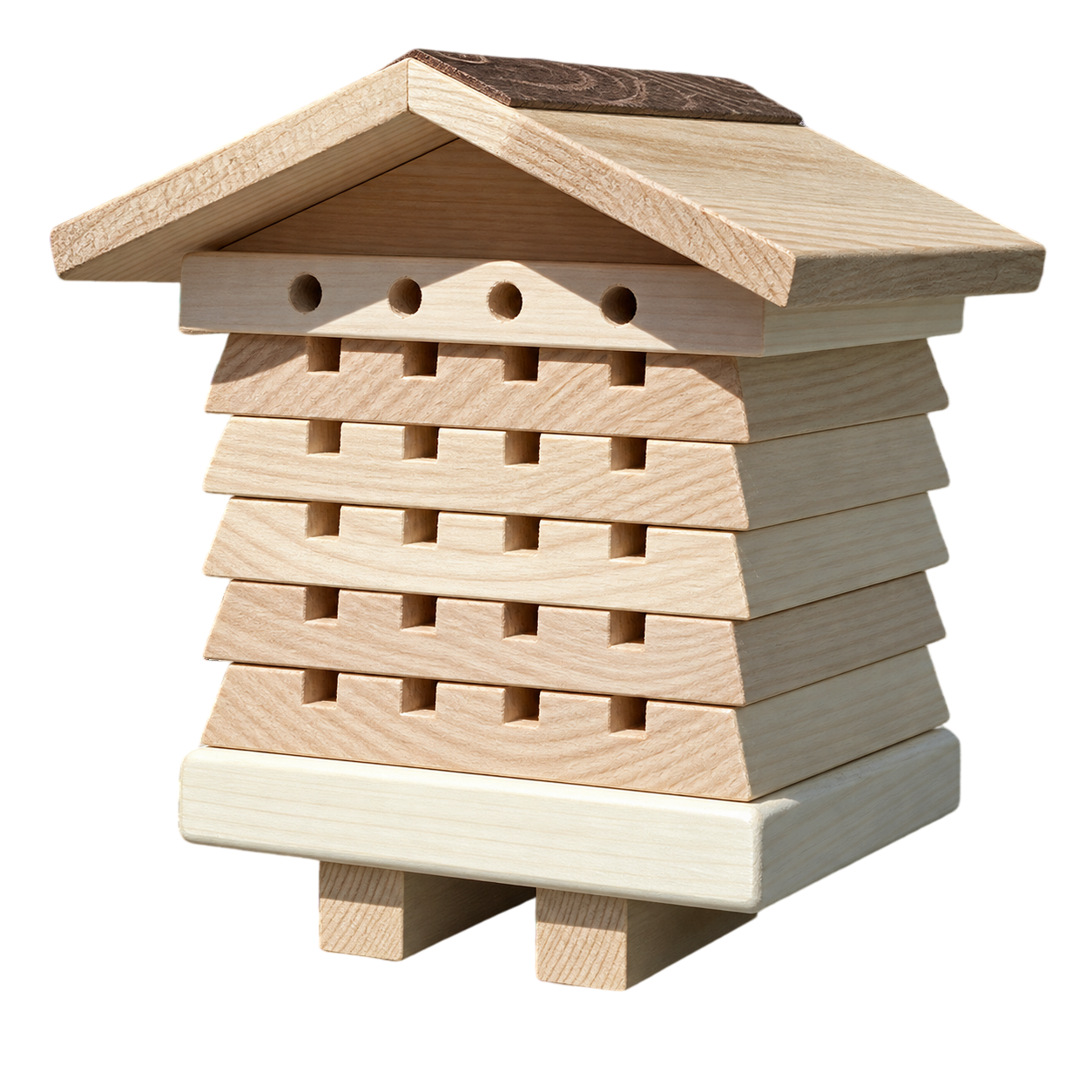
If your priority is red mason or leafcutter bees nesting reliably, a dedicated bee hotel with sanded 2–10mm tunnels outperforms a general bug hotel every time. £39.99, free worldwide shipping, 30-day money-back guarantee.
About Clayton Dawson
Cabinetmaker and solitary-bee keeper, and the maker of the Wild Bee Hotel. Clayton has kept red mason and leafcutter bees in his own garden for years, and every guide on this site is written and checked against what he sees in the tunnels each season rather than copied from a catalogue. Read the full story.
First published 21 June 2025 · last reviewed 2 July 2026.
What we based this on: Wildlife Trusts, RHS, Buglife.