Bee hotel alternatives
At a glance
- Most UK bee species nest in the ground, not in tunnels.
- Forage over a long season usually limits populations more than nest sites do.
- Bare sunny soil, dead stems and rough grass are free and highly effective.
- Bought bumblebee boxes have a poor record; leaving habitat works better.
- A hotel is a good addition for tunnel nesters, not a substitute for habitat.
The alternatives, compared honestly
| Option | Who it helps | Effort and cost | Honest drawback |
|---|---|---|---|
| More single-flowered plants, March–September | Every bee species, plus hoverflies and butterflies | Moderate; the cost of plants or seed | Takes a season or two to establish |
| Bare, sunny, undisturbed soil | Mining bees — the majority of UK species | Free; simply leave a patch alone | Looks untidy; easily lost to mulch or paving |
| Standing dead stems | Tunnel nesters, including small masked bees | Free; stop cutting everything back in autumn | Needs the right plants and a tolerant eye |
| Log piles and dead wood | Beetles, some tunnel nesters, overwintering insects | Free if you have prunings | Helps bees less than it helps beetles |
| Rough, uncut grass | Bumblebees and ground nesters | Free; mow less | Not always acceptable in a small front garden |
| Bought bumblebee nest box | Bumblebees, in theory | Costs money | Frequently never occupied |
| Bug hotel or insect house | Ladybirds, lacewings, beetles; bees only incidentally | Low to moderate cost | Rarely deep or dry enough for nesting bees |
| Purpose-built bee hotel | Tunnel-nesting solitary bees | Costs money; minutes to install | Helps only a subset of species; needs good siting |
Why "just plant more" is the strongest answer
A nest is only useful if there is food within flying range. Solitary bees forage over short distances, so a female needs pollen-rich, open flowers within a few hundred metres to fill even one tunnel. In most gardens the limiting factor is that supply, particularly in early spring when mason bees are flying and little is in bloom. Fruit blossom, pulmonaria, aubretia, willow, then geraniums, borage, scabious, lavender and single dahlias will carry the season. The planting guide lists more by month.
Bare soil: the alternative most people remove by accident
The majority of UK bee species dig nests in the ground. They need sunny, firm, undisturbed earth — precisely what bark mulch, membrane, decking and paving eliminate. Leaving a south-facing patch of soil bare and untrodden, or the gaps in an old path unpointed, costs nothing and helps species a hotel can never serve. Mason bees also need damp bare soil to collect mud for cell walls, so a patch of exposed earth improves hotel occupancy too.
Dead stems: the natural version of a bee hotel
A bee hotel is an imitation of a hollow stem. You can provide the original for free by leaving bramble, raspberry, teasel, fennel and hogweed stems standing through winter, or cutting a few to around 30cm and leaving them upright in a sunny spot. Small masked bees in particular nest in pithy stems they excavate themselves. The only drawback is appearance, and the fact that a stem gives you nothing to watch at close quarters.
So when is a hotel worth it?
When you want to help tunnel-nesting species specifically, when your garden has little old timber or standing dead growth left, and when you want to see the life cycle up close — the mud caps, the leaf discs, the following spring's emergence. That last point is not trivial: a hotel is the most reliable way to make solitary bees visible to a household or a class, which is why it works as a gift and as a school project. It is an addition to habitat, not a replacement for it. Do bee hotels work sets out what the evidence does and does not support.
If you do buy one, buy one that works
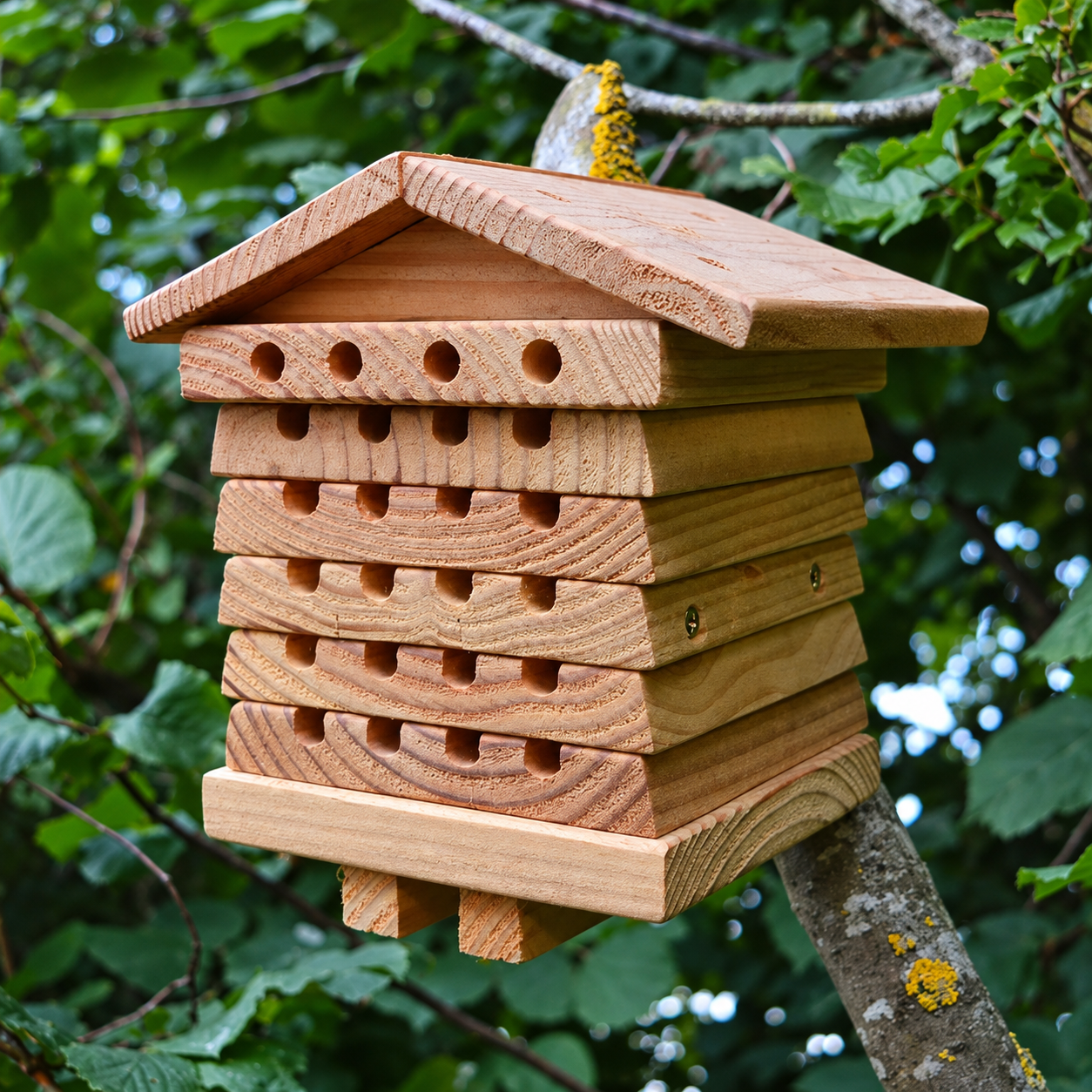
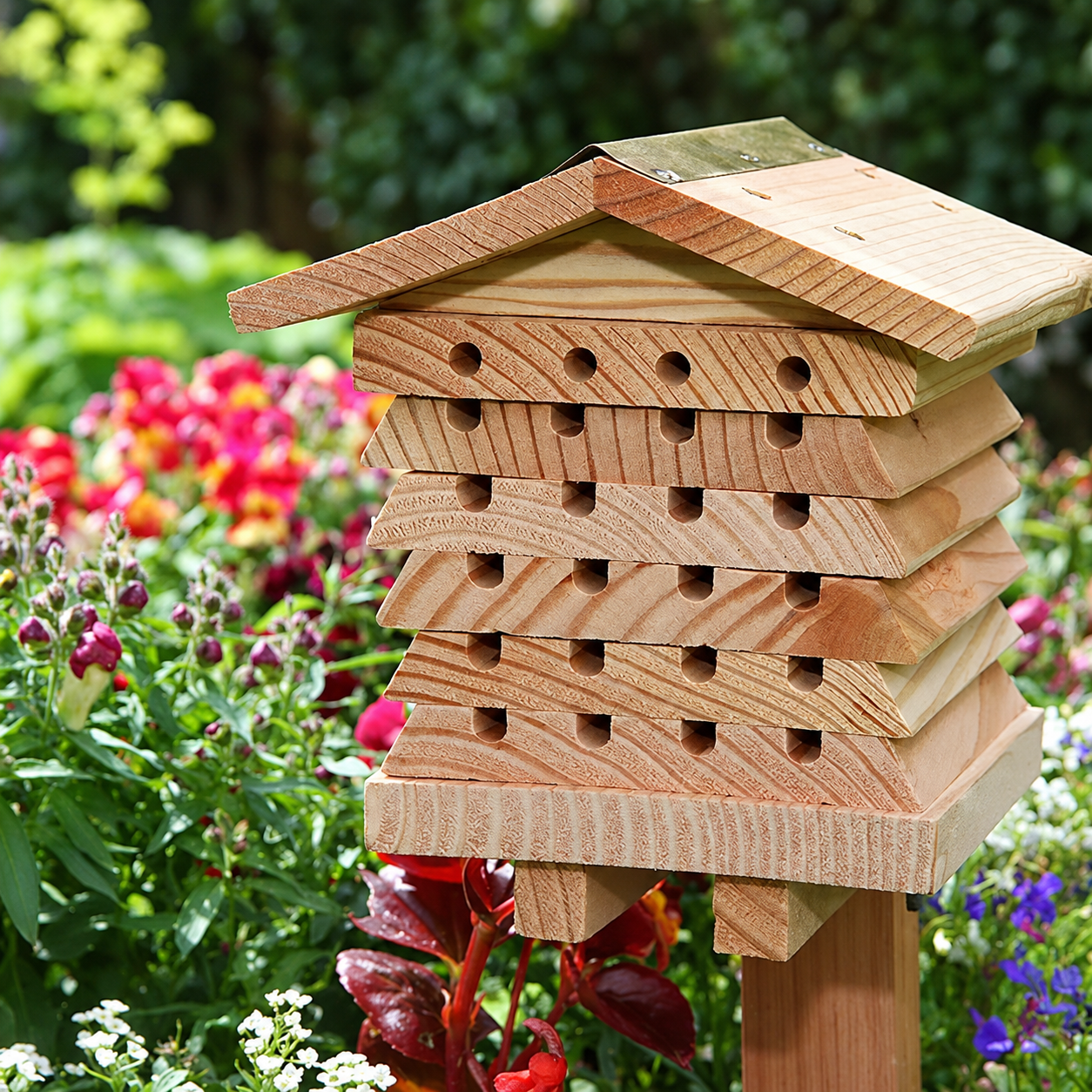
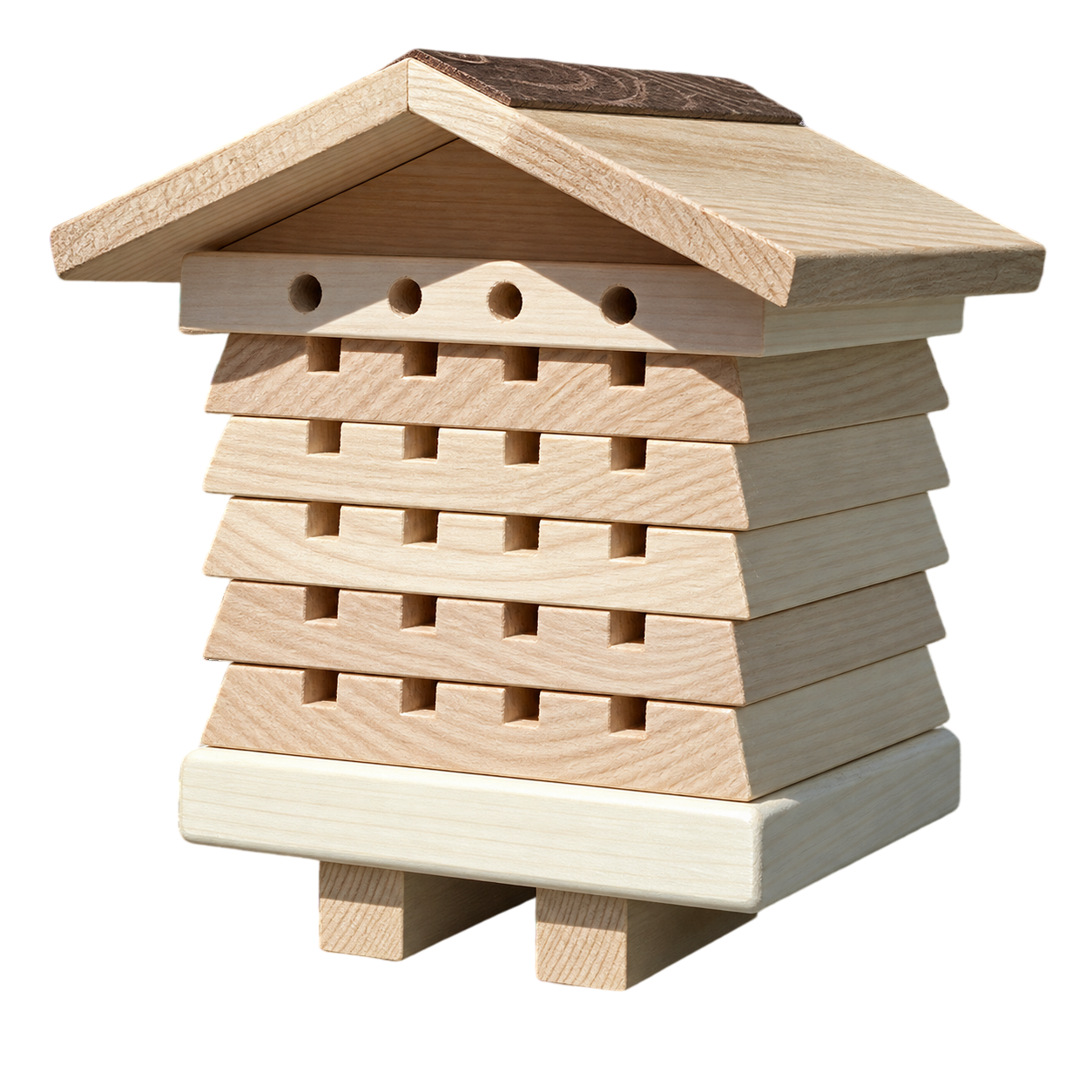
A poorly built hotel is worse than none, because damp tunnels and rough cane can waste a female's whole season. Look for untreated timber at least 15mm thick, a roof that overhangs the tunnel faces, tunnels 10–15cm deep in a range of widths from about 2mm to 10mm, smooth interiors and a solid back. The Wild Bee Hotel is built to that specification in untreated Western red cedar with a hand-formed copper roof, from £39.99 with free worldwide shipping and 30 days to change your mind. And keep planting either way — that part matters more.
Questions people ask next
What is the single best thing I can do for bees?
Do I need a bee hotel at all?
What helps ground-nesting bees?
Do bumblebee nest boxes work?
Are dead stems really useful?
Use both, not one
Forage and bare soil help the most species; a well-built hotel helps the tunnel nesters you can actually watch.
About Clayton Dawson
Cabinetmaker and solitary-bee keeper, and the maker of the Wild Bee Hotel. Clayton has kept red mason and leafcutter bees in his own garden for years, and every guide on this site is written and checked against what he sees in the tunnels each season rather than copied from a catalogue. Read the full story.
First published 5 August 2025 · last reviewed 20 September 2026.
What we based this on: Buglife, Bumblebee Conservation Trust, RHS.