Reviewing a bee hotel: what actually matters
This page is written by the people who make the Wild Bee Hotel, so treat it as a checklist rather than an independent verdict. The six criteria below are the ones that decide whether any bee hotel gets used — apply them to ours and to anything else you are considering.
Disclosure
We make and sell the Wild Bee Hotel. This is not an independent review and we are not going to pretend otherwise. What we can offer honestly is the criteria we design against, why each one matters biologically, and a frank account of who our hotel is not for.
The six criteria
| Criterion | What to look for | Why it decides occupancy |
|---|---|---|
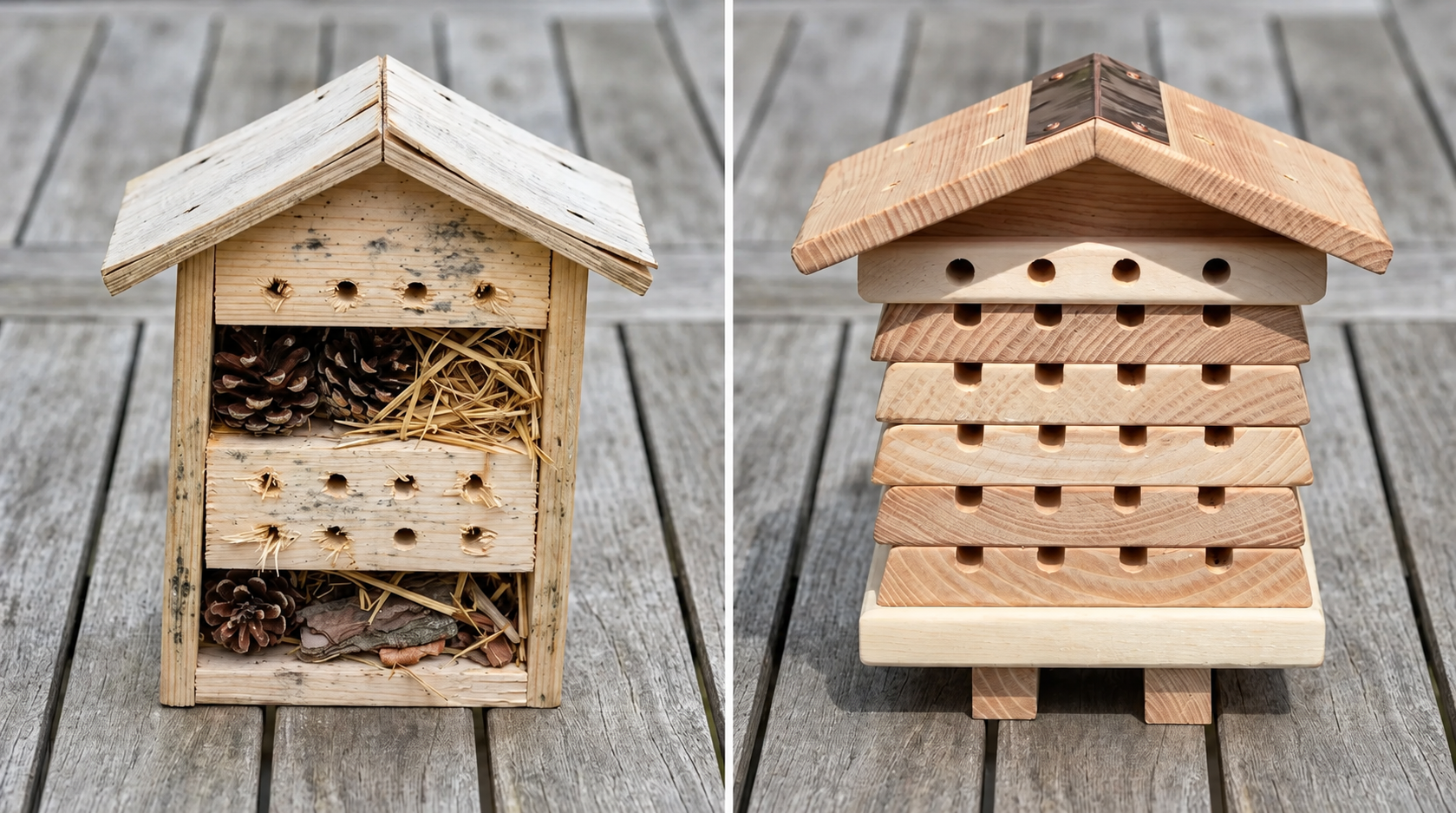
| Timber | Untreated, naturally durable, 15mm or thicker | Thin or treated wood swells, splits or smells enough to deter females |
| Roof | Overhangs the tunnel faces, pitched | Rain across the openings ruins the pollen store inside |
| Tunnel depth | Roughly 10–15cm | Shallow tunnels skew nests towards male eggs and fewer cells |
| Width range | About 2mm to 10mm across the face | One diameter serves one species group and excludes the rest |
| Interior finish | Smooth walls and rims | Rough drilling damages wings over repeated entries |
| Back panel | Solid, no light through | Dead ends keep out draughts and rear parasite access |
Everything else — paint, printed roofs, chalkboard labels, decorative cut-outs — is aimed at the buyer, not the bee. That is not automatically bad, but it should not cost you any of the six.
How the Wild Bee Hotel measures up
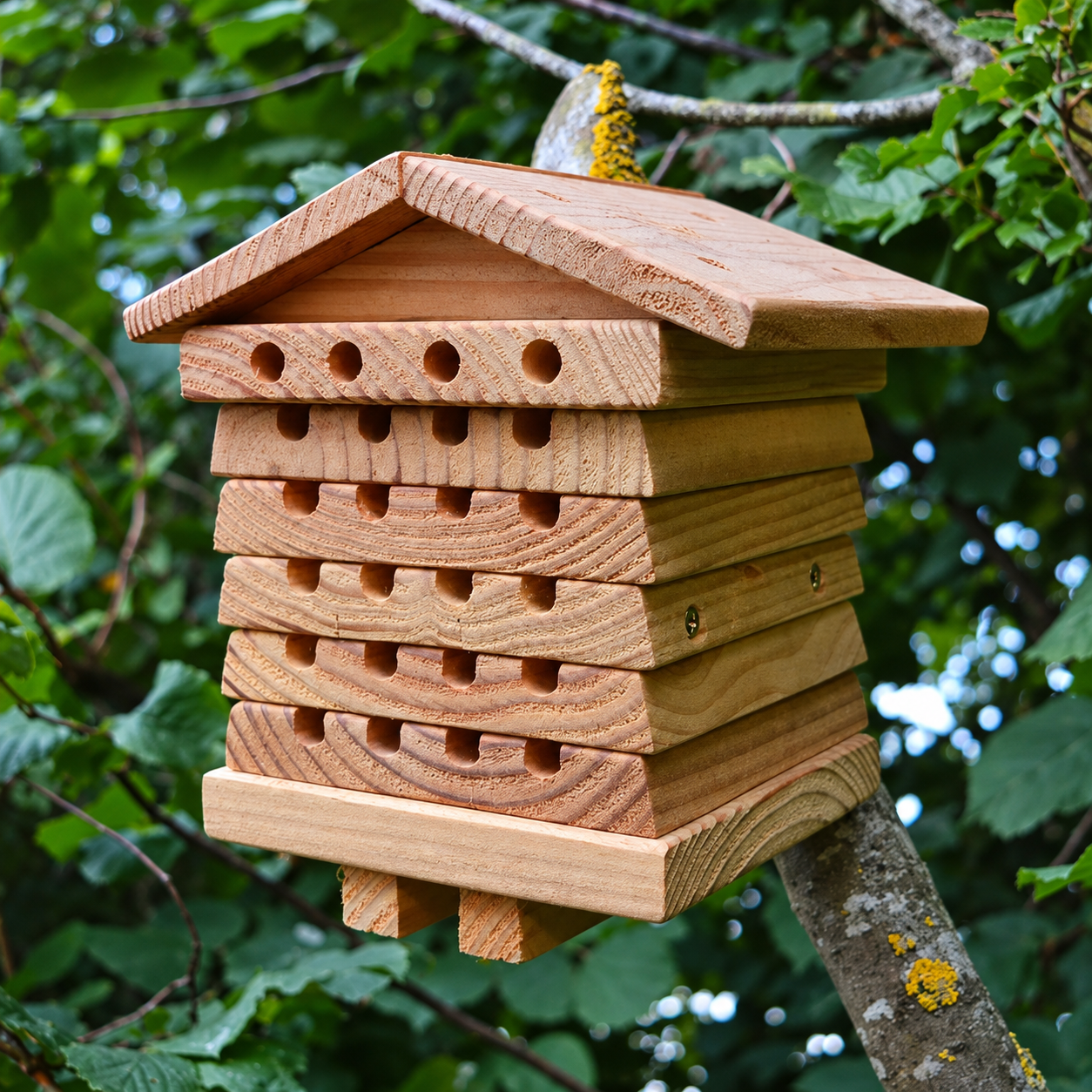
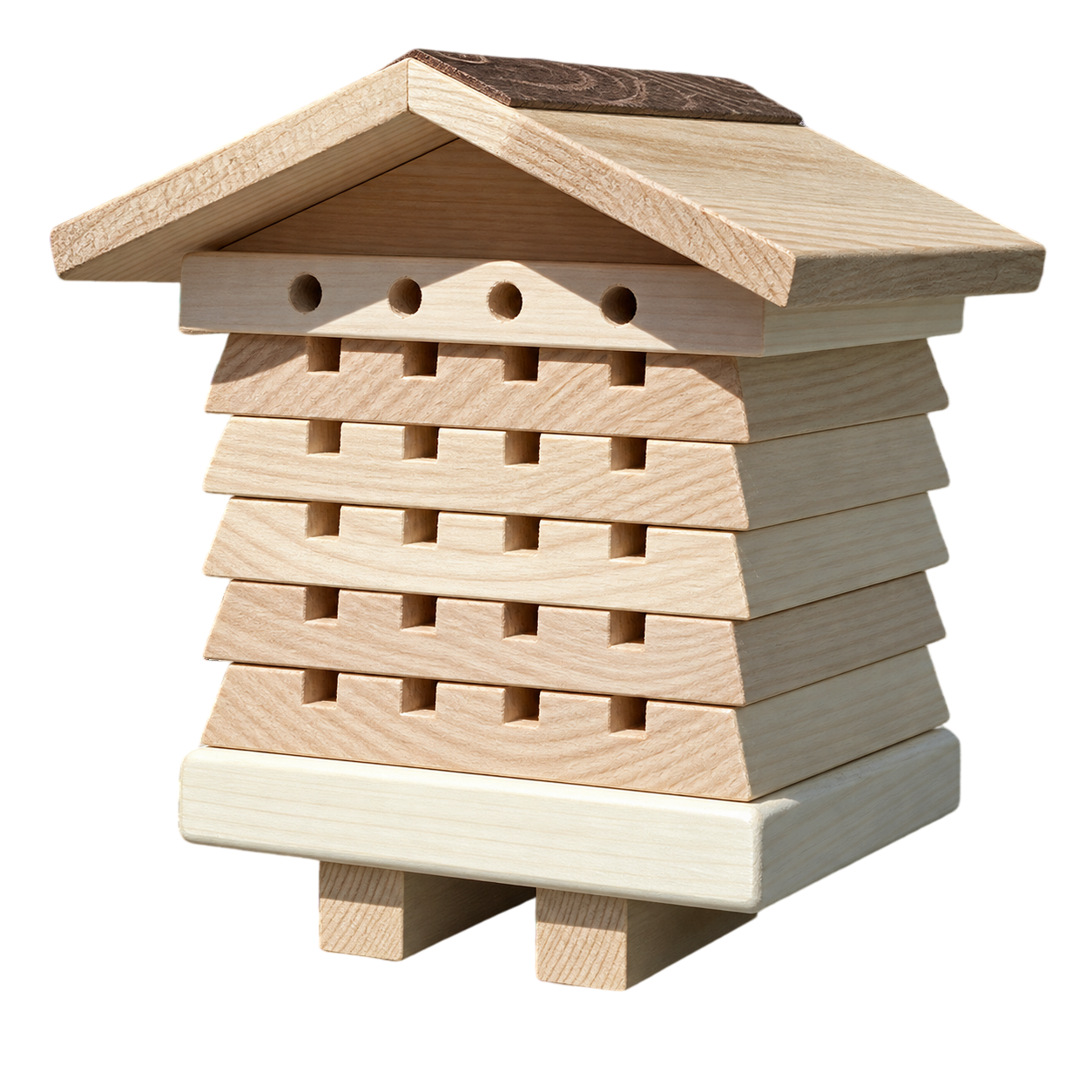
19mm untreated Western red cedar, chosen for natural durability without preservative. A hand-formed copper roof that overhangs the tunnel faces and weathers from bright to dark brown. Tunnels from 2mm to 10mm, drilled deep and dead-ended against a solid rear panel, with interiors and rims hand-sanded. No paint, no treatment, no loose cane. It arrives complete and is fixed to a wall or post rather than hung, because movement is a real cause of abandonment. The full dimensions and photographs are on the product page.
Who it is not for
- Anyone wanting honey or a hive. This houses solitary bees; there is no colony and nothing to harvest.
- Anyone wanting broad insect habitat. A bug hotel serves ladybirds, beetles and lacewings better.
- Anyone expecting guaranteed occupancy. No hotel can promise that; it depends on local bees, forage and aspect.
- Anyone wanting the cheapest option. It is not, and the price page explains where the money goes.
- Anyone who enjoys making things. Building one is a genuinely good project.
Claims to be sceptical of
Be wary of anything promising bees will arrive in a set time, of "attractant" coatings and pheromone sprays, of hotels sold as needing to come indoors for winter, and of hole sizes quoted without a depth. Also treat star ratings on large marketplaces carefully for this category: a hotel is usually reviewed within days of arrival, long before anyone could know whether a bee used it, so ratings tend to measure packaging and looks rather than performance.
How to run your own test fairly
Put it up in late winter or early spring, chest height, tunnels facing between south-east and south, fixed so it cannot move, sheltered from driving rain, with clear flight space in front. Then leave it entirely alone and count sealed tunnels on the same day each month. If two seasons pass with nothing, work through the troubleshooting list before blaming the box — siting and forage explain most empty hotels.
Where to look for other views
Conservation organisations publish guidance on nest-site quality and the debate about whether artificial nests help wild bees at all — our page on that question summarises the arguments without overstating the case. Our own customer feedback is collected on the reviews page, and we would rather you weigh it alongside independent sources than take it as proof.
Questions people ask next
Can I trust a review written by the seller?
What is the most common fault in bee hotels on sale?
Do expensive bee hotels work better?
How long should I test one before judging it?
What does a genuinely good result look like?
Read the specification, then decide
The product page lists materials, dimensions, tunnel sizes and what arrives, so you can check every criterion on this page yourself.
About Clayton Dawson
Cabinetmaker and solitary-bee keeper, and the maker of the Wild Bee Hotel. Clayton has kept red mason and leafcutter bees in his own garden for years, and every guide on this site is written and checked against what he sees in the tunnels each season rather than copied from a catalogue. Read the full story.
First published 23 July 2025 · last reviewed 20 September 2026.
What we based this on: Buglife, RHS, Wildlife Trusts.