How to make a bee hotel that bees will use
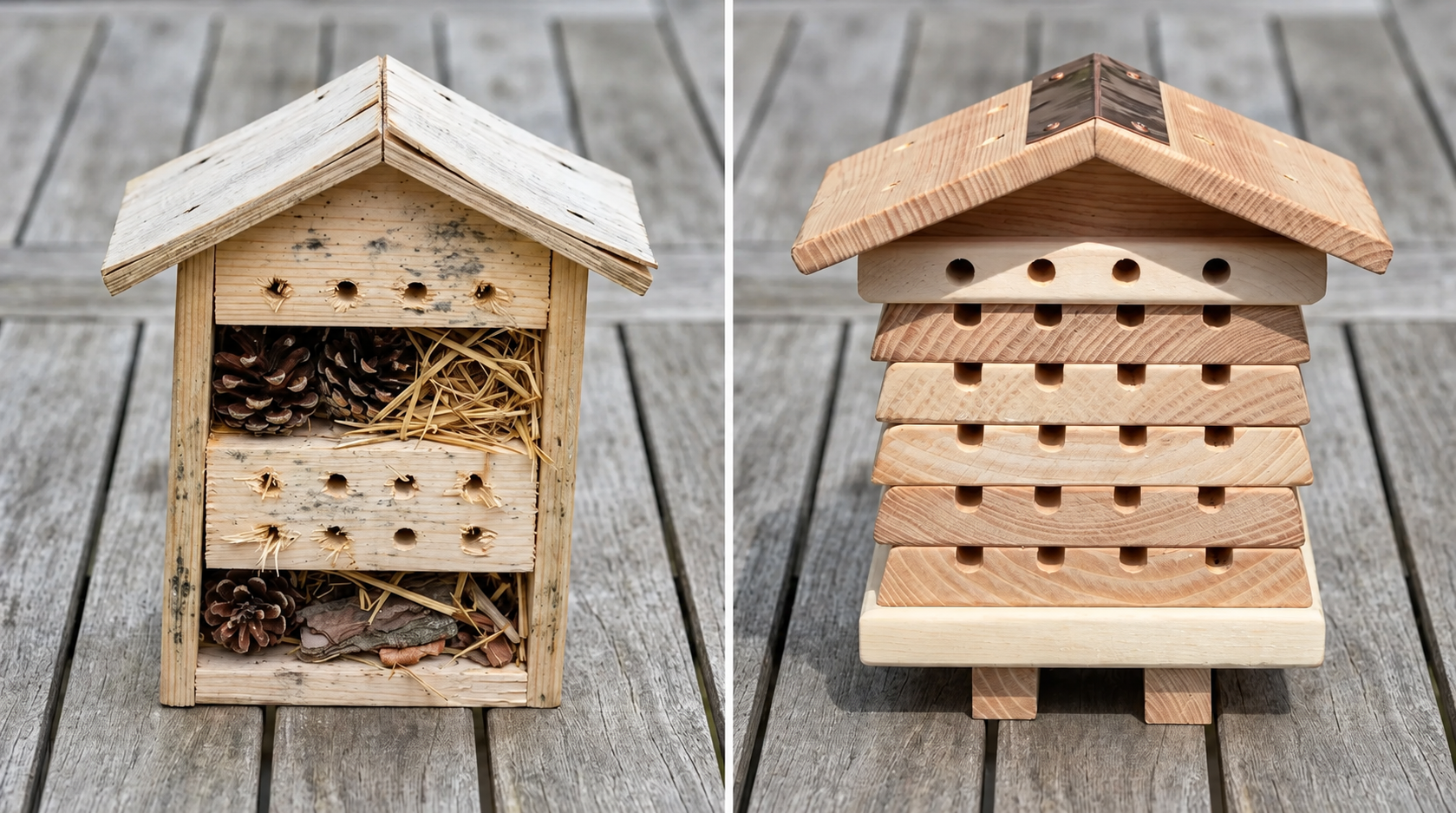
A homemade bee hotel works if you get five things right: untreated timber thick enough to drill deep, tunnels from about 2mm to 10mm, a depth of 10–15cm, smooth walls and rims, and a roof that overhangs a solid back. Get any of them wrong and the box stays empty or the brood dies damp.
At a glance
- Untreated timber only, 15mm thick or more, no plywood or MDF.
- Tunnel widths from about 2mm to 10mm, in a spread rather than one size.
- Depth 10–15cm, and never drilled through to the back.
- Sand every tunnel mouth and wall smooth before fixing it up.
- A roof that overhangs the face is the part most homemade builds skip.
What you need
| Material or tool | Specification |
|---|---|
| Timber block | Untreated cedar, oak, beech or ash; at least 15cm deep front to back |
| Frame and back | Same timber; the back must be solid, not open |
| Roof | Metal sheet, slate or a thick timber lid, overhanging the front by 3–5cm |
| Drill bits | Long-reach 2, 4, 6, 8 and 10mm — brad point cuts cleanest |
| Abrasive | Fine sandpaper, plus a rolled strip to reach inside tunnels |
| Fixings | Two screws and plugs, so it cannot rotate or swing |
Step by step
1. Season the timber. Wet or green wood splits as it dries and the splits open tunnel walls, so use timber that has been stored dry.
2. Mark out the face. Space tunnels around 15–20mm apart so drilling does not break through between them. Mix the sizes across the face rather than grouping them, which gives every species a choice in the warmest part of the block.
3. Drill deep and straight. Clamp the block, drill square to the face, and stop at least 1cm short of the back so every tunnel is a dead end. Clear the swarf as you go rather than forcing the bit, which burns and roughens the walls.
4. Sand everything. Run fine paper over the face to remove the furry rim around each hole, then roll a strip and work it inside each tunnel. Rough walls and rims damage wings, and damaged females leave. This is the step that most separates a working homemade hotel from a decorative one.
5. Add the roof and back. Fit a solid back panel, and a roof that projects beyond the tunnel faces so water runs clear. Pitch it slightly. A flush lid is not a roof.
6. Fix it up. Chest height, tunnels facing between south-east and south, on a surface that does not move, sheltered from driving rain. The siting rules are identical to a bought hotel and are covered in where to put a bee hotel.
The bamboo version, done properly
If you would rather not drill, cane can work. Choose canes with a hollow channel, cut each one just behind a node so the far end is naturally closed, keep them 10–15cm long, and sand both cut ends until a fingertip finds no burr. Pack them tightly into a box with a solid back and an overhanging roof so none can slide or rattle. The reason shop-bought cane bundles have a poor reputation is that they break all four of those rules at once — short, split, open-ended and loose.
Mistakes that keep homemade hotels empty
- Drilling right through, so tunnels are draughty and open to parasites from behind.
- One hole size, usually whatever bit was in the drawer.
- Shallow tunnels, which skew the nest towards male eggs and fewer cells.
- Plywood or MDF, which swells, delaminates and wicks water.
- Treating the wood, which leaves a smell females avoid.
- Hanging it from a hook or string, so it swings and gets abandoned.
- No roof overhang, so every shower runs across the tunnel mouths.
Full detail on widths and depths, including which species takes which diameter, is in the hole-size guide.
Honest comparison with buying one
Building is the right choice if you want the project — it is genuinely satisfying, and it is an excellent activity with children, which the schools guide covers. It is the wrong choice if you are expecting a big saving: cedar of sufficient thickness, long drill bits and a weatherproof roof material rarely come to much less than a well-made hotel once you have bought them, and the two evenings are free only if your time is.
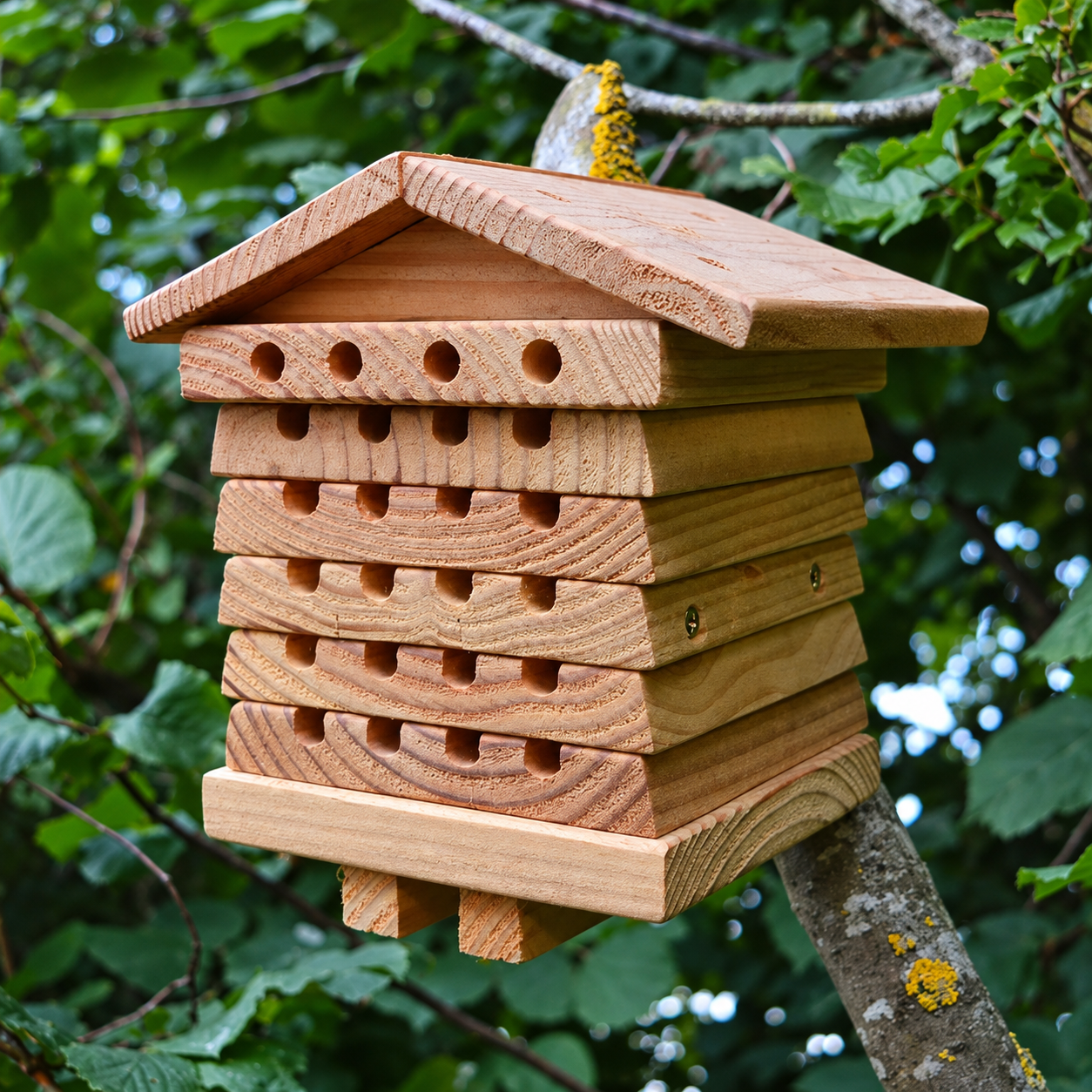
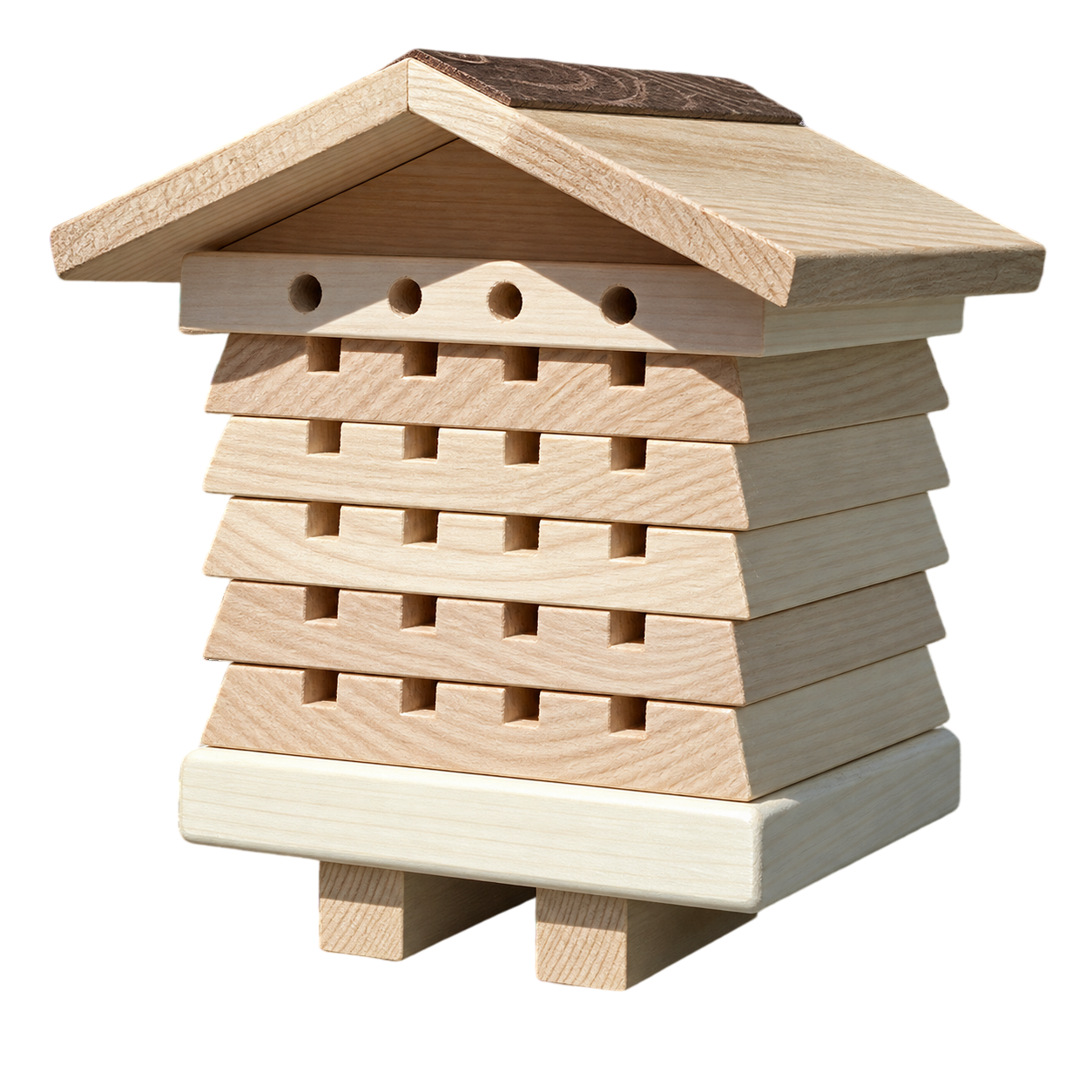
The Wild Bee Hotel exists for people who want the specification without the workshop: 19mm untreated Western red cedar, a hand-formed copper roof that overhangs the face, hand-sanded tunnels from 2mm to 10mm, dead-ended against a solid rear panel, from £39.99 with free worldwide shipping and 30 days to change your mind. Build or buy, the requirements on this page do not change.
Questions people ask next
What wood should I use for a bee hotel?
What size drill bits do I need?
Can I use bamboo canes instead of drilling?
Do I need to treat or paint it?
Is a homemade bee hotel cheaper than buying one?
Build it, or buy the version that already meets the spec
Either way the requirements are the same. Cedar, depth, smooth tunnels, a range of widths and a roof that sheds water clear of the face.
About Clayton Dawson
Cabinetmaker and solitary-bee keeper, and the maker of the Wild Bee Hotel. Clayton has kept red mason and leafcutter bees in his own garden for years, and every guide on this site is written and checked against what he sees in the tunnels each season rather than copied from a catalogue. Read the full story.
First published 26 August 2025 · last reviewed 20 September 2026.
What we based this on: Buglife, RHS, Wildlife Trusts.