Bee hotels with children and in schools
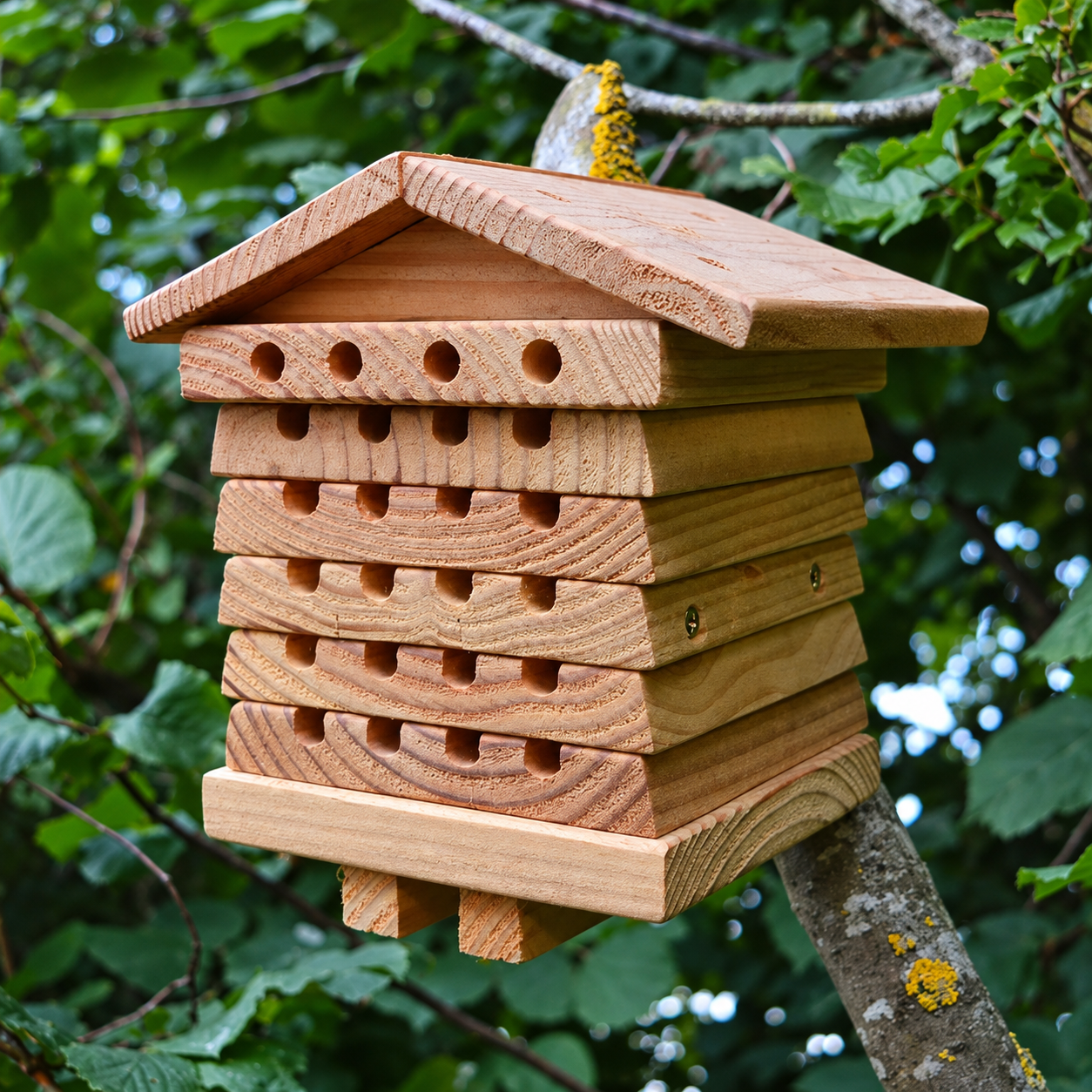
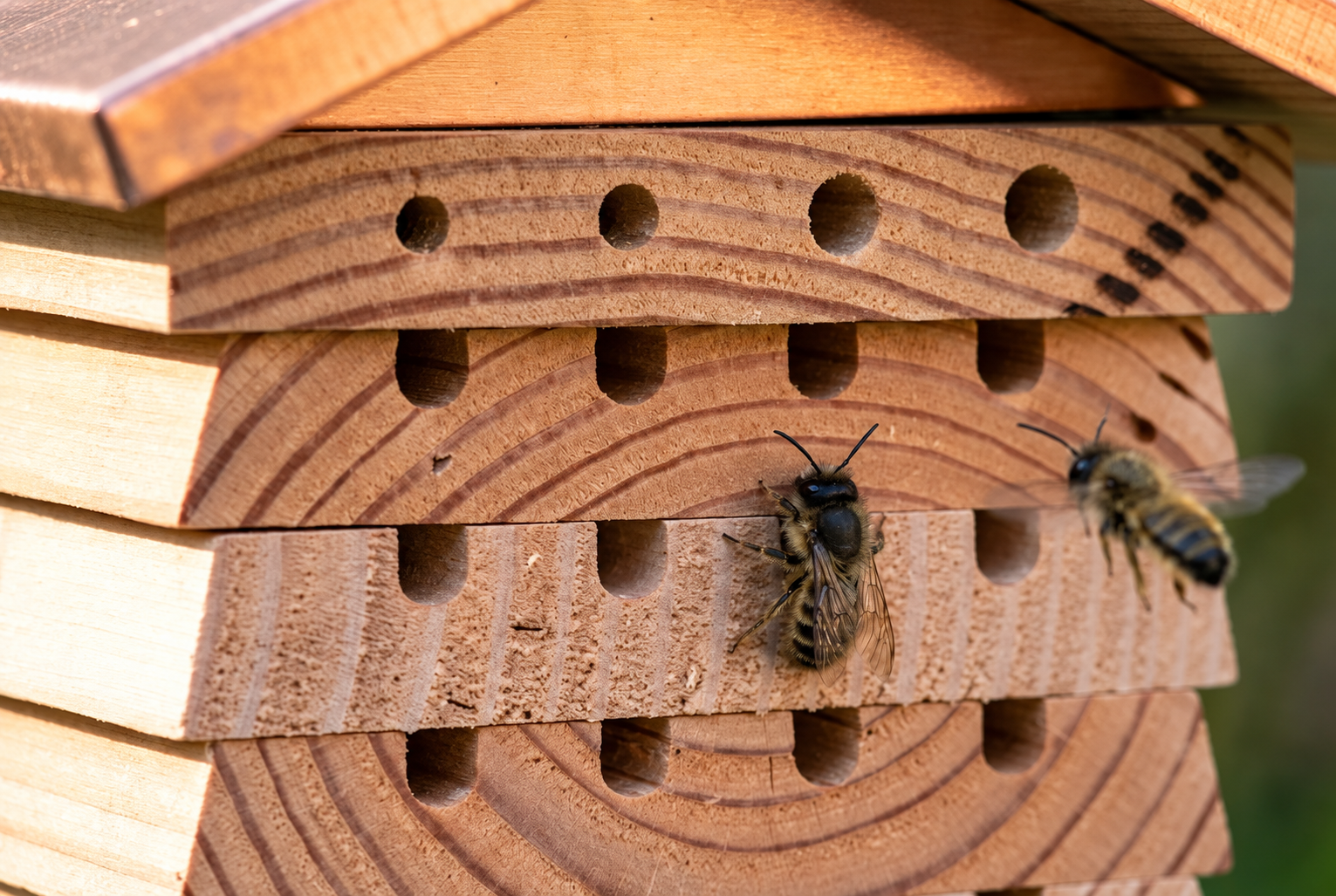
Solitary bees are about the safest wildlife a child can watch closely: no colony, no honey to defend, and very little reason to sting. A bee hotel gives a class something that visibly changes through the year and needs almost no maintenance between visits.
At a glance
- Solitary bees do not swarm and have no nest to defend.
- Watch from about a metre away; no handling, no poking tunnels.
- Site it away from doors, paths and play equipment, in morning sun.
- Counting sealed tunnels gives a real, repeatable measurement.
- Nothing needs doing in the holidays — it stays outside all year.
Why solitary bees suit children
Nearly every bee most children meet in a story is a honeybee or a bumblebee — a colony insect with a nest to defend. Solitary bees overturn that picture, and the contrast is what makes them a good teaching subject. Each female works alone: she finds a tunnel, gathers her own pollen, lays her own eggs, seals them and dies before her young hatch. There is no queen, no workers, no honey, no hive to protect, and consequently very little defensiveness. A group can stand and watch a busy hotel from a short distance and see the whole life cycle play out over two seasons.
Simple safety rules that work with a class
- Watch, do not touch. No hands near the tunnel faces.
- Stand back about a metre so bees can approach and reverse in freely.
- Never block, poke or open a sealed tunnel.
- Do not shake, swing or unscrew the hotel.
- Tell an adult if a bee lands on you, and stay still rather than swatting.
Site the hotel where the flight path does not cross a doorway, a bench or a ball game. Chest height for an adult puts it at good viewing height for most children while keeping tunnels out of casual reach. The siting guide covers the rest.
What to look for, term by term
| Time of year | What the class can observe | Question to ask |
|---|---|---|
| Spring term, late | Bees hovering, entering backwards, pollen on their bodies | Why does she reverse into the tunnel? |
| Summer term | Mud caps, then leaf discs at tunnel mouths | Which bee used mud, and which used leaves? |
| Autumn term | Complete stillness, tunnels sealed | What is inside a sealed tunnel right now? |
| Winter | No activity at all | Why must it stay outside in the cold? |
| Following spring | Caps broken open from the inside | How did they get out, and where will they nest? |
Counting sealed tunnels on the same day each month is an honest, easily recorded measurement, and it produces a real graph rather than a copied one. What happens inside sealed tunnels explains the biology behind the numbers.
Build one, buy one, or both
Building teaches the specification: children quickly understand why tunnels must be deep, why the back is solid and why a rough rim matters once they have sanded one. The build guide sets out the timber, bit sizes and depths, and it is realistic about where homemade versions fail. The disadvantage is that a first attempt may not be used, which is a flat result for a class expecting bees.
A well-made hotel gives the observation project a dependable subject. Running both side by side is the best of it: one built, one bought, same aspect, and a genuine comparison over two years of which gets occupied and why.
Extending it beyond the hotel
The forage garden is half the project. Sowing borage, planting pulmonaria for early spring, and keeping a patch of bare damp soil for mason bees to collect mud gives children a direct hand in occupancy — and a reason to care about single rather than double flowers. The planting guide lists species by season.
For groups and multiple gardens
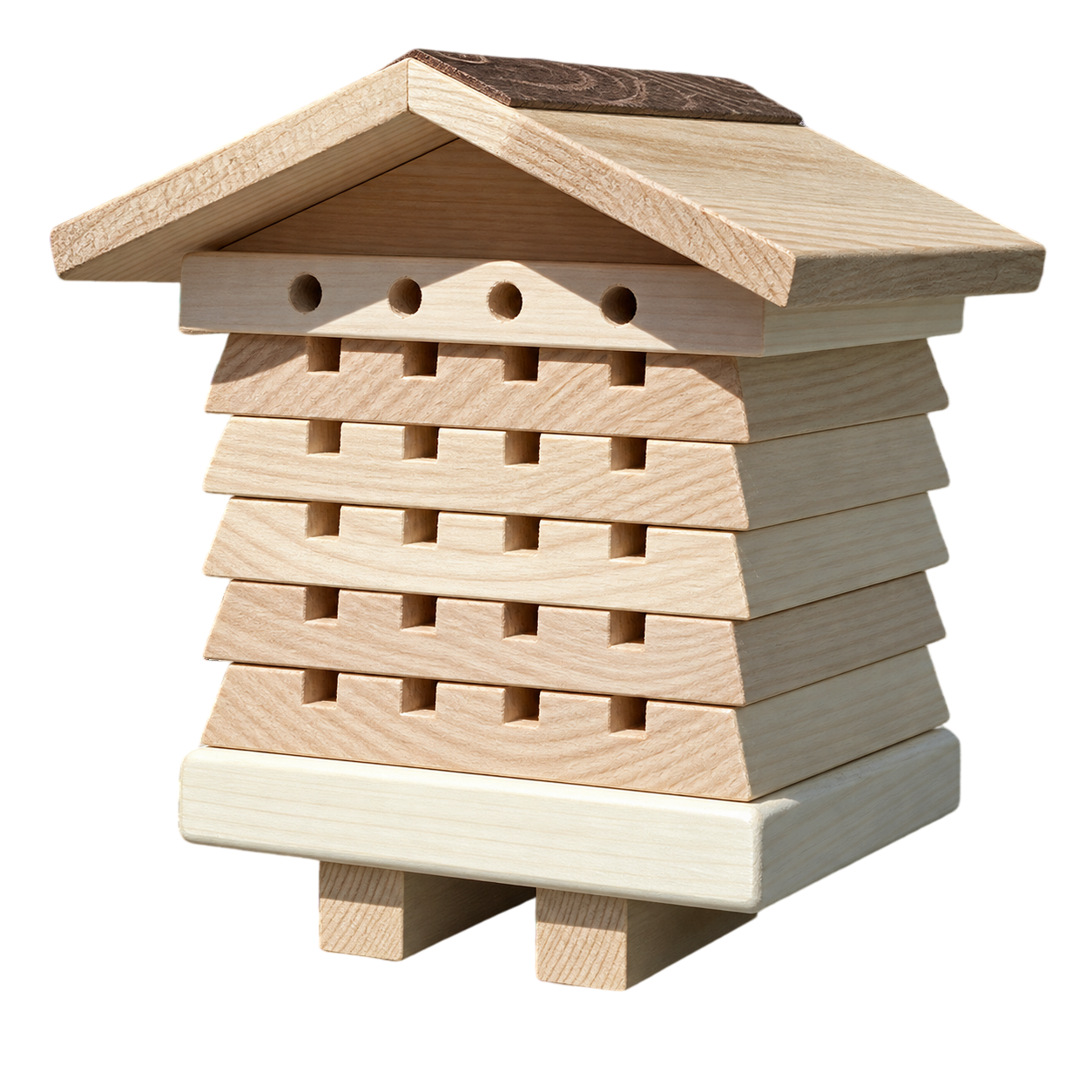
The Wild Bee Hotel is 19mm untreated Western red cedar with a hand-formed copper roof, hand-sanded tunnels from 2mm to 10mm and a solid rear panel — no assembly, nothing to treat, and nothing sharp. Single hotels are £39.99, and packs of two, three and four bring the per-hotel price down for a school, a class set, an allotment association or a group of families. Shipping is free worldwide and there are 30 days to change your mind. If you need an invoice or a purchase order for a school, email us and we will arrange it.
Questions people ask next
Are solitary bees safe around children?
Is a bee hotel suitable for a school with allergy concerns?
What can children actually see happening?
Does it need looking after during school holidays?
Should children build one or use a ready-made one?
One hotel per class, or one per garden
Multi-packs bring the per-hotel price down, and free worldwide shipping applies to every order.
About Clayton Dawson
Cabinetmaker and solitary-bee keeper, and the maker of the Wild Bee Hotel. Clayton has kept red mason and leafcutter bees in his own garden for years, and every guide on this site is written and checked against what he sees in the tunnels each season rather than copied from a catalogue. Read the full story.
First published 10 September 2025 · last reviewed 20 September 2026.
What we based this on: Buglife, Wildlife Trusts, RHS.