Bee house bees: who uses one and what they do inside
At a glance
- Around nine in ten UK bee species are solitary rather than colony-forming.
- Red mason bees fly in spring and cap cells with mud; leafcutters follow in summer.
- Each female does every job herself — no queen, no workers, no honey.
- Harmless solitary wasps share the tunnels and hunt garden pests.
- Sting risk in normal use is effectively nil.
The regular guests, month by month
| Species | Usually flying | Tunnel width favoured | How it seals cells |
|---|---|---|---|
| Red mason bee (Osmia bicornis) | March to June | About 8mm | Wet mud |
| Blue mason bee (Osmia caerulescens) | May to August | About 6mm | Chewed leaf pulp |
| Leafcutter bees (Megachile species) | June to August | 6–7mm | Cut leaf discs |
| Masked and yellow-faced bees (Hylaeus) | Late spring to summer | 2–4mm | Cellophane-like secretion |
| Solitary hunting wasps | Summer | Various, often narrow | Sand, mud or plant debris |
Which of these appear is decided by what already lives within a few hundred metres of your garden. A hotel does not import bees; it gives ones already present somewhere better to nest than a crumbling mortar joint. That is also why a spread of widths matters more than any other feature — a single diameter turns most species away.
What happens inside a tunnel
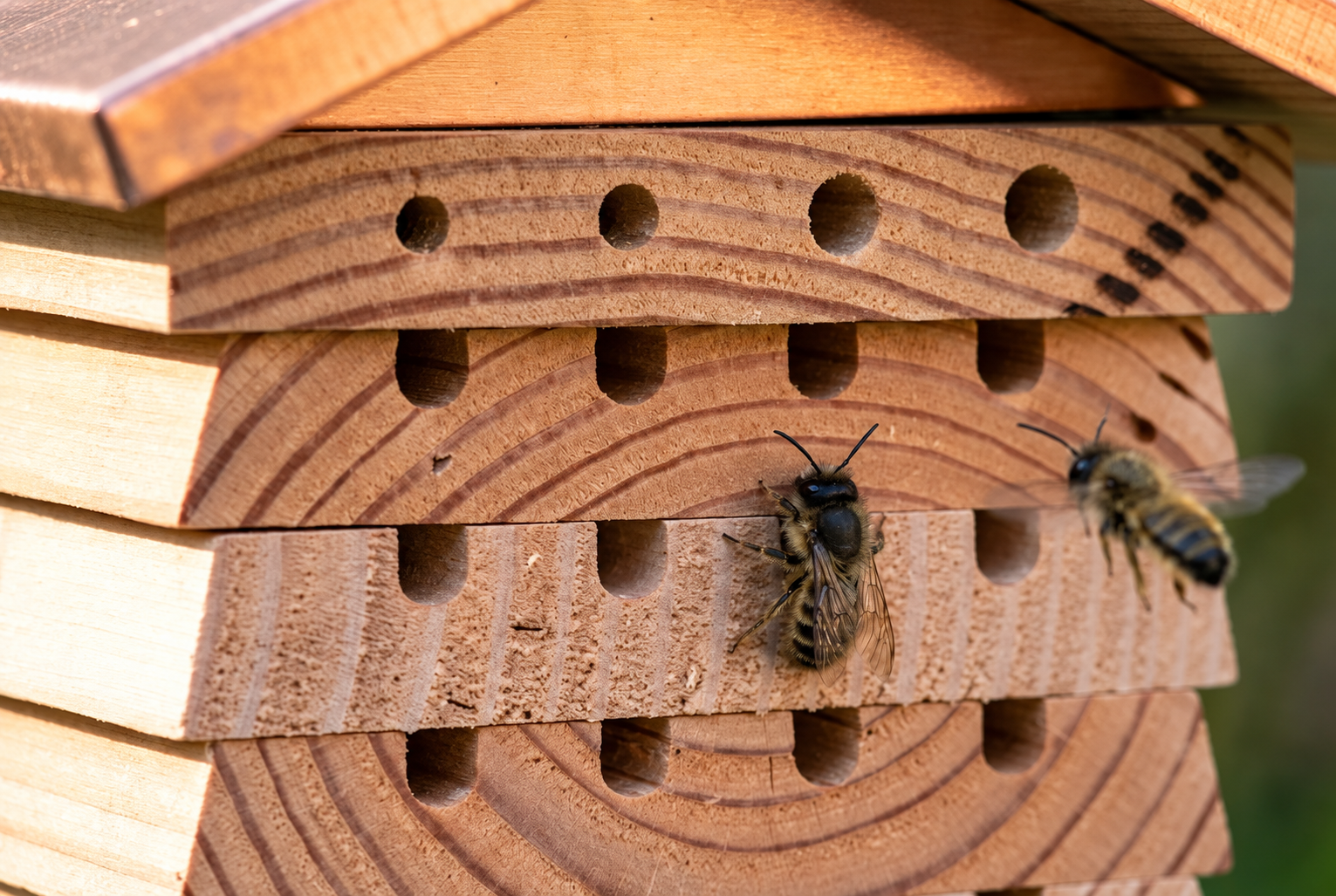
A female inspects several tunnels before choosing one, often hovering at the face and backing in repeatedly. Once she commits, she flies out dozens of times to gather pollen and nectar, packing it into a loaf at the far end. She lays one egg on that loaf, then builds a wall to close the cell — mud for masons, leaf discs for leafcutters — and repeats along the tunnel's length. Eggs laid deepest usually become females; those near the entrance usually become males, which is why shallow tunnels produce fewer females. When the tunnel is full she caps it and moves on. Inside, each egg hatches, the larva eats its pollen store, spins a cocoon, and waits out the winter as a developing adult.
The whole sequence is described step by step in how a bee house works. From outside, all you see is a gradually increasing number of sealed tunnel mouths, which is the honest measure of whether a hotel is working.
Telling bees from the other tunnel users
Bees look furry and carry pollen: mason bees on a brush of hairs under the abdomen, leafcutters the same, and both look dusted yellow when returning. Solitary wasps are slimmer, shinier and arrive carrying an aphid or small caterpillar rather than pollen. Neither poses a risk to people, and the wasps are a genuine asset because their larvae are fed on garden pests. Social wasps — the paper-nest builders — do not use tunnel nests at all, so a bee house does not encourage them.
You may also see tiny metallic-looking ruby-tailed wasps loitering at the face. These are cuckoo species that lay in other bees' cells. They look dramatic but are a normal part of a healthy nesting aggregation, not a sign of a problem, and there is no need to intervene.
How to get more of them
Three things matter far more than the box itself once it is a good one. First, forage: open single-flowered plants from March through September, close by. Second, mud for masons — a patch of bare, damp soil within a short flight, because dry gardens with no exposed earth leave them nothing to build with. Third, stillness: a hotel that swings or gets bumped is abandoned. The planting side is covered in attracting bees to a bee hotel.
Giving them a nest worth using
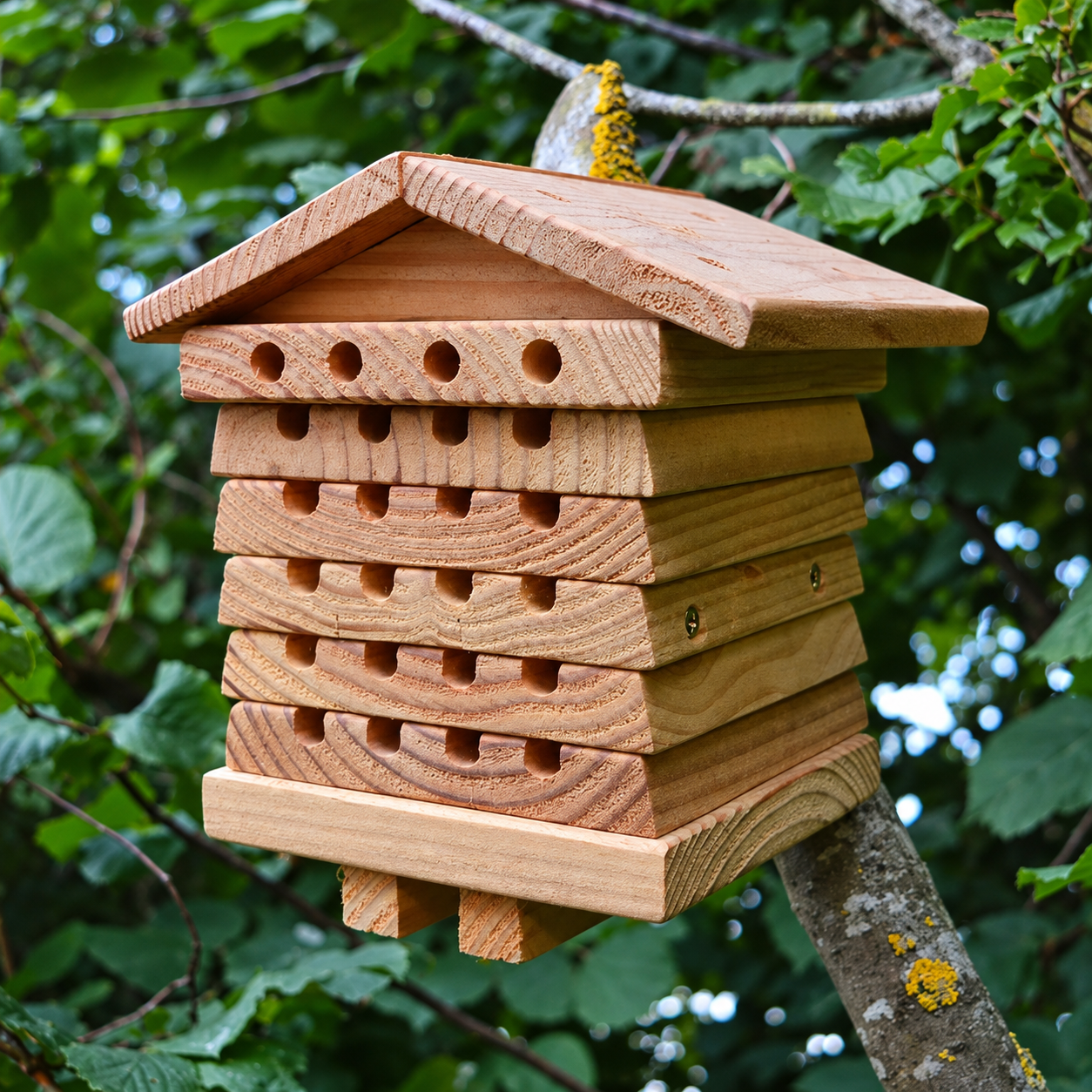
Every species above needs the same basic thing: a dry, smooth, dead-end tunnel of the right width and a decent depth, kept still and warm. The Wild Bee Hotel is built to that: 19mm untreated Western red cedar, a hand-formed copper roof that overhangs the face, tunnels from 2mm to 10mm hand-sanded inside and at the rim, and a solid rear panel. It is £39.99 for one, with free worldwide shipping and 30 days to change your mind.
Questions people ask next
Do bee house bees sting?
How do I know whether it is a bee or a wasp in the tunnels?
Why are there leaf discs in my bee house?
Do the same bees come back each year?
Will honeybees or bumblebees use a bee house?
One box, several species
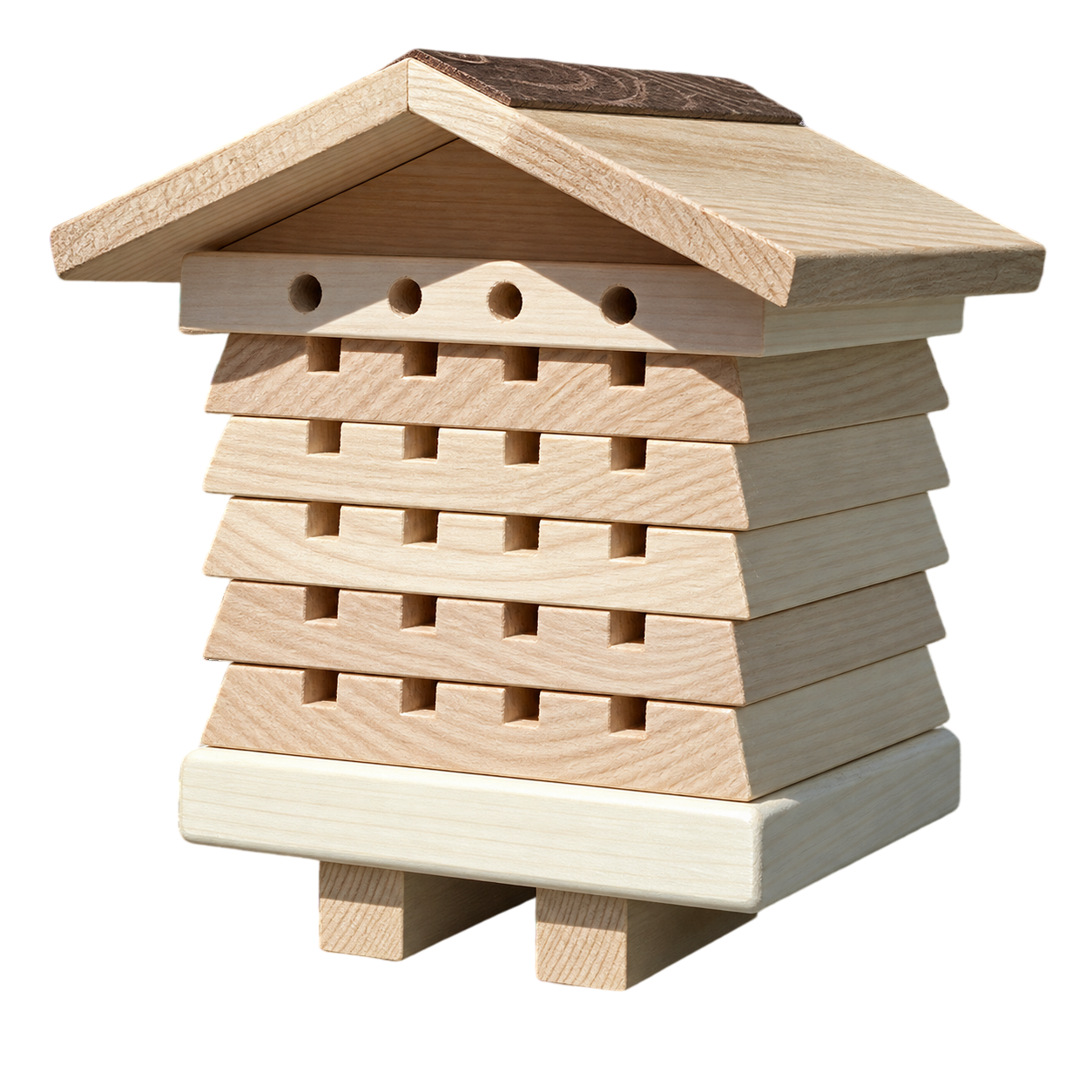
A spread of tunnel widths is what lets a single hotel host masons, leafcutters and the smaller species rather than just one of them.
About Clayton Dawson
Cabinetmaker and solitary-bee keeper, and the maker of the Wild Bee Hotel. Clayton has kept red mason and leafcutter bees in his own garden for years, and every guide on this site is written and checked against what he sees in the tunnels each season rather than copied from a catalogue. Read the full story.
First published 27 May 2025 · last reviewed 20 September 2026.
What we based this on: Buglife, Bumblebee Conservation Trust, RHS.