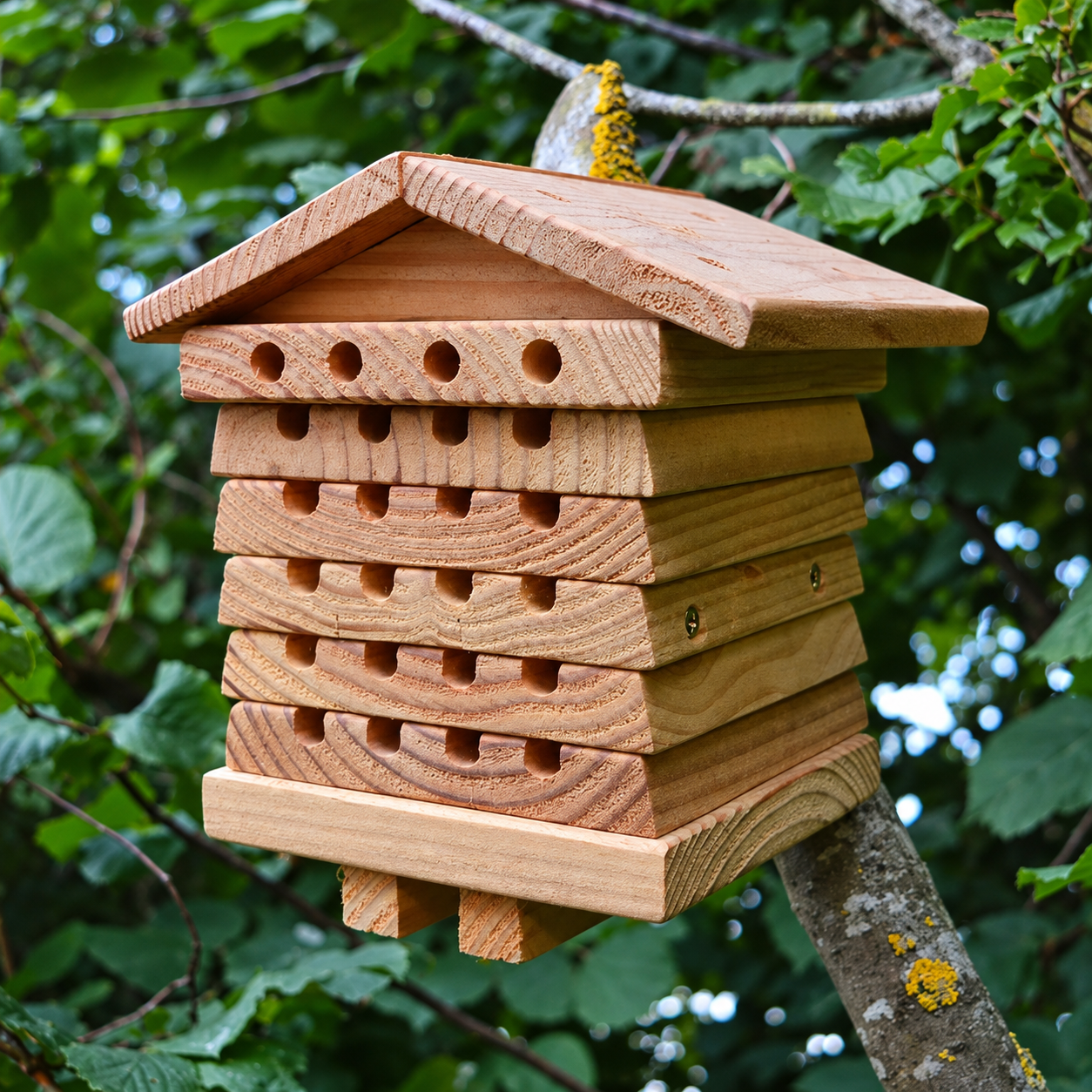
Leafcutter bee house: the right tunnels for Megachile, June to August
Leafcutter bees (Megachile) fly June to August and need tunnels around 6–7mm in diameter, sealed at the back and protected from rain, where they build cells from neatly cut leaf discs rather than mud. If you've found perfect circles cut from your rose or lilac leaves, a leafcutter is very likely already nesting nearby.
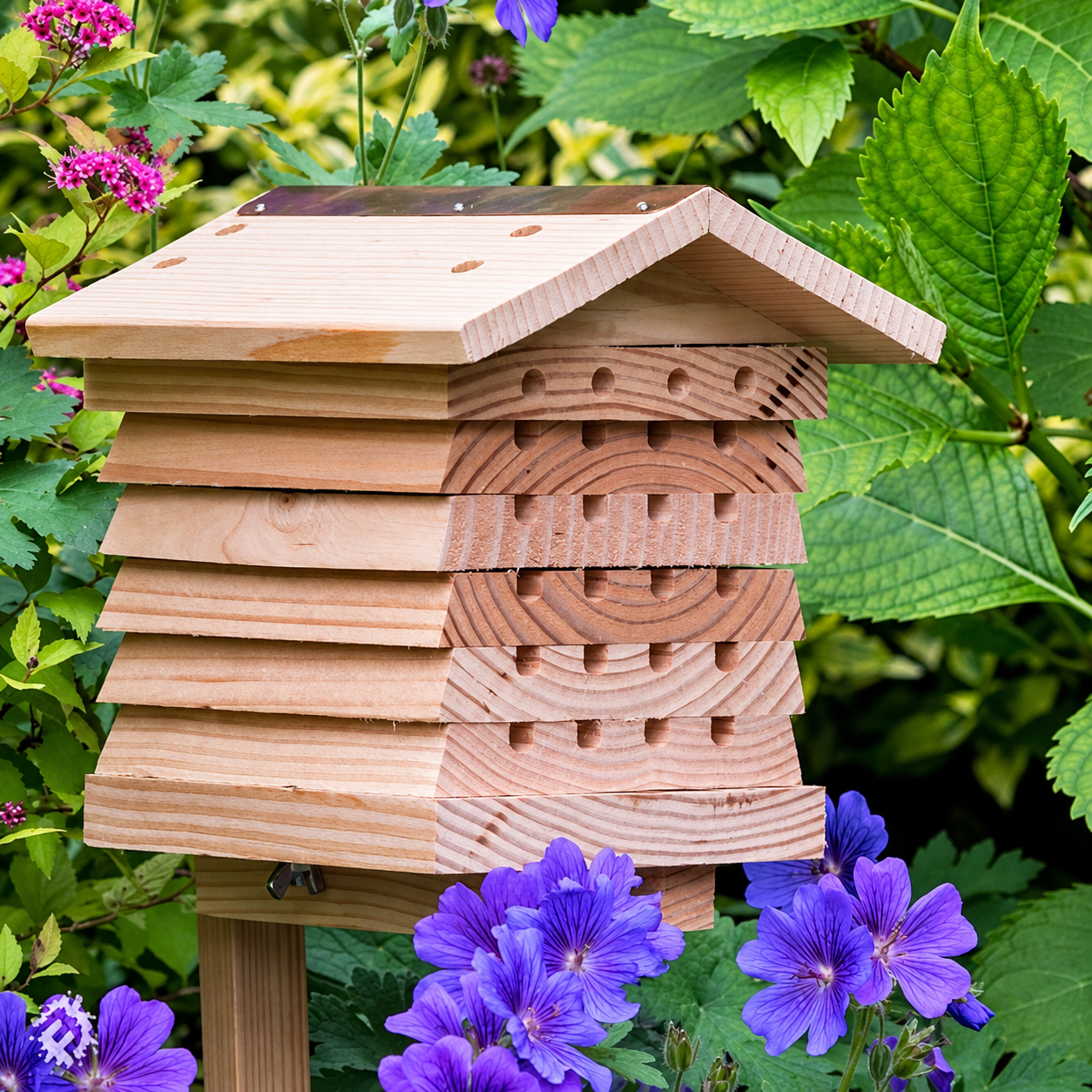
At a glance: leafcutter bees and their houses
- Fly June to August in the UK — later than red mason bees.
- Need tunnels around 6–7mm in diameter, 10–15cm deep, sealed at the back.
- Build cells from cut leaf discs, not mud.
- Non-aggressive solitary bees — no hive, no queen, no colony to defend.
- Favour roses, lilac, wisteria and Virginia creeper as leaf sources.
Anyone who's spotted perfectly round or oval notches cut from garden leaves has usually met a leafcutter bee's handiwork before ever seeing the bee itself. Getting a leafcutter house right is a slightly different job from a general bee hotel, because the species has its own timing, its own preferred diameter, and its own construction material.
Why 6–7mm matters specifically for leafcutters
UK leafcutter species (genus Megachile) are generally a size class smaller than red mason bees, and tunnel diameter needs to match a female's body width closely enough that she can pack material against the walls. Too wide and the leaf discs won't seal properly; too narrow and she can't fit at all. The reliable range is 6–7mm, distinct from the 8mm that suits mason bees — see our full diameter and depth chart for how every size in between gets used.
Key fact
Why gardeners see the cut leaves before they see the bee
Leafcutter bees are fast, quiet workers and rarely settle long enough to be noticed mid-cut. What's far more visible is the aftermath: smooth-edged circles or ovals removed from leaf margins, usually from soft, pliable leaves like roses or lilac. A female can complete a cut in under a minute and fly the piece straight back to her tunnel, rolled lengthways in her legs and mandibles.
Leafcutter vs red mason bee nest construction
| Feature | Leafcutter bee (Megachile) | Red mason bee (Osmia bicornis) |
|---|---|---|
| Flight season | June–August | March–June |
| Preferred tunnel diameter | 6–7mm | 8mm |
| Cell partition material | Cut leaf discs | Mud |
| Entrance plug appearance | Green, tightly rolled leaf | Grey-brown mud cap |
| Typical leaf sources | Roses, lilac, wisteria, Virginia creeper | Not applicable |
Common mistakes with leafcutter houses
- Offering only 8mm+ tunnels, which excludes leafcutters entirely.
- Siting the house somewhere with no leafy plants nearby to supply material.
- Unprotected entrances where rain soaks and unravels the leaf-disc plugs before they cure.
- Rough-sawn tunnel rims, which shred a leafcutter's wings faster than a mason bee's, since she's carrying bulkier material through the same gap.
Season by season
Spring is quiet for leafcutters even while mason bees are active in the same block. Activity picks up through June, peaks in July, and tapers by late August. The sealed tunnels then sit through autumn and winter exactly as described in our guide to how a bee house works, with adults emerging the following summer rather than the following spring.
What to look for when buying a leafcutter-friendly house
- A genuine spread of diameters including 6–7mm, not just 8mm.
- Depth of 10–15cm so a full clutch of cells can be laid.
- A roof that keeps rain off the leaf-disc plugs while they cure.
- Sanded, splinter-free tunnel rims that don't shred wings on entry.
- A sealed rear panel, exactly as required for any solitary bee species.
The Wild Bee Hotel's tiered tunnels cover this whole range in one block, so the same house that hosts red mason bees in spring can host leafcutters through the summer without any changes needed.
Questions people ask next
Why are there neat circles cut out of my rose leaves?
Do leafcutter bees damage the plants they cut from?
How is a leafcutter's nest different from a mason bee's?
What size tunnel does a leafcutter bee actually need?
When should I expect leafcutter activity to start and stop?
Can red mason bees and leafcutter bees use the same bee house?
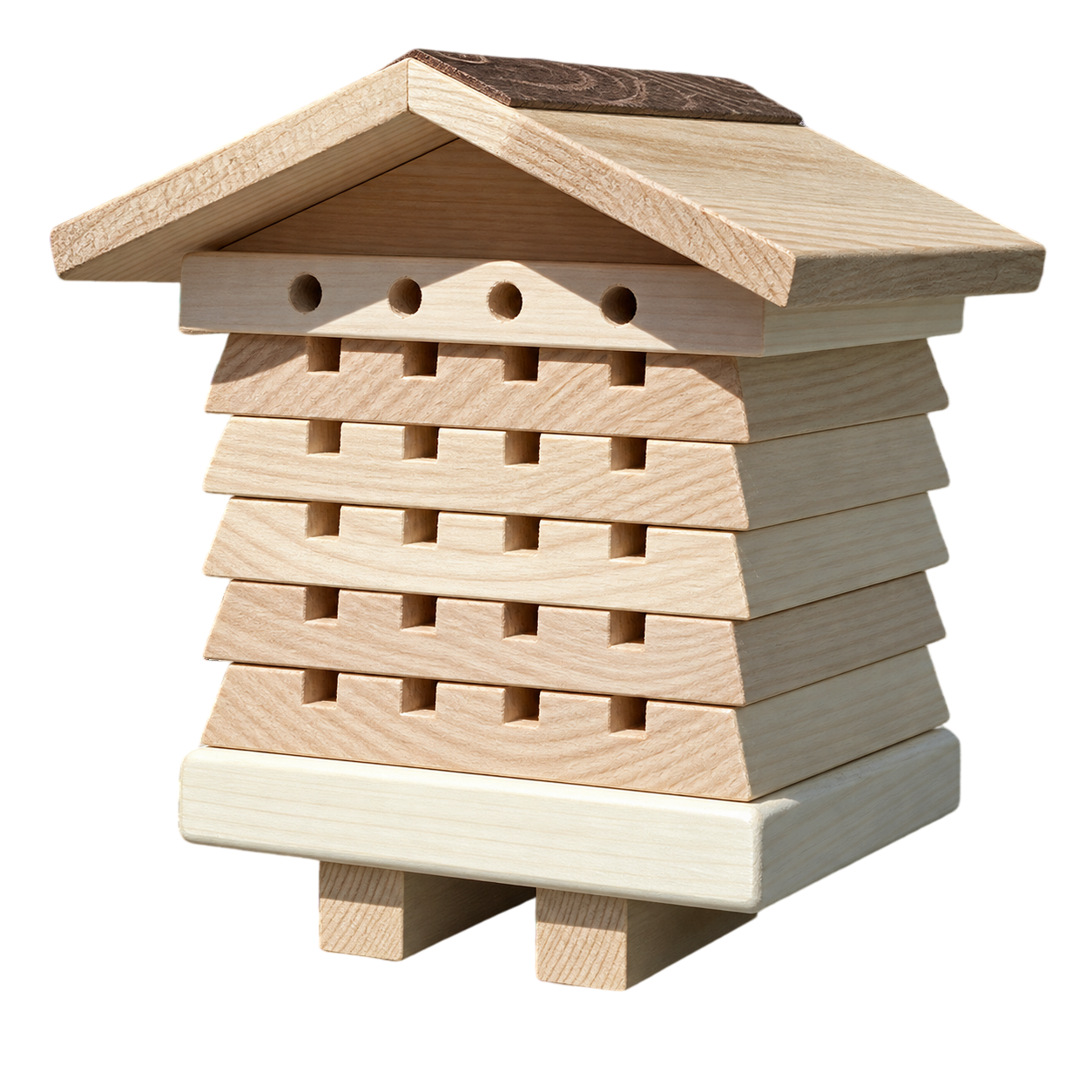
Give leafcutters somewhere dry to build
The Wild Bee Hotel's tiered tunnels include the 6–7mm diameters leafcutter bees favour, under a copper roof that keeps their leaf-disc plugs from getting wet. £39.99, free worldwide shipping, 30-day money-back guarantee.
About Clayton Dawson
Cabinetmaker and solitary-bee keeper, and the maker of the Wild Bee Hotel. Clayton has kept red mason and leafcutter bees in his own garden for years, and every guide on this site is written and checked against what he sees in the tunnels each season rather than copied from a catalogue. Read the full story.
First published 14 May 2025 · last reviewed 30 June 2026.
What we based this on: Bumblebee Conservation Trust, RHS.