Beekeeping at home, or solitary bees?
At a glance
- Honeybee keeping is a managed livestock hobby with a real time commitment.
- Solitary bees need no management, no feeding and no equipment.
- Only honeybees produce harvestable honey.
- Solitary species include many of the bees genuinely in decline.
- Both benefit far more from flowers than from equipment.
What keeping honeybees actually involves
A hive is a colony of tens of thousands of insects that depends on its keeper. Through the active season it needs regular inspections to check the queen is laying, to judge whether the colony is preparing to swarm, and to watch for disease and parasites — varroa management in particular is ongoing rather than optional. There is equipment to buy and store: hive parts, frames, a suit, a smoker, a hive tool, extraction kit if you want honey. There is winter feeding to judge, swarm control to plan, and a responsibility to neighbours if a colony becomes defensive or swarms into someone else's chimney.
None of that is a reason not to do it. Beekeepers find it absorbing precisely because it is demanding. But it is a livestock commitment measured in years, and the sensible route in is a course with a local association before any purchase, not a hive bought on impulse.
What hosting solitary bees involves
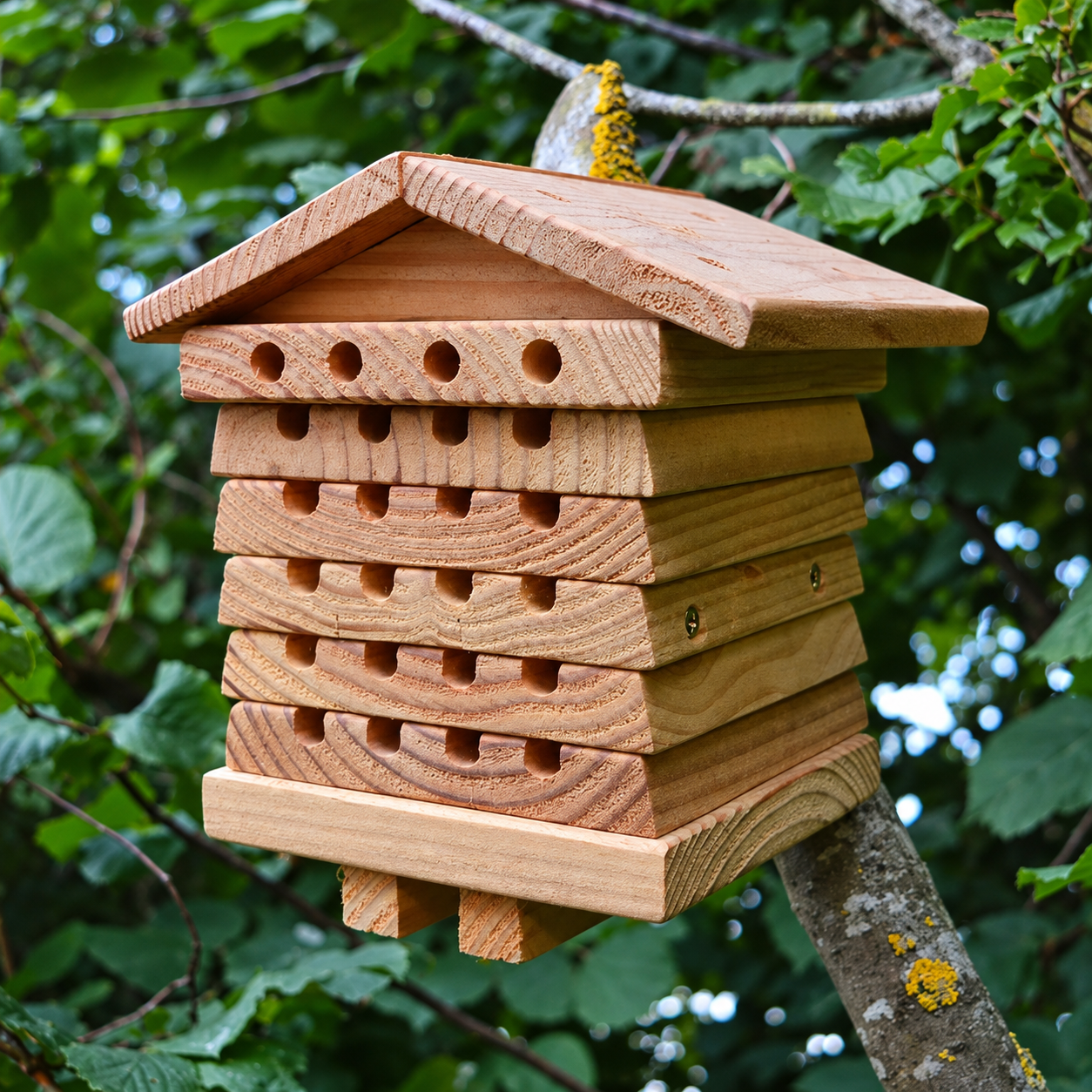
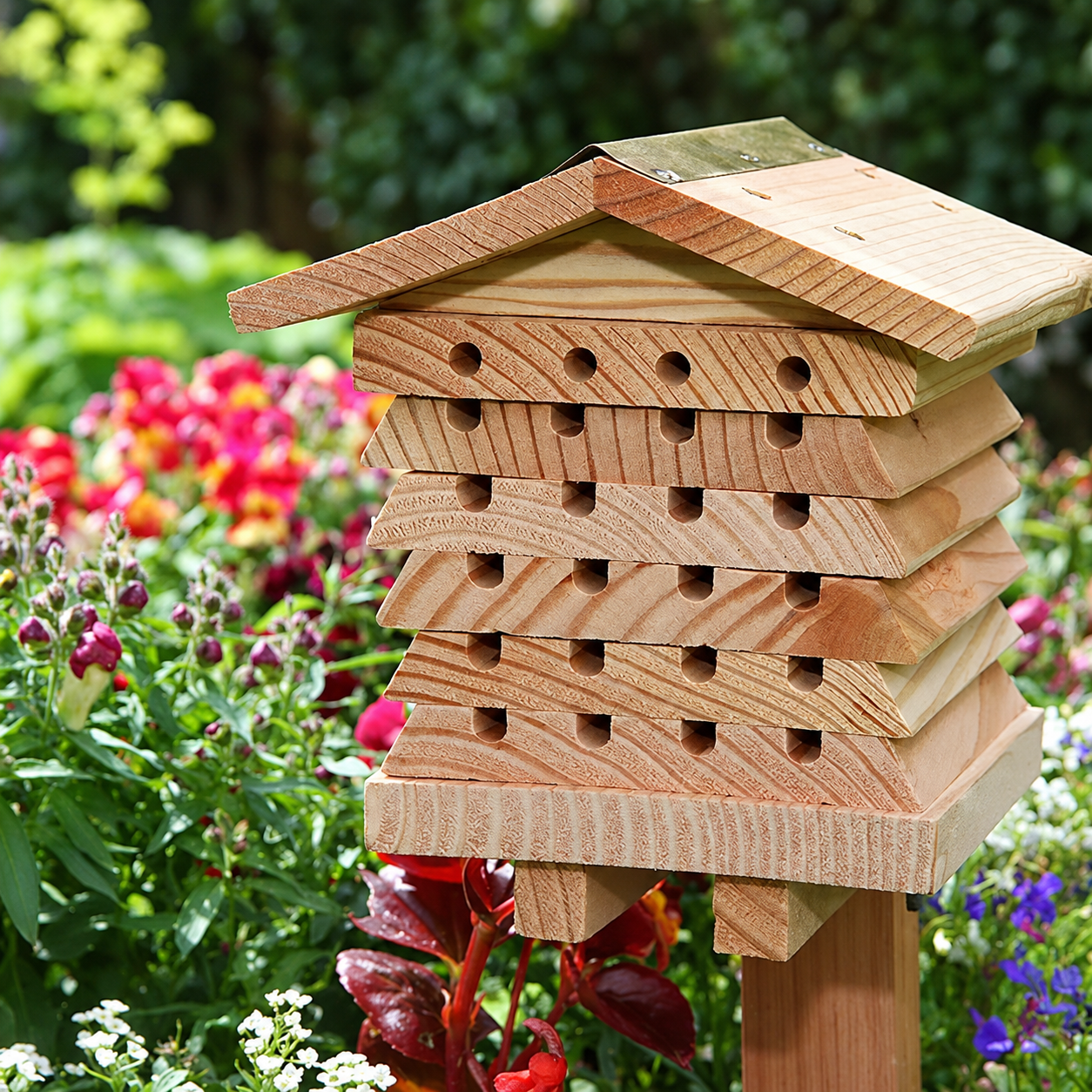
Fixing a box to a wall, and then nothing. Around nine in ten UK bee species are solitary: each female finds a nest site, provisions her own cells and dies before her young hatch. There is no colony to inspect, no swarm to catch, no queen to find, no honey to extract, no treatment to apply. A well-sited hotel is used or not used based on aspect, dryness and nearby forage, and the only maintenance is keeping foliage off the face and checking the fixing before winter. The process is described in the setup guide.
Side by side
| Honeybee hive | Solitary bee hotel | |
|---|---|---|
| Time commitment | Regular inspections through the season, for years | Minutes to install, then essentially none |
| Training needed | A course and ideally a mentor | None |
| Equipment | Hive, suit, smoker, tools, storage | Two screws |
| Disease and pests | Active management required | Nothing to manage |
| Honey | Yes, in a good year | None |
| Sting risk | Real; a colony defends itself | Very low; nothing to defend |
| Suits a small garden or balcony | Often not | Yes |
| Helps declining wild species | Not directly | Yes, tunnel nesters specifically |
The conservation question, stated fairly
Honeybees are a managed species and are not endangered in the UK; adding hives increases managed bee numbers, which in flower-poor areas can add competition for the same forage that wild bees need. Many wild species, by contrast, are genuinely under pressure from habitat and forage loss. If your motivation is helping pollinators rather than producing honey, the effective actions are planting for a long flowering season, leaving bare sunny soil for mining bees, leaving dead stems standing, and providing good nesting tunnels. The alternatives page ranks those options honestly, and do bee hotels work is candid about the limits of what a hotel achieves.
You can do both
Plenty of beekeepers also put up solitary bee nests, because the two occupy different corners of a garden and different amounts of attention. If you are unsure which suits you, start with the one that costs a weekend rather than a season: plant for bees, put up a nest block, watch what turns up, and decide about a hive after a year of paying attention to what already flies in your garden.
Starting with solitary bees
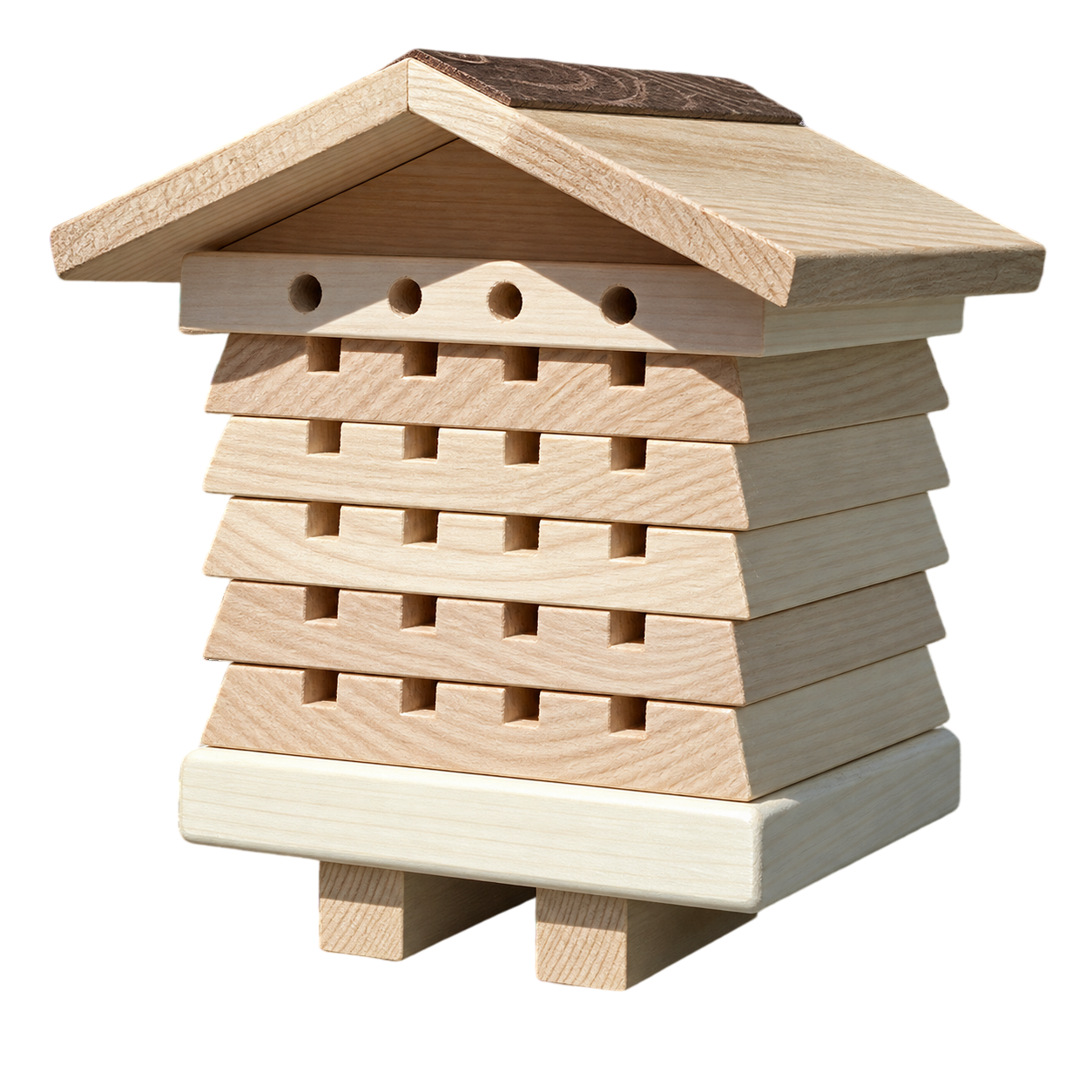
The Wild Bee Hotel is 19mm untreated Western red cedar with a hand-formed copper roof, hand-sanded tunnels from 2mm to 10mm and a solid rear panel. It arrives complete, fixes to a wall or post in minutes, needs no treatment and no upkeep, and costs £39.99 for one with free worldwide shipping and 30 days to change your mind.
Questions people ask next
Can I keep bees in a normal garden?
Is a bee hotel a form of beekeeping?
Do solitary bees make honey?
Which helps wild pollinators more?
Do I need any licence or registration?
The low-commitment way to host bees
Deep, dry, hand-sanded tunnels in untreated cedar under a copper roof — fixed once, then left alone.
About Clayton Dawson
Cabinetmaker and solitary-bee keeper, and the maker of the Wild Bee Hotel. Clayton has kept red mason and leafcutter bees in his own garden for years, and every guide on this site is written and checked against what he sees in the tunnels each season rather than copied from a catalogue. Read the full story.
First published 16 September 2025 · last reviewed 20 September 2026.
What we based this on: Bumblebee Conservation Trust, Buglife, RHS.