A bee hotel makes an unusually good gift — here's why
Most gifts sit on a shelf. This one goes up on a fence or a wall and, within a season, has bees moving into it while the person you gave it to watches from the kitchen window. That is the whole pitch, and it holds up.
At a glance
- £39.99 for one, £49.99 for two ("one to keep, one to give").
- Optional gift wrap with a handwritten note, £4.99, added at checkout.
- Free worldwide shipping on every order.
- Dispatched within 2 working days; UK 3–5 working days, Europe 7–12, US and elsewhere 7–14.
- 30-day money-back guarantee (unless bees have already moved in).
It suits an oddly wide range of occasions, which is part of why it works so well as a gift: Mother's Day for a mother who spends every spare hour in the garden, a milestone birthday for someone downsizing into a smaller space, a Christmas present that doesn't compete with the usual pile of slippers and chocolate, or a retirement gift for someone who suddenly has weekday mornings free to watch what happens on their own fence.
Why a bee hotel, specifically
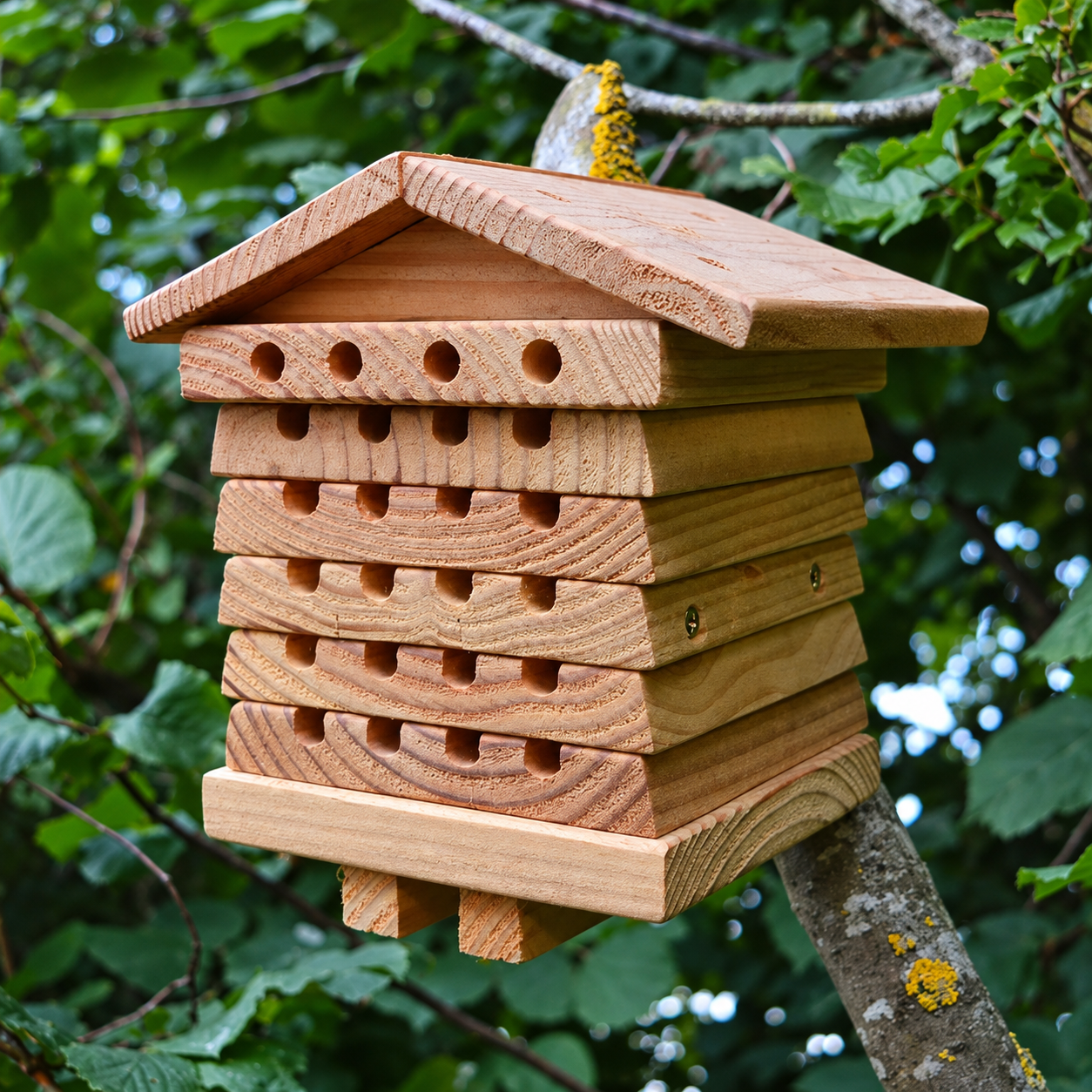
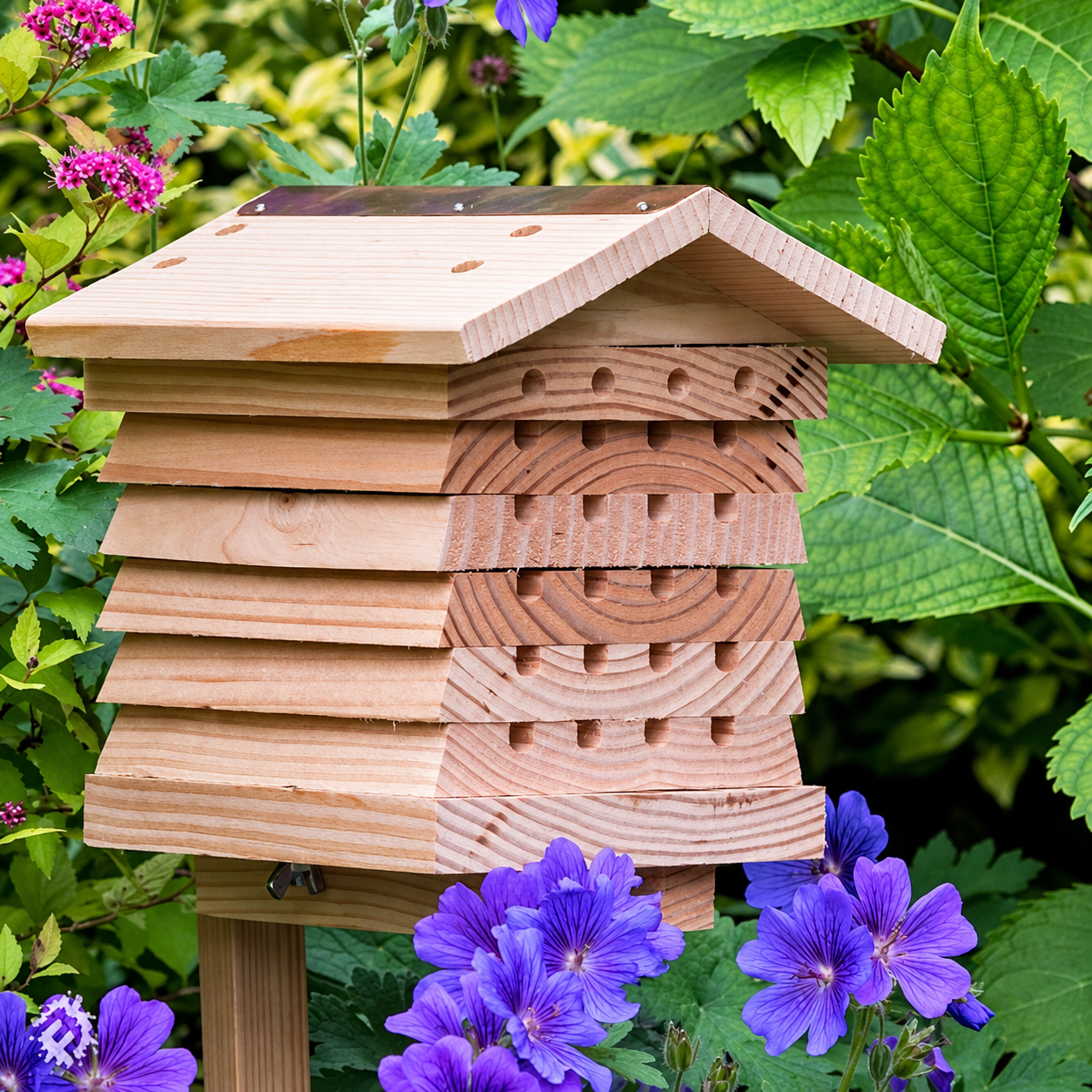
Most novelty garden gifts are decorative and nothing more — a solar light, a wind chime, a gnome. A bee hotel is decorative too, with an untreated cedar body and a hand-formed copper roof that darkens attractively over its first year outside, but it also does something: it gives red mason bees and leafcutter bees somewhere to nest. If you want the recipient to actually see bees using it, our guide to UK mason bees explains what a female bee does once she finds a tunnel, and it's a good thing to send along with the gift so they know what they're looking for in April.
Solitary bees are not honeybees and this is not a beehive — there's no honey, no queen, no swarm and, practically speaking, no risk of being stung. That distinction is worth mentioning if the person you're buying for is slightly wary of anything with "bee" in the name. Our mason bee house guide covers the biology in more depth if they want to read further once it arrives.
What arrives, and how it's presented
| Element | What you get |
|---|---|
| Body | Untreated Western red cedar, 19mm walls |
| Roof | Hand-formed copper, overhanging the nesting face |
| Tunnels | 2mm–10mm, hand-sanded inside and at the rim |
| Mounting | Heavy-duty steel mount for wall, fence or post |
| Gift wrap (optional, £4.99) | Kraft paper, garden twine, handwritten note card |
Without the gift wrap option it arrives well packed but in plain, practical packaging — fine if you're wrapping it yourself or handing it over in person. With gift wrap added at checkout, it turns up ready to give, note attached, with nothing left for you to do.
Choosing between one and two
A single hotel at £39.99 is the right choice for one recipient and one garden. The two-pack at £49.99 works two ways: some buyers give one and keep the other for their own garden — a nice way to justify the purchase to yourself while shopping for someone else — and others simply know two people who'd both appreciate one, a sibling and a parent, or two friends who garden together on an allotment. Either way it costs less per hotel than ordering two singles.
Sizing the moment right — when to buy
Bees are most visibly active from March through June, so a hotel given in late winter or early spring gets used within weeks of arriving, which is satisfying if the recipient is the type who wants to see a result quickly. A Christmas or birthday gift given earlier in the year will still work perfectly well — hung any time, it simply waits for the following spring's mason bees, or for leafcutters over the summer.
Common questions before buying as a gift
People mostly worry about three things: whether it will actually attract bees, whether it needs upkeep the recipient won't want to do, and whether it will arrive looking presentable. On the first, tunnel quality is what decides that — smooth, correctly sized, protected from rain — and that's exactly what the copper roof and hand-sanded tunnels here are built for; see our full buyer's checklist if you want the underlying detail before you commit. On the second, there's genuinely very little to do beyond leaving it outside. On the third, that's what the gift wrap option solves.
Shipping, guarantees and what happens if it's the wrong gift
Shipping is free worldwide, and orders are dispatched within 2 working days of purchase. From there, UK addresses typically take 3–5 working days, European addresses 7–12 working days, and the US and the rest of the world 7–14 working days — we quote ranges rather than guaranteed dates because that's what carriers actually deliver against. If you're buying for a specific date, order with that range in mind rather than right up against it.
If it turns out not to suit — wrong garden aspect, recipient already has one, simply not their thing — the 30-day money-back guarantee covers it, provided bees haven't already begun nesting inside. Full detail on returns is on our guides index, alongside the rest of our care and setup guides.
What to look for when buying a bee hotel as a gift
- A range of tunnel sizes, not one uniform diameter — different species need different widths.
- A solid rear panel, not a through-hole, so parasitic wasps can't reach the brood from behind.
- An overhanging roof that actually keeps rain off the tunnel entrances.
- Smooth-sanded tunnel interiors — rough wood shreds a bee's wings over hundreds of visits.
- An honest returns policy, since the whole point is that it's supposed to be used, not just looked at.
Questions people ask next
Will it arrive in time?
Can I add a message?
What if they already have a bee hotel?
Is it suitable for someone with a small garden or a balcony?
Does it need any assembly or upkeep from the person receiving it?
What if they don't like it or nothing moves in?
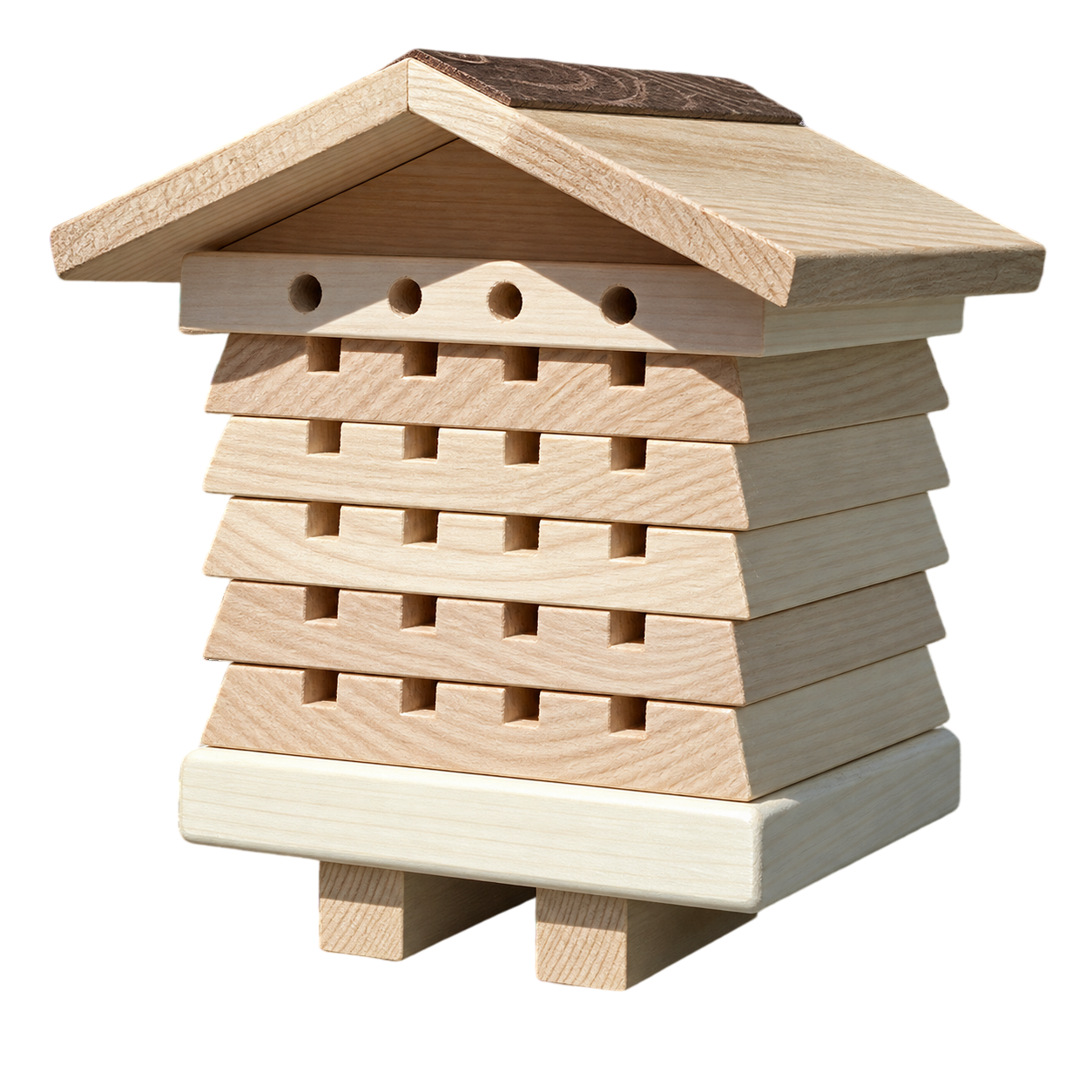
One to keep, one to give
The two-pack is £49.99 — less per hotel than buying two singly — so you can keep one for your own garden and gift the other, or give a pair to someone with room for both.
About Clayton Dawson
Cabinetmaker and solitary-bee keeper, and the maker of the Wild Bee Hotel. Clayton has kept red mason and leafcutter bees in his own garden for years, and every guide on this site is written and checked against what he sees in the tunnels each season rather than copied from a catalogue. Read the full story.
First published 4 November 2025 · last reviewed 18 August 2026.
What we based this on: Bumblebee Conservation Trust, RHS.