Bee and bee hotel: what the name means
At a glance
- "Bee and bee" and "bee hotel" mean the same thing — tunnels for solitary bees.
- Guests are individual females, not a colony: no queen, no honey, no swarm.
- Tunnel widths from roughly 2mm to 10mm suit the widest range of species.
- Dryness is the single biggest factor in whether a box is used or ignored.
- Nothing needs feeding or managing once it is up and sited well.
Where the name came from
The phrase spread through gardening magazines and wildlife charities because it does a job that the word "hotel" only half does: it tells you the residents are short-stay guests rather than livestock. A honeybee hive is a permanent household with a queen, thousands of workers and a store of honey to defend. A bee and bee is closer to a row of empty rooms that individual travelling bees use and then leave. Once you have that picture, most of the practical advice on this site makes immediate sense.
It matters commercially too. Because the phrase reads as decorative, a great deal of what is sold under it is decorative: printed roofs, painted flowers, bundles of loose bamboo and a price that reflects the graphics rather than the joinery. The nickname is harmless. Buying on the nickname is what leaves a box empty for three years.
What a working bee and bee has to get right
| Feature | Why it decides occupancy |
|---|---|
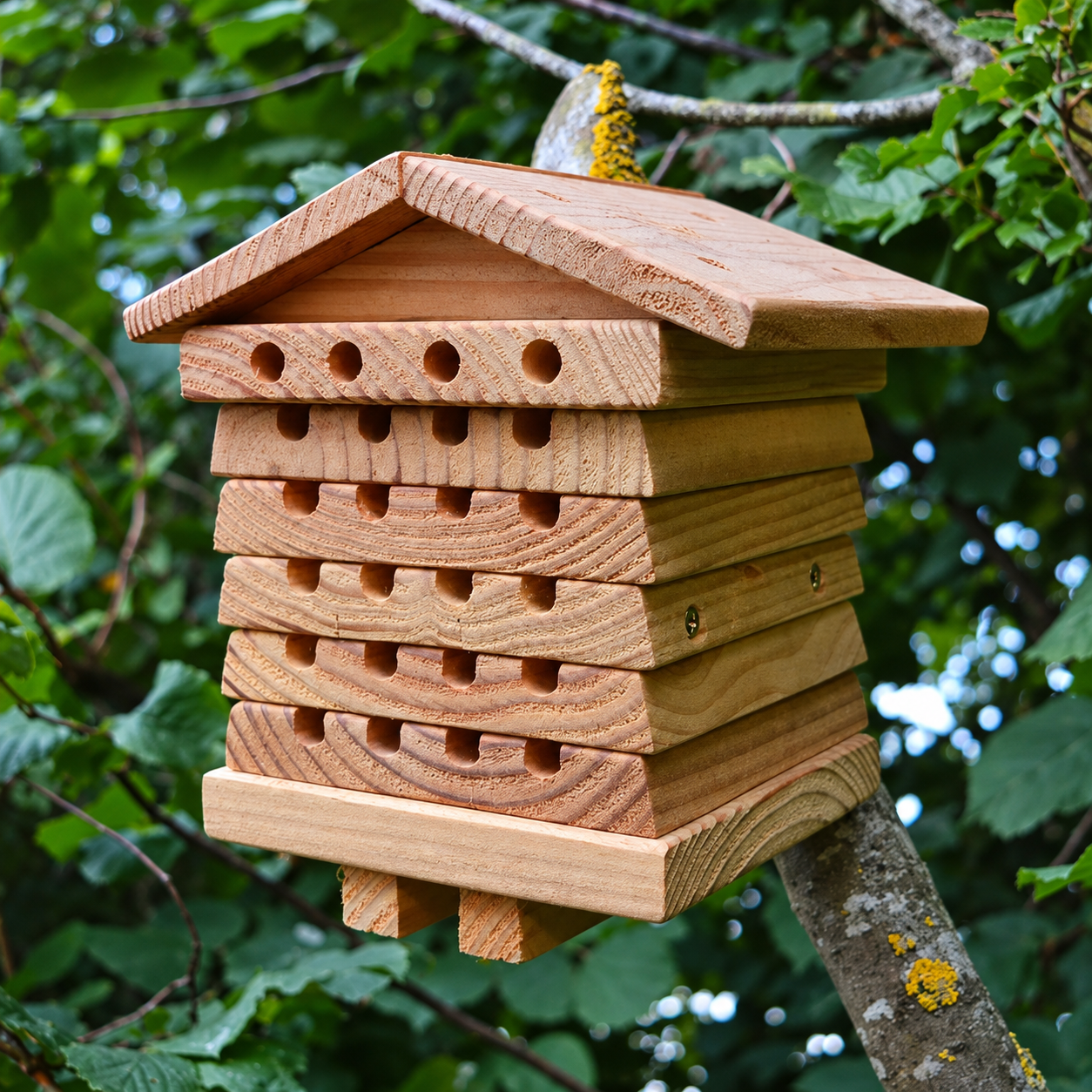
| Thick, untreated timber | Holds its shape when wet, and carries no solvent smell that deters females |
| Roof that overhangs the tunnel faces | Keeps rain off the openings, which is where damp gets in |
| Smooth tunnel walls and rims | Rough drilling damages wings over repeated entries and exits |
| Solid back panel | Stops parasites reaching sealed cells from behind, and stops draughts |
| A spread of tunnel widths | One diameter suits one group of species and turns the rest away |
| Tunnel depth of roughly 10–15cm | Shallow tunnels skew the nest towards male eggs and fewer cells |
The widths point is the one most often ignored, and the hole-size guide sets out which species take which diameter. A single-size box is not broken, it is just narrower in appeal than the garden around it.
Who checks in through the season
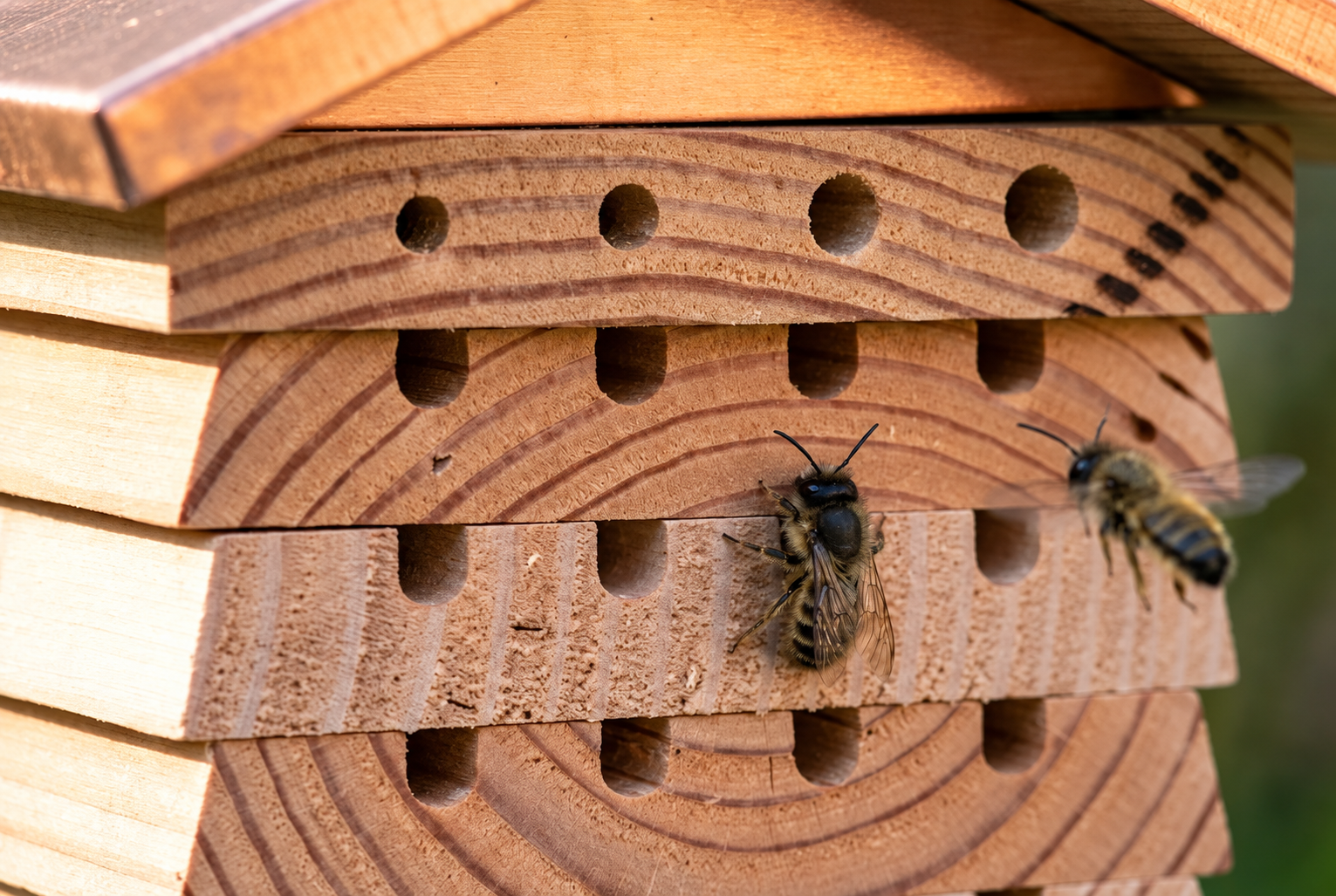
In a typical UK garden, red mason bees arrive first, from March into June, and favour tunnels around 8mm. They cap their cells with mud, so the first sign of success is usually a small plug of soil-coloured material at a tunnel mouth. Leafcutter bees follow from June into August, use slightly narrower tunnels, and seal with neat discs snipped from rose and shrub leaves — an entirely cosmetic bit of damage to the plant. Smaller masked and yellow-faced bees take the 2mm to 4mm tunnels. Harmless solitary hunting wasps use some tunnels too, and their larvae eat aphids and caterpillars.
Nothing arrives to order. Occupancy depends on what is already flying within a few hundred metres and on how much flower forage is available nearby, which is why planting matters as much as the box.
What to expect in the first season
An empty box in its first spring is normal, not a fault. Females are looking for tunnels in a landscape they already know, and a new object on a wall takes time to be found. Put it up before the first warm spell in late winter or very early spring, leave it entirely alone, and judge it over two seasons rather than two months. If the second season is still empty, the cause is almost always aspect, damp, movement, or a lack of flowers rather than the bees being absent — the troubleshooting guide walks through each cause.
Care, honestly
There is very little to do. Leave capped tunnels alone. Keep the face clear of growth. Check the fixing each autumn so winter wind cannot rock it. Do not bring an occupied hotel into a warm house, and do not scrub out tunnels that still hold brood. Beyond that, the useful work is in the garden rather than the box: more flowers over a longer season, and some bare damp soil for mason bees to gather mud from.
If you are choosing one
Judge it in your hand, not on the photograph. Look for real thickness in the timber, a roof with a genuine overhang, a back you cannot see through, tunnels that feel smooth to a fingertip, and several diameters rather than one. The Wild Bee Hotel is built to that list: 19mm untreated Western red cedar, a hand-formed copper roof, tunnels from 2mm to 10mm sanded inside and at the rim, and a solid rear panel, from £39.99 with free worldwide shipping and 30 days to change your mind.
Questions people ask next
Is a bee and bee different from a bee hotel?
Do bees actually stay overnight in one?
Where should a bee and bee go in the garden?
How long does a bee and bee last outdoors?
Can I put more than one in the same garden?
The specification behind the nickname
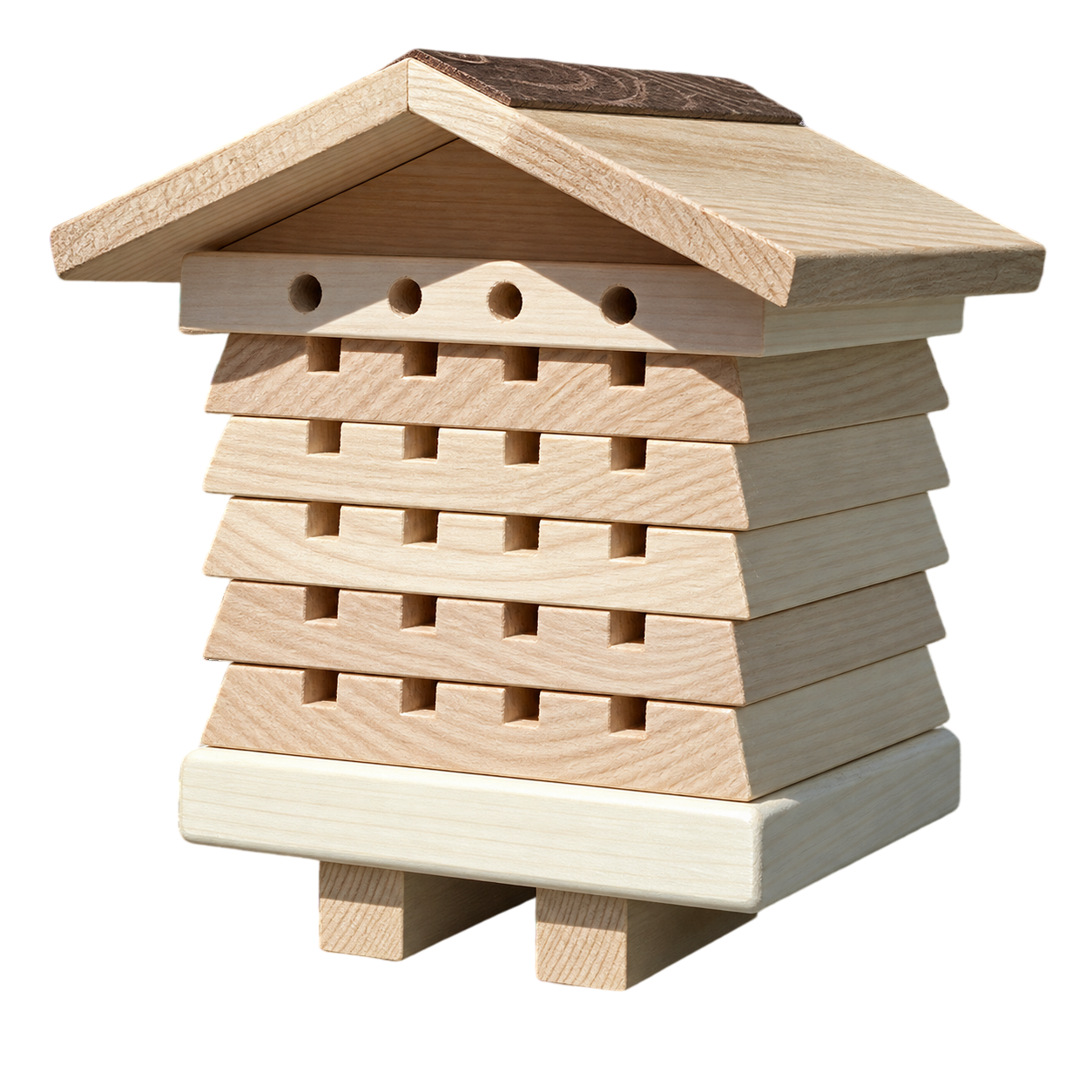
Dry timber, an overhanging roof, smooth tunnel walls, a sealed back and a spread of widths — the things that decide whether anything nests, all standard.
About Clayton Dawson
Cabinetmaker and solitary-bee keeper, and the maker of the Wild Bee Hotel. Clayton has kept red mason and leafcutter bees in his own garden for years, and every guide on this site is written and checked against what he sees in the tunnels each season rather than copied from a catalogue. Read the full story.
First published 14 May 2025 · last reviewed 20 September 2026.
What we based this on: Buglife, RHS, Bumblebee Conservation Trust.